Phosphate ions can be found in bone, in the collagen structure of soft tissues, in cell membranes as phospholipids, intracellularly and in the extracellular fluids. More than 80% of the phosphate ion is present in bone and about 15% is in the soft tissues.
Phosphate also plays an important role in enzyme activity: kinases use it to activate or deactivate different enzymes, and it forms the energetic bonds of ATP in the cells.
Phosphate homeostasis is not controlled as tightly as calcium concentration in the body, and it has quite variable perturbation during the day based on the diet. Part of the reason is that the diet supplies phosphate far beyond the daily need, while one of the intestinal absorption routes cannot be turned down.
Forms in the blood
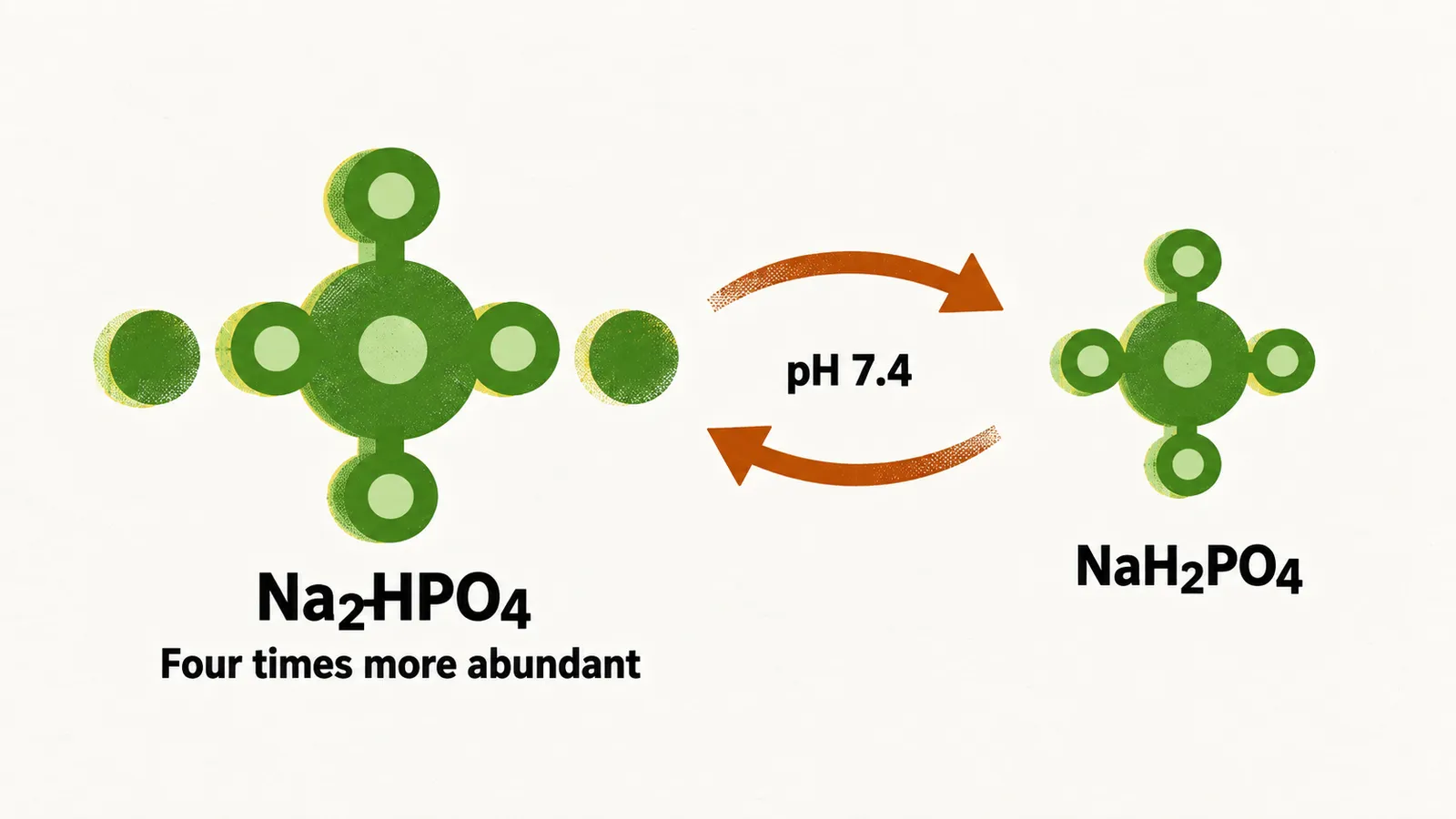
At the pH of 7.4 in the blood, extracellular fluid phosphorus can be found in two forms: NaH2PO4 and Na2HPO4, which is four times more abundant than the monosodium form.
The two forms interconvert at a pH close to that of blood, which is what allows the pair to buffer the extracellular fluid, that is, to limit the change in pH when acid or base is added. In the extracellular fluids phosphate does act as a buffer, but, because of its low concentration, it is not considered the main buffer system of the blood.
Intestinal absorption
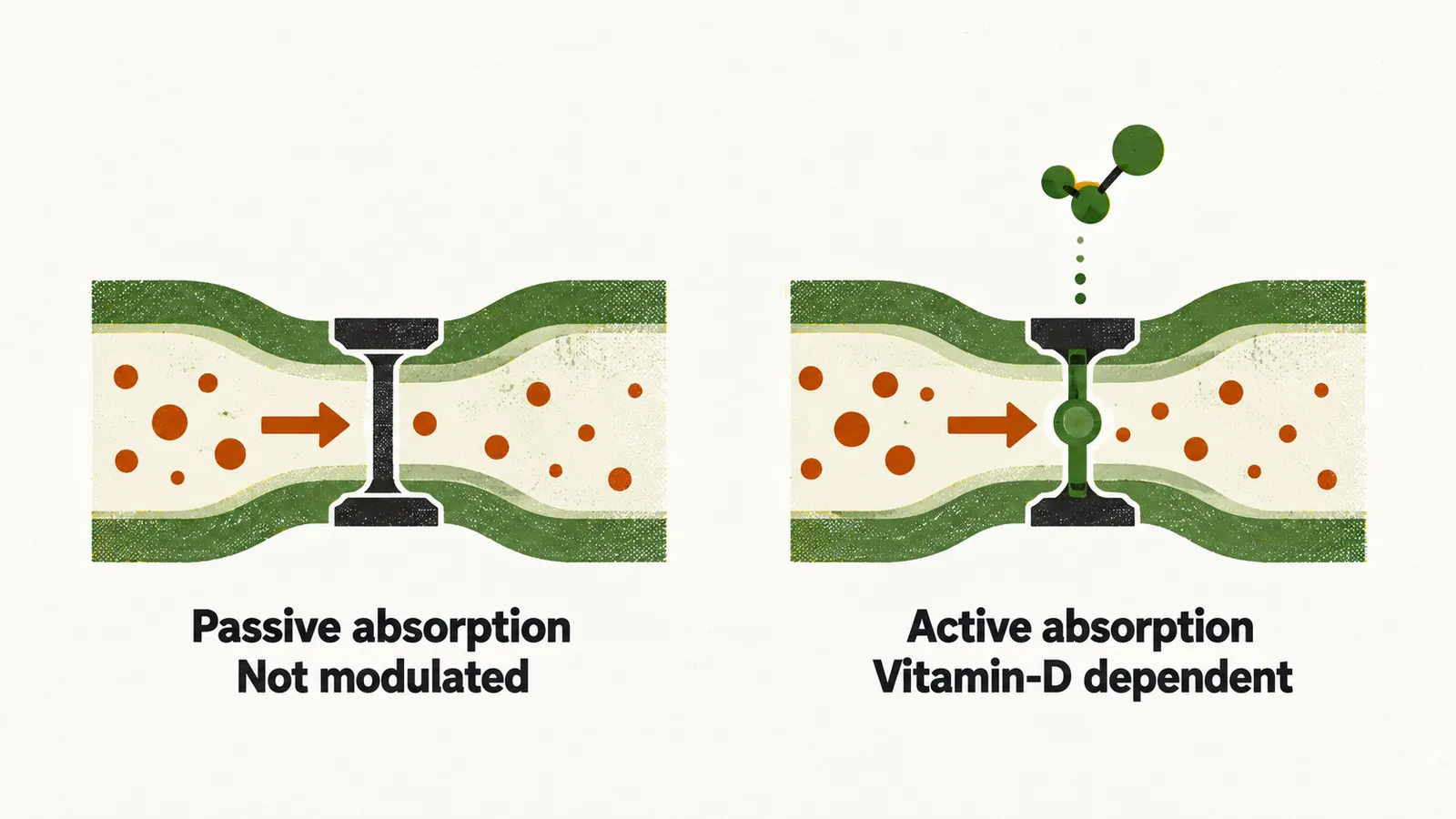
The amount of phosphate ion in different diets is much higher than the daily need, and even in inadequate diets the amount of phosphate ions is high. Most of the phosphate ion, about two thirds, is absorbed by the intestine. There are two molecular mechanisms for the absorption of phosphate in the intestine:
- passive absorption: the passive mechanism is almost always not modulated, and this is why some patients have persistent hyperphosphatemia, because these transporters are not downregulated;
- active, vitamin-D dependent absorption.
Because intake exceeds need and the passive route is not turned down, the intestine does not set the balance.
Renal handling
The balancing mechanism that keeps the phosphate ion in the body rests on the kidney. In fact, almost all the absorbed phosphate is excreted in the urine in the physiological state, and if the individual has hyperphosphatemia, the phosphate transporters of the renal tubules are down-regulated.
More than 90% of the free phosphate of the plasma is filtered in the urine, and more than 80% of that is reabsorbed in the proximal convoluted tubule (PCT). This reabsorption is under the control of:
- PTH
- fibroblast growth factor 23, or FGF23
- dietary intake of phosphorus
- non-hormonal factors: extracellular volume, since expansion of plasma volume increases the excretion of phosphate, and acid-base status
Urinary buffering
Phosphate also has a physiological effect in the urine itself. It is accumulated in the urine, and as it passes toward the distal tubules, where there is exchange of a proton ion with sodium, Na2HPO4 is converted to NaH2PO4; this conversion permits urine to accumulate as much proton ion as needed without any change in the pH state of the urine.
Since renal reabsorption is the step that sets the phosphate balance, and PTH and FGF23 are the hormones that control it, the hormones are the next thing to understand, beginning with PTH.