
Parathyroid hormone-related protein, or PTHrP, is a peptide that shares the N-terminal part of its sequence with parathyroid hormone (PTH) and therefore activates the same receptor, the type 1 PTH receptor (PTH1R). It is not a second parathyroid hormone: it is produced by many tissues, where it generally acts locally rather than as a circulating regulator of plasma calcium.
Where it comes from
PTHrP is physiologically secreted during fetal life and then decreases after birth; it increases during injury and malignancy conditions. Because it signals through the PTH receptor, a tissue that releases PTHrP can reproduce the effects of PTH on calcium and phosphate even when the parathyroid glands are not secreting PTH.
Its actions
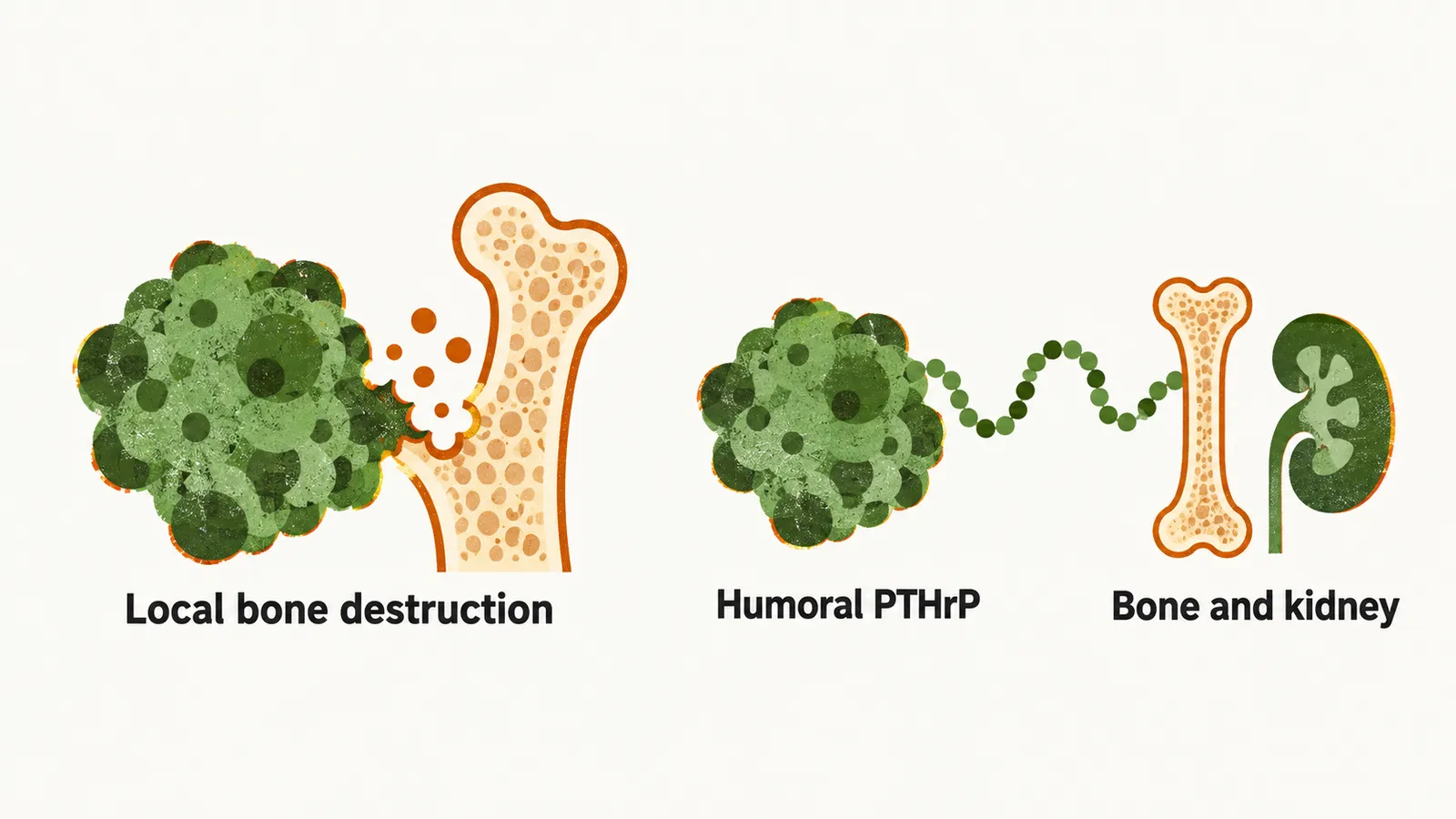
PTHrP acts through PTH1R in bone and kidney in the same way PTH does. It stimulates the resorption of bone by osteoclasts, increases calcium reabsorption by the renal tubules, and reduces phosphate reabsorption, so the plasma calcium rises while phosphate falls. The rise in calcium then feeds back on the parathyroid cell through the calcium-sensing receptor and suppresses PTH, so the plasma calcium can be high while PTH is low.
Hypercalcemia of malignancy
The clinical importance of PTHrP is that it is a major humoral mediator of the hypercalcemia of malignancy. A tumor can raise plasma calcium in two main ways: it can metastasize to bone and destroy it locally, or it can secrete a humoral factor that acts on bone and kidney at a distance. Humoral hypercalcemia of malignancy is mediated mainly by tumor-produced PTHrP acting through the PTH/PTHrP receptors in bone and kidney, which is why the calcium rises without a rise in PTH.
PTHrP is secreted by several different forms of cancers, mainly breast, prostate and lung cancer. In more than half of breast cancers and prostate cancer there is secretion of PTHrP.