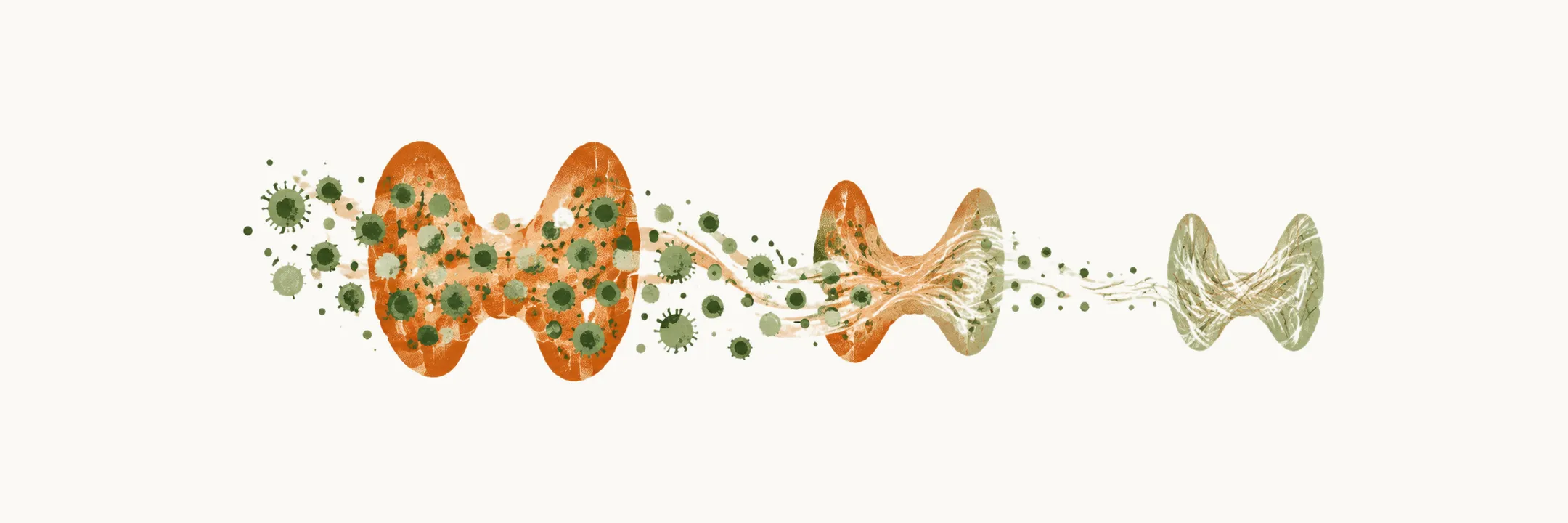
In autoimmune hypothyroidism the immune system forms autoantibodies against thyroid proteins, and these affect both thyroid hormone action and the gland itself. The antibodies do not act alone; the gland is destroyed mainly by cells, a process described in Pathogenesis of autoimmune hypothyroidism.
The disease is the product of several factors acting together, and the hormonal ones explain its distribution. Because of the effect of hormonal changes on autoimmune thyroid disease (AITD), AITD is about 8 times more prevalent in women than in men. The incidence is also higher in Japanese people, perhaps because of genetic predisposition combined with a diet rich in iodine.
The two phases
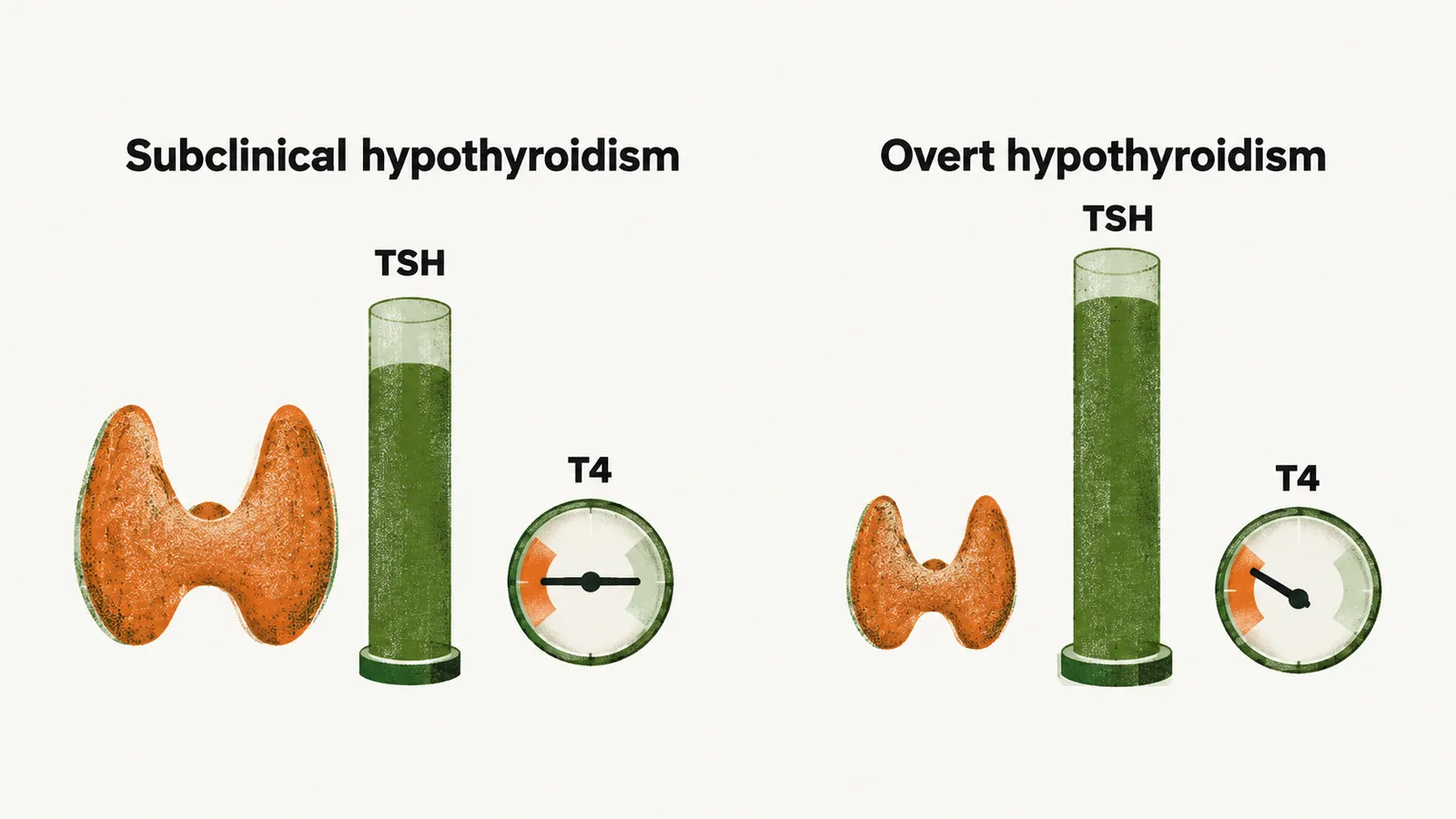
Autoimmune hypothyroidism passes through two phases, separated by how well the pituitary can compensate for the failing gland:
- Subclinical hypothyroidism: the thyroid hormone falls slightly, but a rise in TSH (thyroid-stimulating hormone) drives the remaining gland to keep the level normal. Most patients in this phase have no symptoms. It is found in 6-8% of women and 3% of men.
- Overt hypothyroidism: the fall is too large for the TSH rise to compensate, and symptoms appear. The incidence is about 4 new cases per 1000 women and 1 per 1000 men each year.
The two forms
The same process can produce two different appearances of the gland:
- a goitrous form, in which the gland enlarges — Hashimoto’s thyroiditis
- a form with minimal residual thyroid tissue — atrophic thyroiditis
Infertility and pregnancy
Autoimmune thyroid disease also touches reproduction, both before and after pregnancy. Patients with AITD are more infertile than the general population, and two mechanisms are proposed for this. One is hypothyroidism itself, through its effect on the ovarian cycle. The other applies to patients with AITD who are euthyroid, meaning their thyroid hormone levels are normal: they have a higher prevalence of other autoimmune conditions.
Autoimmune thyroid disease after pregnancy
AITD can appear in the postpartum period, in which case it occurs in 5-10% of women. The reason lies in the immune changes of pregnancy: the high level of progesterone during pregnancy increases immunosuppression, so autoimmune disease already present in a subclinical state is held in check; when the pregnancy ends and that immunosuppression is withdrawn, the disease flares. This is why women who develop hypothyroidism after pregnancy have most often had subclinical Hashimoto’s thyroiditis beforehand.
Postpartum thyroiditis: follow-up
Because of the immunosuppressive effect of progesterone during pregnancy, the period after delivery can bring postpartum thyroiditis (PPT), the postpartum flare of autoimmune thyroid disease, which usually shows as hypothyroidism within the first year after delivery. PPT occurs mainly in women who are TPO (thyroid peroxidase) antibody positive, and the follow-up reflects that risk:
- women who are anti-TPO positive should have a TSH test about 6 months after delivery
- women who have had PPT have a higher risk of developing overt hypothyroidism over the following 5-10 years, so annual screening is recommended