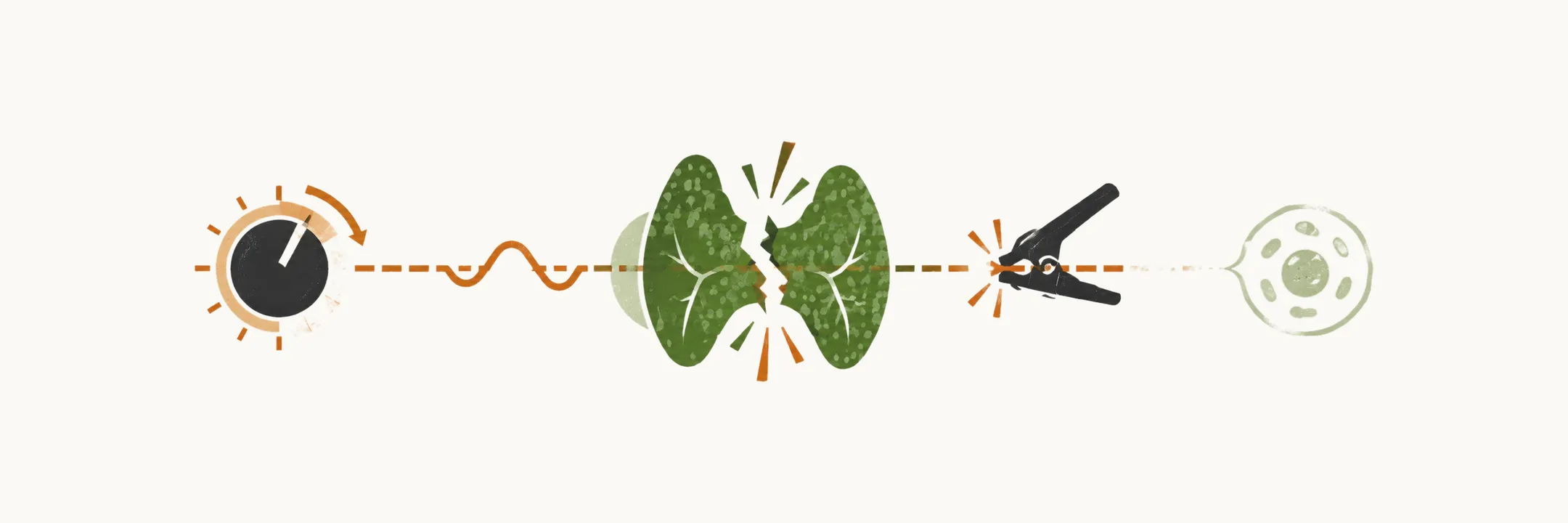
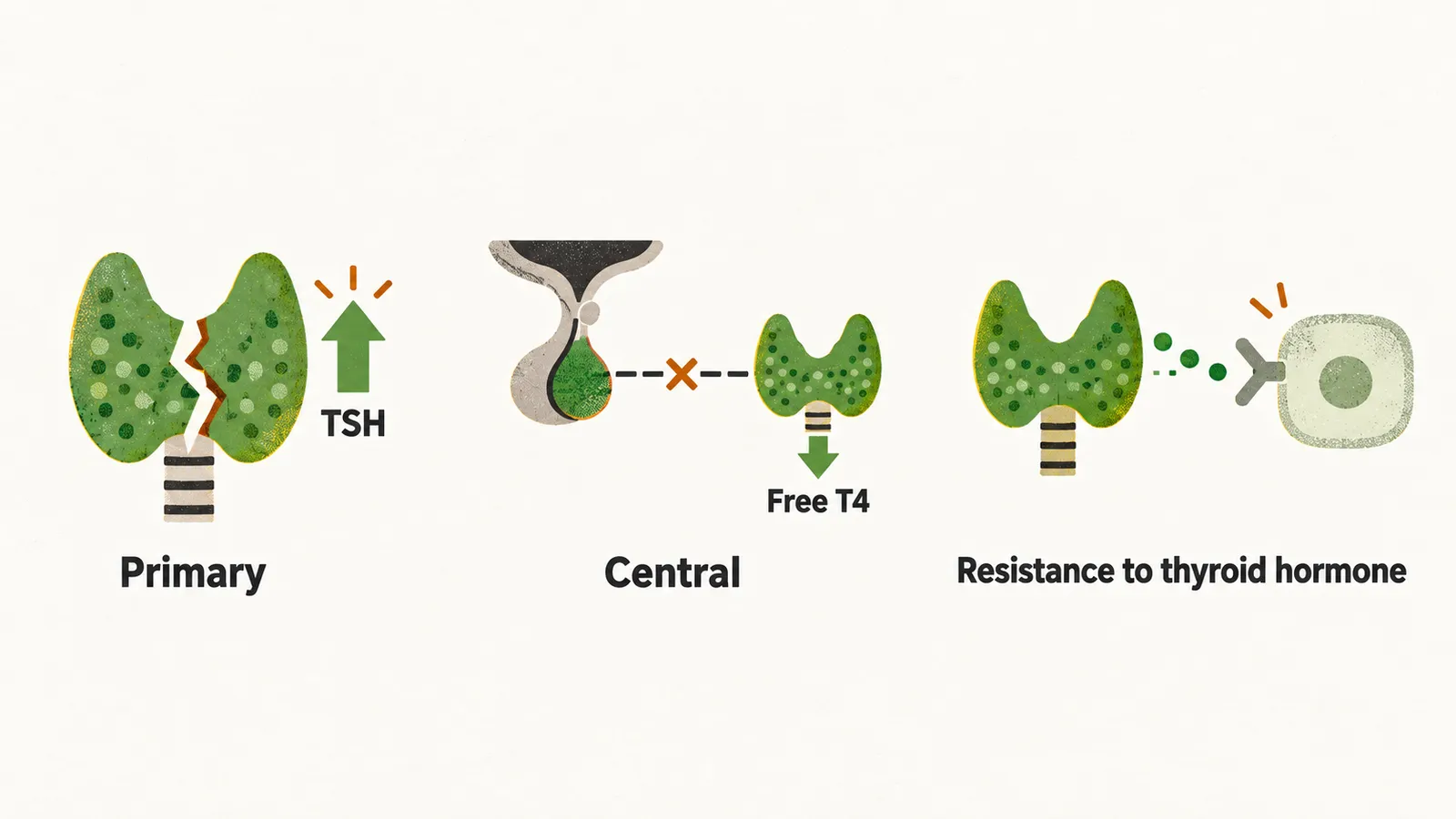
Hypothyroidism is low production of thyroid hormone, but it matters where the failure begins, because the site of the fault decides which test can be trusted and what treatment is needed. When the thyroid gland itself cannot make enough hormone, the condition is primary. When the gland is capable but the pituitary supplies too little TSH (thyroid-stimulating hormone), the signal that drives it, the condition is central.
The distinction has a direct consequence. In primary hypothyroidism the pituitary is healthy, so it senses the falling hormone and raises TSH; that exaggeration is what makes TSH the sensitive first test. In central hypothyroidism the pituitary cannot mount that response, so TSH may be low, normal, or even slightly raised, and the free T4 (thyroxine) level becomes the marker to follow instead.
A third group is not a failure of supply but of response. In resistance to thyroid hormone, usually caused by a mutation in the thyroid hormone receptor, the hormone level may be normal or high while the tissues respond poorly, so a person can show the features of hypothyroidism despite adequate hormone in the blood.
The main causes
Worldwide, iodine deficiency is the most common cause of hypothyroidism wherever dietary iodine is low, because iodine is required to build thyroid hormone. In iodine-sufficient areas the picture changes: autoimmune thyroiditis, mainly Hashimoto’s thyroiditis, becomes the most common cause, and iatrogenic hypothyroidism — the result of treating hyperthyroidism by surgery, radioiodine, or antithyroid drugs, or of irradiation to the neck — comes next.
Beyond these, the remaining causes fall into groups by mechanism:
- Central hypothyroidism, from disease of the pituitary or hypothalamus, where the drive to the gland is lost
- Congenital hypothyroidism, present from birth, usually from a gland that never developed normally or from a defect in hormone synthesis
- Drug-induced hypothyroidism, from drugs that interfere with hormone synthesis or release, such as amiodarone and lithium
- Altered metabolism of thyroid hormone, meaning reduced conversion of the prohormone T4 into the active T3 or increased deactivation of the hormone
At the bedside, two causes deserve particular attention: autoimmune destruction, which develops slowly and can pass through a long subclinical phase, and the iatrogenic group, where the cause is already known from the patient’s treatment for hyperthyroidism. Distinguishing the central form matters because it changes which laboratory test is followed, since the TSH can no longer be trusted.