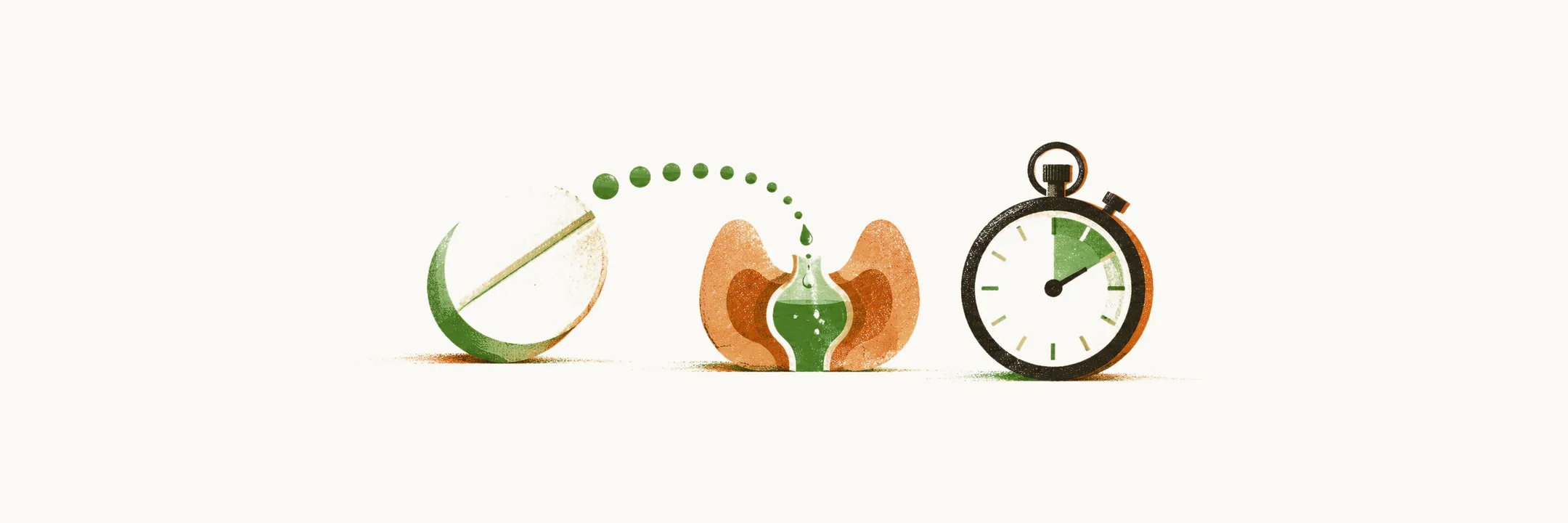
Treatment of hypothyroidism replaces the hormone the thyroid gland no longer makes. The standard preparation is levothyroxine, a synthetic form of T4 (thyroxine); because the body converts T4 into the active hormone T3 (triiodothyronine), giving T4 restores both, and levothyroxine is preferred over T3 preparations for its steady level in the blood. The exception is the newborn with congenital hypothyroidism, in whom replacement is started urgently and at a much higher weight-based dose than in adults.
Replacement in adults
In an otherwise healthy adult with overt primary hypothyroidism, a full replacement dose is about 1.6 mcg/kg per day.
The dose is not given at full strength to everyone, because a heart that has adapted to a low metabolic rate can be strained by a sudden increase in demand: when the hypothyroidism is mild, or when the patient is older or has cardiac disease, treatment starts lower and is built up gradually, and the milder the hypothyroidism and the more fragile the heart, the slower the build-up.
Because thyroid hormone increases the clearance of cortisol, replacement in a patient who may also have adrenal insufficiency — for example a patient with hypopituitarism — is preceded by glucocorticoid replacement, so that an adrenal crisis is not unmasked.
Absorption is affected by what is taken with the tablet. Levothyroxine is taken on an empty stomach, and calcium, iron, and drugs that reduce stomach acid are separated from it by several hours, because they bind it or reduce its absorption and can otherwise cause an unexplained rise in TSH.
Monitoring the dose
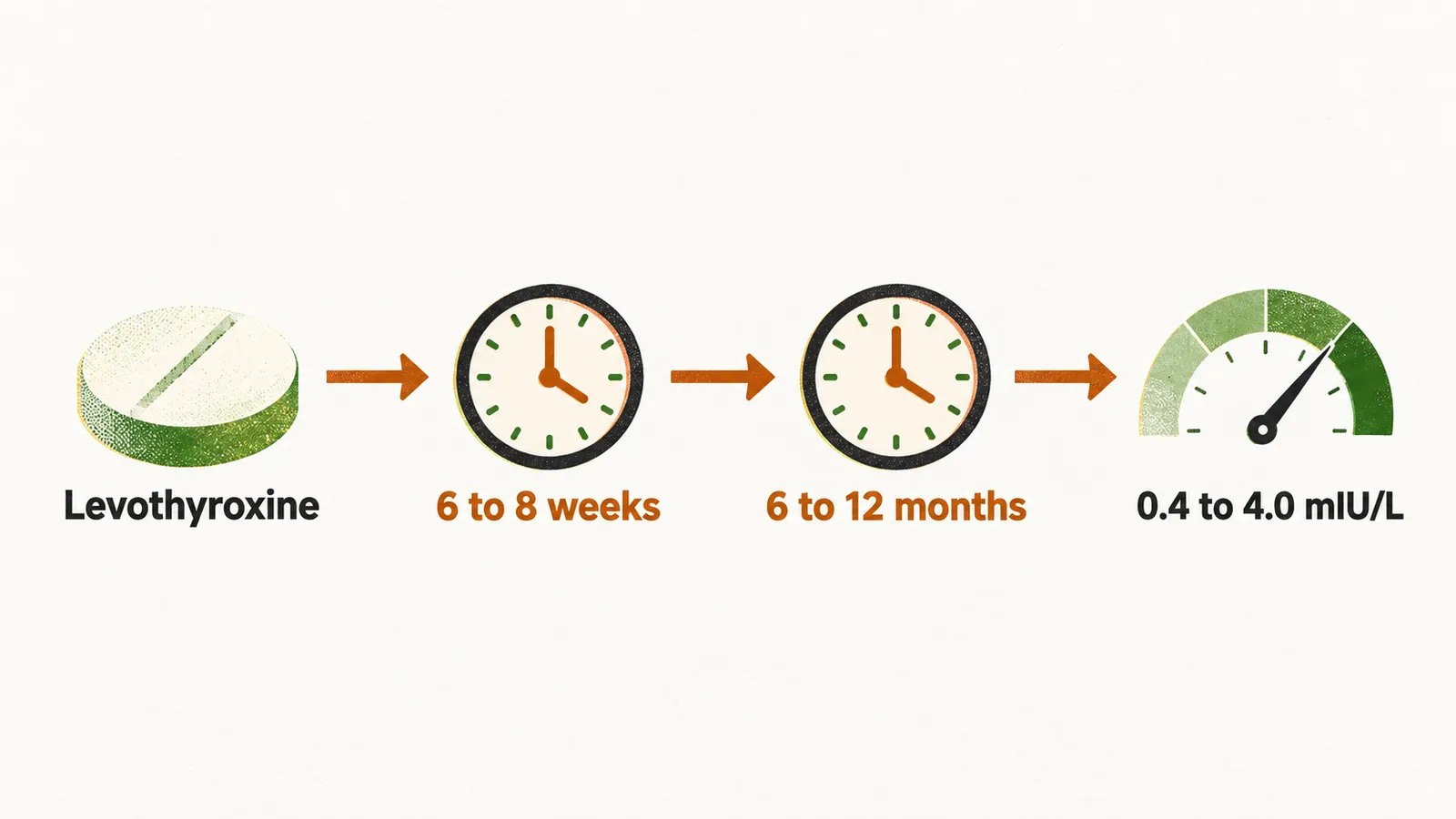
The dose is adjusted against the TSH (thyroid-stimulating hormone). Levothyroxine has a half-life of about 1 week, so the TSH has not yet settled immediately after a change; it is rechecked about 6 to 8 weeks after starting or changing a dose, and then every 6 to 12 months once the level is stable. The aim in primary hypothyroidism is a TSH within the laboratory reference range, roughly 0.4 to 4.0 mIU/L.
In central hypothyroidism the TSH cannot be used to guide treatment, because the pituitary is the part that is failing; the free T4 level is followed instead.
Subclinical disease and pregnancy
Not every raised TSH calls for full replacement. Subclinical hypothyroidism, a raised TSH with a normal free T4, is not automatically treated. A trial of levothyroxine is more reasonable when the TSH is above 10 mIU/L, when symptoms are present, or in pregnancy, while in older adults with a mildly raised TSH observation is often preferred, since the cardiovascular benefit is uncertain in that group.
In pregnancy, levothyroxine requirements rise, so the dose is usually increased and the TSH checked regularly through the pregnancy.
Myxedema coma
At the severe end of the spectrum, hypothyroidism can decompensate into myxedema coma: decompensated severe hypothyroidism with a decline in consciousness, hypothermia, bradycardia, hypotension, and hypoventilation, often with hyponatremia and hypoglycemia. It is an emergency with a high mortality, and treatment is started on clinical suspicion, before laboratory confirmation, so that treatment is not delayed. Management combines intravenous levothyroxine, in a loading dose followed by daily maintenance; stress-dose hydrocortisone given before or with the thyroid hormone, because adrenal insufficiency may coexist and untreated adrenal insufficiency worsens with thyroid hormone; and supportive care — mechanical ventilation, careful fluid replacement, gentle rewarming, and treatment of any precipitating infection.