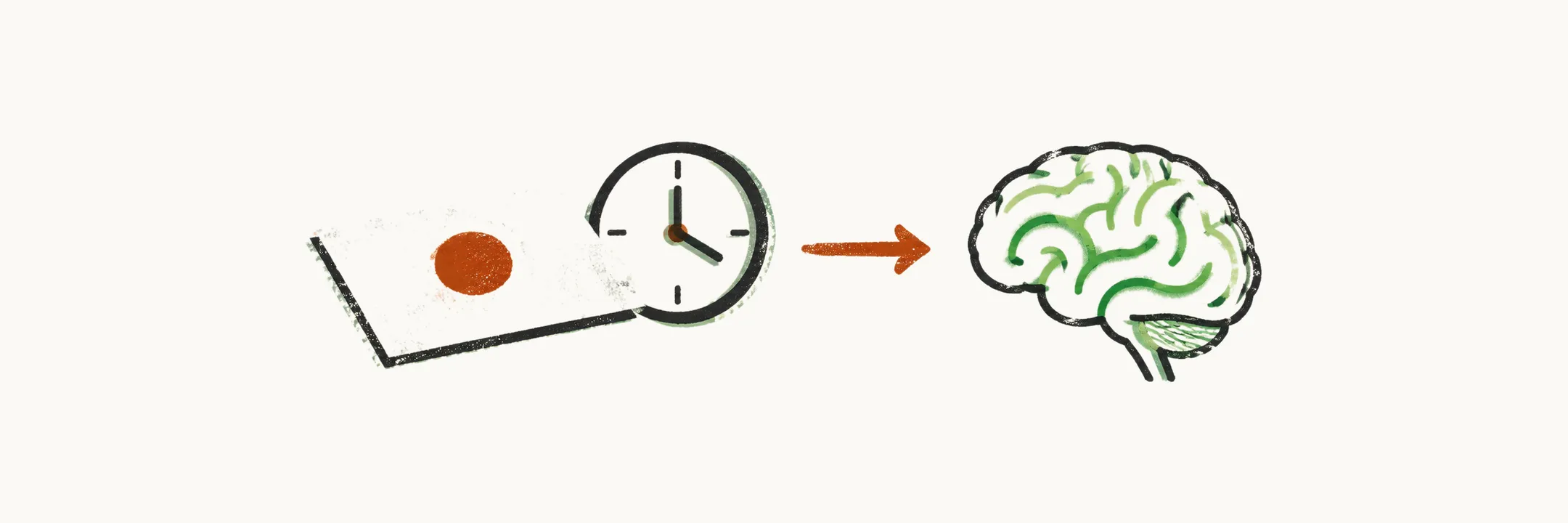
Congenital hypothyroidism is thyroid hormone deficiency that is present from birth. Most cases are found by screening rather than by clinical signs, because at birth the signs are subtle and non-specific, while the damage that low thyroid hormone does to the developing brain is already underway. The delay between birth and the appearance of obvious signs is therefore the reason screening exists: treatment started in the first weeks protects development, and treatment started late does not recover it.
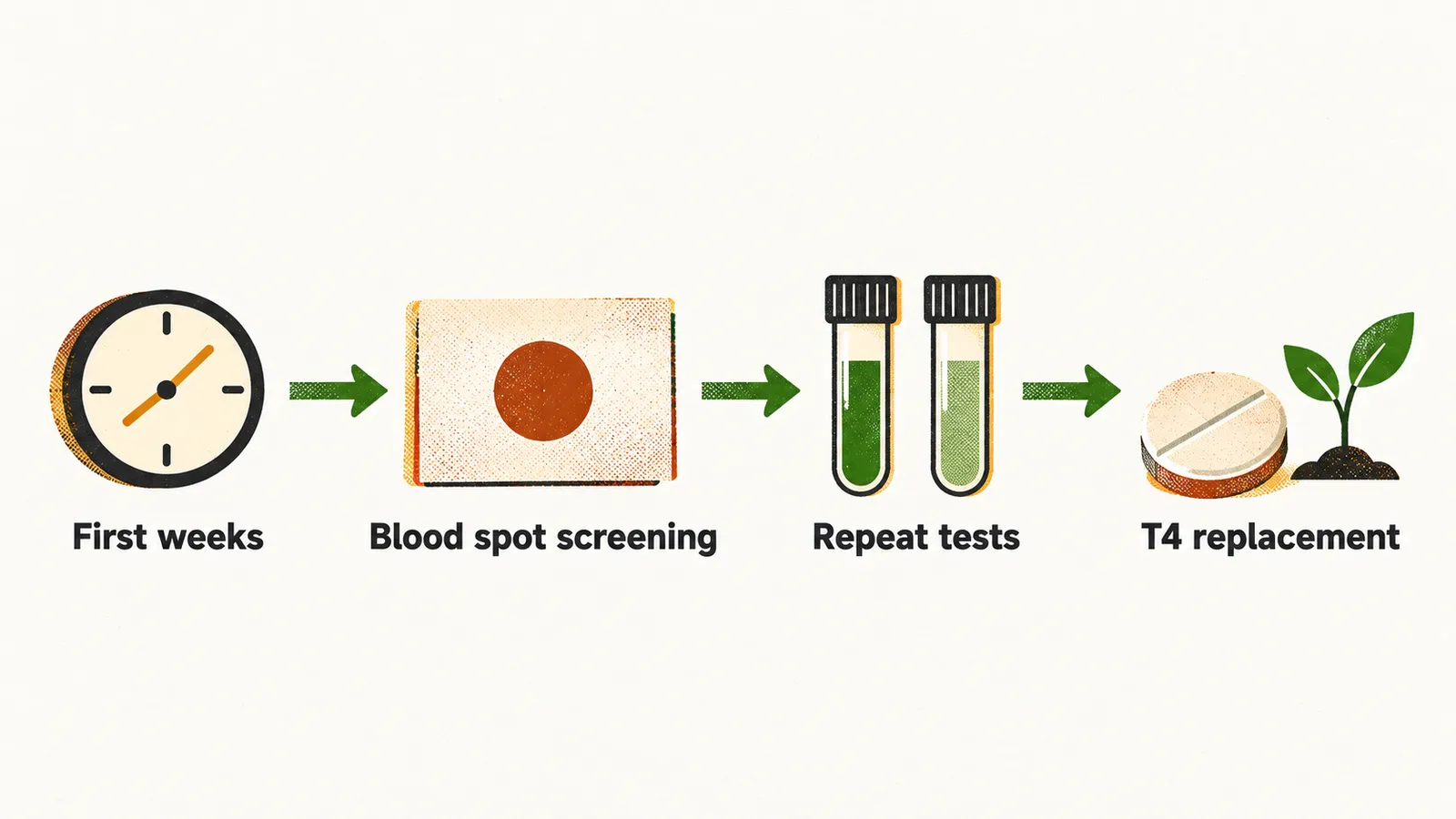
The prevalence is about 1 in 2000-4000 newborns, and most industrialized countries screen for it. Screening measures TSH and T4, usually on a blood spot taken a few days after birth, once the normal postnatal surge of TSH has settled.
Before birth, thyroid hormone passes across the placenta from the mother, so a fetus with congenital hypothyroidism is not hormone-deficient in the womb; the deficiency appears only when that maternal supply ends at delivery.
Causes
The main causes of congenital hypothyroidism are:
- thyroid gland dysgenesis, in 65% of cases, in which the gland has not developed normally; it is twice more common in females than in males
- dyshormonogenesis, an error in thyroid hormone synthesis, in 30% of cases
- TSH-R (TSH receptor) blocking antibodies, in 5% of cases
The mutations responsible fall into three groups: those related to the TRH/TSH axis, the hypothalamic and pituitary control of the gland; those related to gland dysgenesis; and those related to hormone synthesis, or dyshormonogenesis.
A minority of newborn cases are transient rather than permanent, and these are caused by TSH-R blocking antibodies from the mother that cross into the newborn, or by the mother’s use of antithyroid drugs. Recognizing the transient group matters because it resolves as the maternal antibodies clear.
Clinical features
Only a minority of newborns with congenital hypothyroidism are diagnosed on clinical grounds; most are found during screening. When signs are present, the main ones are:
- prolonged jaundice
- feeding problems
- hypotonia (reduced muscle tone)
- an enlarged tongue
- delayed bone maturation
- umbilical hernia
- delayed neurological development when treatment is delayed
- a higher risk of cardiac malformations, about four times that of unaffected newborns
Diagnosis and replacement
Screening is based on measuring the TSH and T4 levels; a screening result that suggests the condition is confirmed by repeat thyroid function tests and, where available, imaging of the gland. Once the diagnosis is confirmed, T4 replacement is started at a dose of 10-15 microgram per kg per day, and the dose and development are followed closely. Hypothyroidism that begins later in life, in a gland that developed normally, raises a different question: what damaged the gland, which in iodine-sufficient areas is often an autoimmune attack.