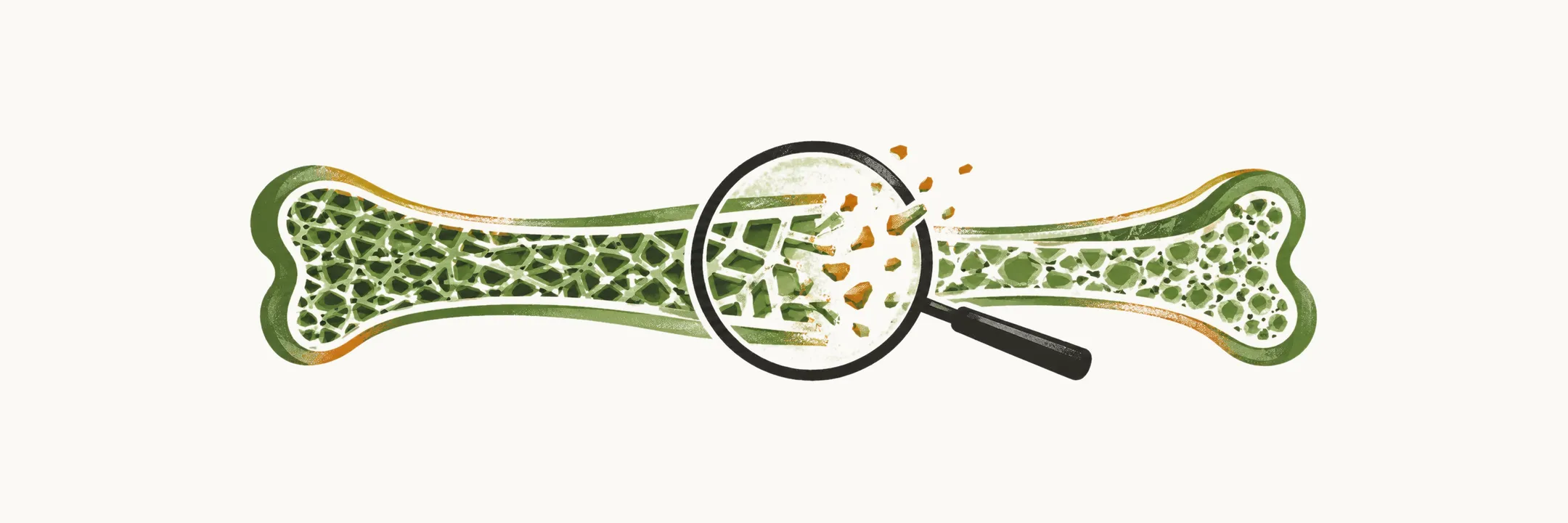
Osteoporosis is a disorder in which bone mass and bone microarchitecture, the internal structure of the bone, both deteriorate, so the skeleton becomes fragile and fractures more easily than expected. Bone strength depends on how much bone there is and on how well it is built, and osteoporosis affects both.
Osteoporosis usually develops when bone remodelling, the continuous cycle in which old bone is resorbed and new bone laid down, becomes unbalanced. Where that imbalance comes from separates the two main settings. Primary osteoporosis arises from the biology of ageing and from the loss of estrogen after the menopause, with no external cause. Secondary osteoporosis arises from another disease, a nutritional deficiency or a drug.
- Epidemiology of osteoporosis describes how common osteoporotic fractures are, who they affect most, and how their numbers have changed.
- Risk factors for osteoporotic fracture explains what raises the risk of fracture, from bone mineral density to bone-quality measures and the FRAX tool.
- Physiology and pathophysiology of osteoporosis works through how peak bone mass is acquired and lost, and which mechanisms shift remodelling toward resorption.
- Clinical manifestation of osteoporosis describes the fractures and other consequences of the disorder, and how the medical history is used.
- Diagnosis and risk assessment of osteoporosis covers the physical findings and the criteria and imaging that define the disease, and who should be tested.
- Secondary causes of osteoporosis sets out which diseases, deficiencies and drugs cause bone loss, and the tests that identify them.
- Treatment of osteoporosis describes the non-drug measures and the drugs that reduce fracture risk, and how treatment is sequenced and monitored.
A reader new to the topic can begin with the epidemiology, to see why the fractures matter, and then the pathophysiology, to understand how bone is lost. The clinical manifestation, diagnosis and treatment notes follow the course of a patient, with the risk factors and secondary causes available whenever those questions arise.