
Osteoporosis is a disorder of low bone mass and deteriorated bone structure, and it matters clinically mainly through the fractures it causes, so its epidemiology is largely the epidemiology of those fractures.
Counting the people affected depends on how the disorder is defined. It is estimated that more than 5 million American men are affected by osteoporosis, defined by the presence of either or both of:
- osteoporotic fractures, which are hip, vertebral compression, wrist, humerus or tibial fractures
- low bone mineral density, the amount of mineral in a given area or volume of bone, measured by a scan
Hip fractures are the clearest marker of the disorder, because virtually all of them can be attributed to osteoporosis, whether primary or secondary. Current estimates put the annual number of hip fractures at about 1.7 million in Europe and 0.3 million in the United States. Both hip fractures and vertebral fractures are about twice as common in women as in men.
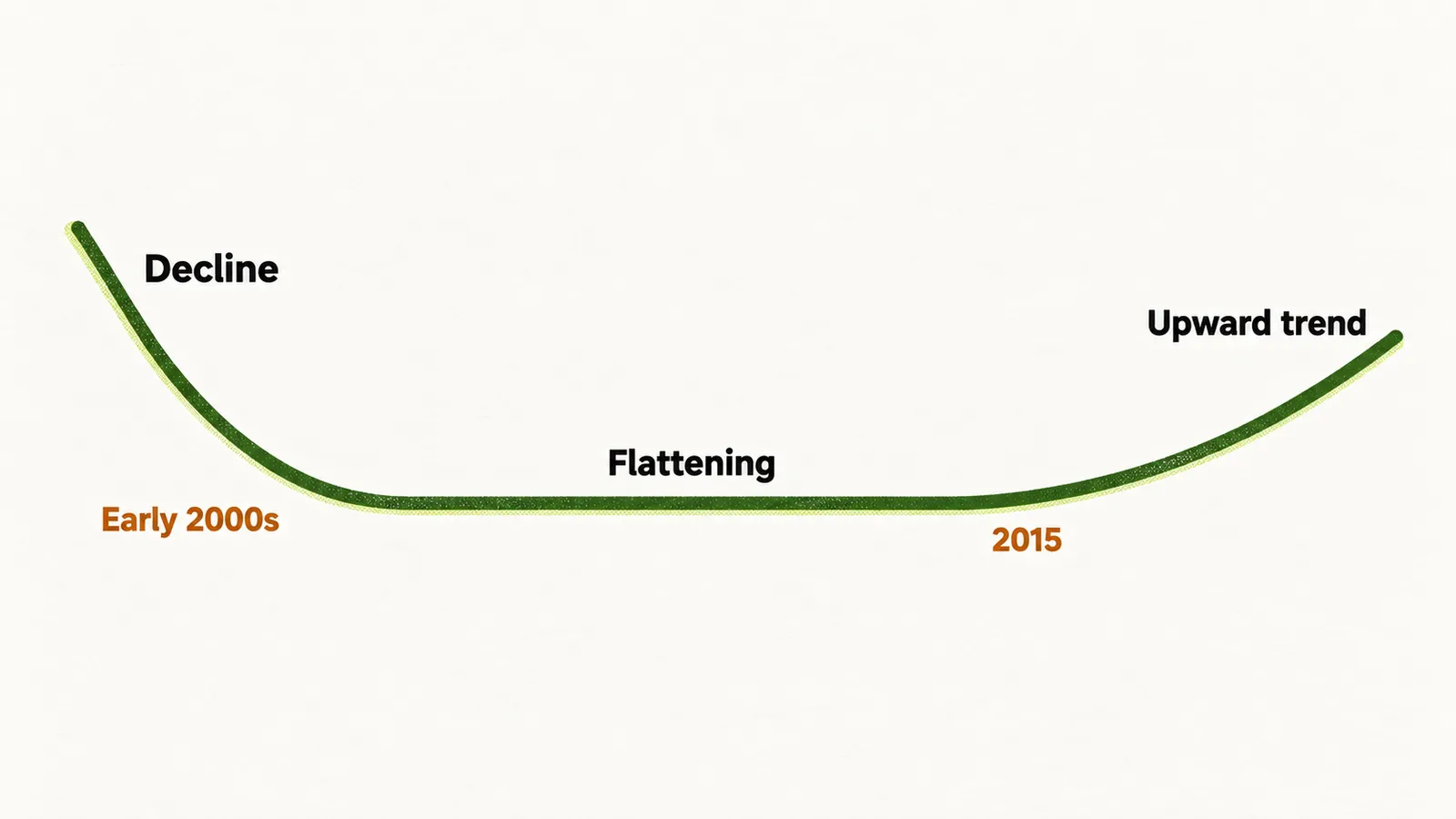
The trend in these fractures has not been steady. Annual hip fracture rates declined through the early 2000s, when effective treatments and clear prevention messaging became widely available, but from about 2015 they flattened and began to trend upwards again. Part of that reversal is attributed to the widespread reporting of atypical femoral fractures in patients treated with bisphosphonates and denosumab, which was followed by a fall in prescribing.
Two features of the disorder stand out. Treatment is frequently abandoned: more than 70% of the individuals diagnosed with osteoporosis do not adhere to treatment beyond one year. And the burden is easy to underestimate relative to the harm it causes: in women, fragility fractures, the fractures that occur with little force, are more numerous than myocardial infarction, stroke and invasive breast cancer combined, and a hip fracture carries a mortality of 20–24% within the first year.
With a burden this large, the practical question is which people are most likely to fracture, and what makes them so.