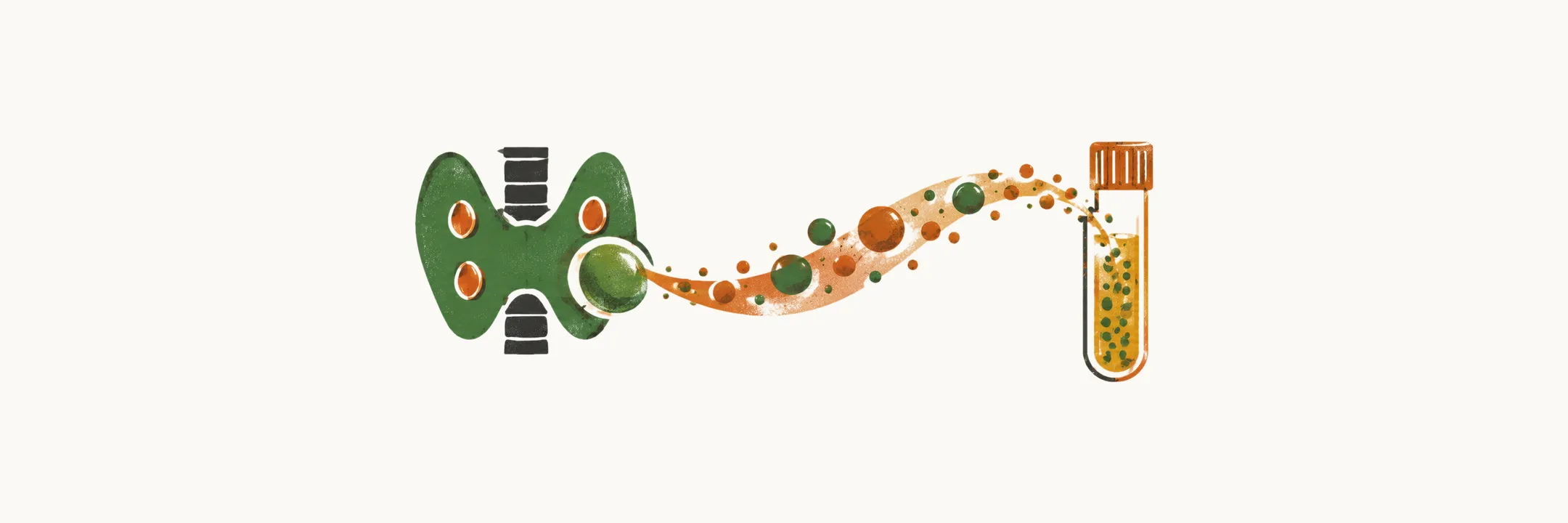
Primary hyperparathyroidism (PHPT) is the over-production of parathyroid hormone (PTH) by one or more parathyroid glands. Who develops the disease, how it was found and how it arises all shape how it presents.
Epidemiology
PHPT is a disease of middle-aged people, mostly diagnosed between 50 and 60 years of age, and it is more common in women, with a ratio of 3-4:1. Recent studies show that PHPT is also more common in African-American people.
Nowadays PHPT is not seen as severely as it was in the past, when it presented with nephrolithiasis (kidney stones), osteitis fibrosa cystica, sub-periosteal bone resorption, distal tapering of the clavicle and phalanges, salt-and-pepper erosions of the skull, and neuromuscular dysfunction and weakness.
The change came with the advent of automated laboratory techniques for the detection and measurement of hypercalcemia in the 1970s: since then, more than three fourths of patients with PHPT are diagnosed in their asymptomatic stage. The fall of the major complications across successive case series shows the shift (hypercalciuria means a high level of calcium in the urine; NR means not reported):
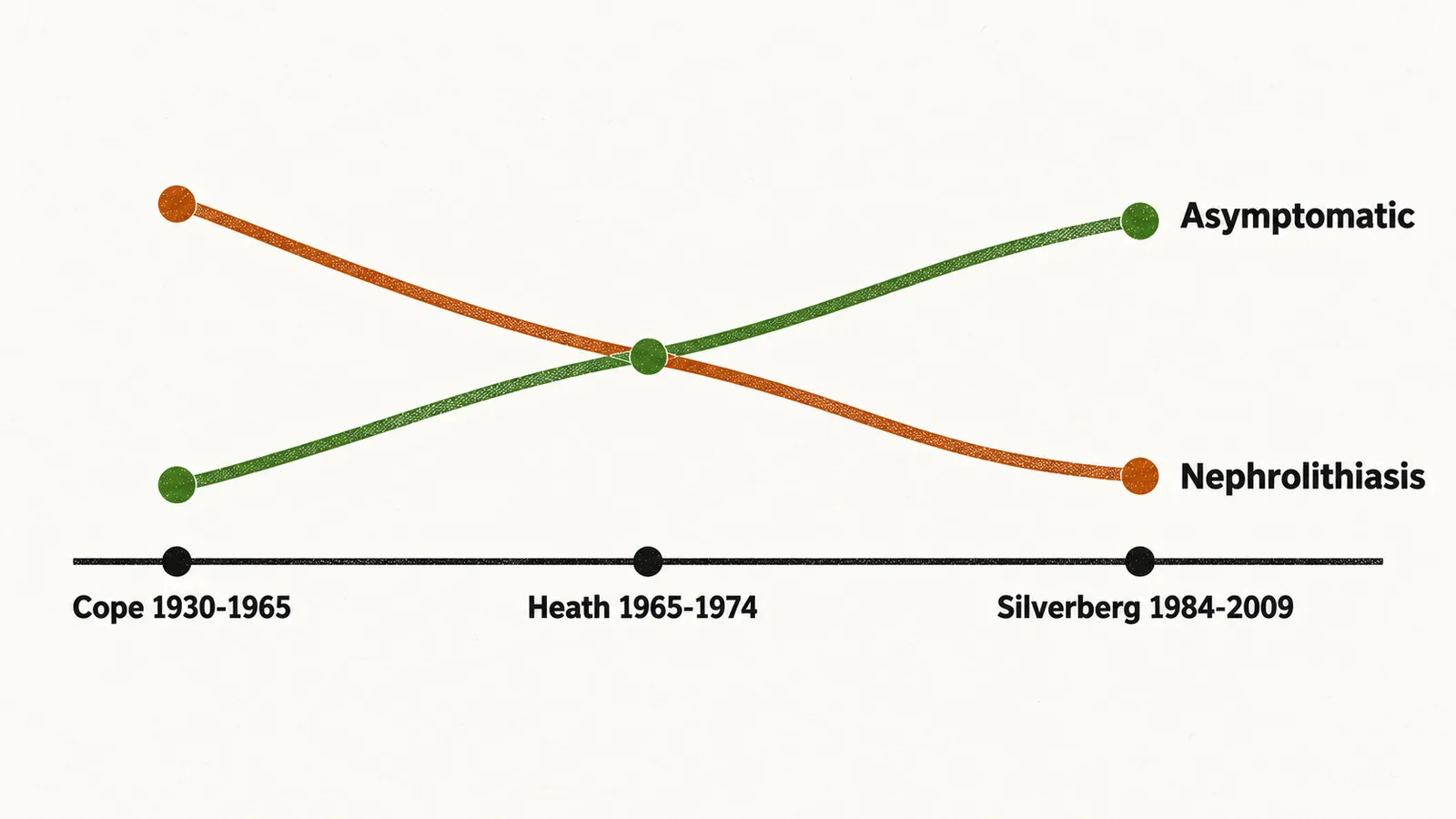
| Nephrolithiasis (%) | Skeletal disease (%) | Hypercalciuria (%) | Asymptomatic (%) | |
|---|---|---|---|---|
| Cope (1930-1965) | 57 | 23 | NR | 0.6 |
| Heath et al (1965-1974) | 51 | 10 | 36 | 18 |
| Mallette et al (1965-1972) | 37 | 14 | 40 | 22 |
| Silverberg et al (1984-2009) | 17 | 1.4 | 39 | 80 |
Another breakthrough in the diagnosis of PHPT happened in the 1990s, when screening for osteoporosis in postmenopausal women was introduced. After this point it was found that it is possible to have normocalcemia but a high level of PTH, which led to the introduction of a new entity of the disease called normocalcemic PHPT, or NPHPT.
Pathogenesis
The parathyroid glands normally sit as two pairs on the back of the thyroid gland, but they can also be found in ectopic locations, such as within the thyroid gland, the mediastinum, or within the thymus gland. An ectopic gland matters clinically because a gland in an unusual position can be missed during parathyroidectomy.
Primary hyperparathyroidism is caused by over-production of PTH from one or more of the parathyroid glands. In most cases the etiological cause of PHPT is not known, and it occurs sporadically. There are some risk factors associated with a higher incidence of PHPT, which are:
- lithium use
- external neck radiation
- chronically low calcium intake
- high body weight
By far the most common finding in patients with PHPT is a solitary parathyroid adenoma, which occurs in more than 80% of the cases. In the remaining cases more than one gland is involved, which changes the surgical plan. The risk factors for multiple parathyroid gland involvement are:
- MEN1 (multiple endocrine neoplasia type 1)
- MEN2 (multiple endocrine neoplasia type 2)
- lithium exposure