
Beyond the usual picture of primary hyperparathyroidism (PHPT), the disease can present in several unusual settings, and these change both the urgency and the differential diagnosis. They range from genetic disease of the newborn, through the effects of PHPT in pregnancy and a sudden hypercalcemic crisis, to parathyroid carcinoma and nodules of parathyroid-derived tissue in the soft tissues around the gland.
Neonatal primary hyperparathyroidism
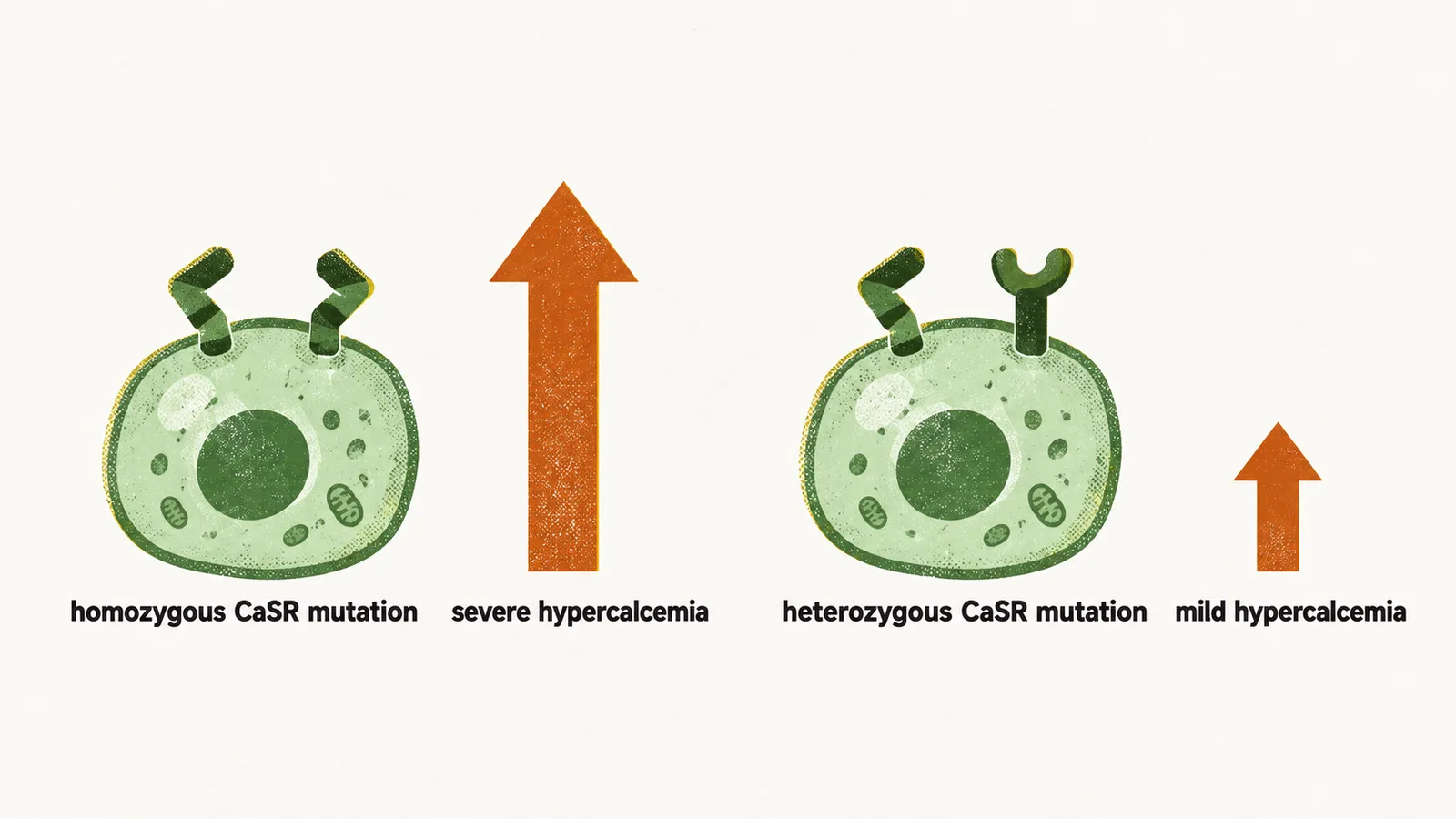
Neonatal forms of PHPT are rare conditions which are genetic and are associated with the calcium-sensing receptor (CaSR), the receptor that normally lets the parathyroid cell sense the calcium level and adjust its PTH release accordingly. A homozygous CaSR mutation (both gene copies affected) leads to severe and fatal hypercalcemia, while a heterozygous CaSR mutation (one copy affected) leads to mild and benign hypercalcemia, also known as familial hypocalciuric hypercalcemia, or FHH.
Primary hyperparathyroidism in pregnancy
PHPT during pregnancy raises important concerns about the effects it can have on the fetus and the neonate, which are commonly spontaneous abortion, low birth weight, and supravalvular aortic stenosis.
Neonatal tetany is another risk. The parathyroid gland of the fetus is suppressed during fetal life by the high exposure of the fetus to calcium, and the newborn is accustomed to that state; the resulting hypoparathyroidism leads to tetany and hypocalcemia during the first days of life.
Acute primary hyperparathyroidism
Acute PHPT is described as a sudden, life-threatening episode of hypercalcemia in patients with PHPT. It is also known as parathyroid crisis, parathyroid poisoning, parathyroid intoxication, and parathyroid storm.
In acute PHPT the findings commonly seen are nephrolithiasis, radiological evidence of subperiosteal bone resorption, and laboratory findings of a very high serum calcium together with a PTH concentration that is high, up to 20-fold, which resembles parathyroid carcinoma, the next form.
Parathyroid cancer
Parathyroid carcinoma accounts for 0.5% of PHPT. It is strongly associated with the hyperparathyroidism-jaw tumour syndrome, or HPT-JT, a rare autosomal dominant condition in which parathyroid carcinoma occurs in 15% of the cases; in contrast, it is only very rarely reported in MEN1 syndrome, in which the parathyroid tumours are almost always benign.
The clinical evidence that can be used for differentiating parathyroid carcinoma from benign PHPT is that in the former there is a far greater increase of serum calcium and PTH level. The clinical manifestations seen are nephrolithiasis in 60%, skeletal involvement on radiological imaging in 35-90%, and a palpable neck mass in 30-76%.
Parathyroid carcinoma can present with metastasis in a later stage, located mostly in the lung, liver, and lymph nodes.
Parathyromatosis
Parathyromatosis is characterised by the presence of nodules of parathyroid-derived tissue embedded in the surrounding soft tissues around the gland. The majority of cases of parathyromatosis have been reported in patients who have undergone parathyroid surgery for secondary hyperparathyroidism in the context of end-stage renal disease.