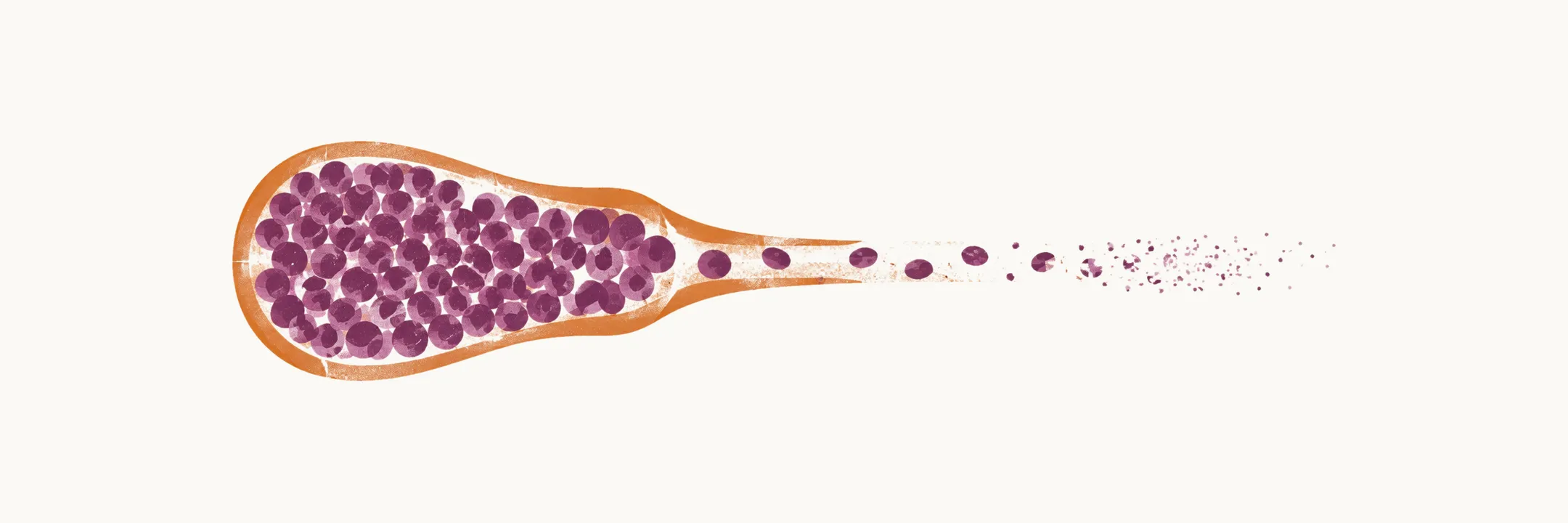
Myelodysplastic syndrome, or MDS, is a group of heterogeneous hematological disorders characterised by cytopenia (a low count of one or more blood cell types) due to bone marrow failure, and by a high risk of development of acute myeloid leukemia (AML). The marrow is not empty: a clone, meaning a population of hematopoietic stem cells descended from one abnormal cell, produces blood cells that are dysplastic (abnormal in appearance) and that do not mature and reach the blood normally.
The disease spans a spectrum. At the low-risk end, bone marrow failure dominates the course. At the high-risk end, excess myeloblasts (immature marrow cells) and the genomic abnormalities behind them are the defining problem. Where a patient sits on that spectrum decides the prognosis and the treatment.
Route through the topic
- Classification of Myelodysplastic Syndrome: FAB, WHO and ICC Systems follows the repeated reclassifications of MDS, from the FAB subtypes of 1982 to the criteria of the International Consensus Classification and the WHO 5th edition, and shows how the boundary with AML has moved.
- Epidemiology and Pathophysiology of Myelodysplastic Syndrome explains who develops MDS, the exposures and inherited conditions associated with it, and the disordered proliferation, differentiation and apoptosis that define the clonal disorder.
- Clinical Features of Myelodysplastic Syndrome explains the signs produced by each cytopenia, the share of patients who are asymptomatic, and the features that suggest transformation to AML.
- Laboratory Studies, Diagnosis and Differential Diagnosis of Myelodysplastic Syndrome explains the blood and bone marrow findings, the criteria that establish the diagnosis, and the conditions that have to be excluded first.
- Treatment of Myelodysplastic Syndrome explains how management is split by risk, from supportive care and anemia-directed agents in lower-risk disease to hypomethylating agents and allogeneic transplantation in higher-risk disease.
- Prognosis and Prognostic Scores of Myelodysplastic Syndrome explains the causes of death, the survival differences between subtypes, and the IPSS, IPSS-R and IPSS-M scoring systems.
The names and boundaries used throughout the topic come from classification, so it is the best place to begin. Epidemiology and pathophysiology then explain who is affected and what goes wrong in the clone. Clinical features and diagnosis show how that disease presents and is recognised, and treatment and prognosis close the topic, because both depend on the risk position that the earlier notes establish.