
Myelodysplastic syndrome (MDS) becomes apparent through the cytopenias it causes, and the symptoms follow whichever cell line is most affected. Because the clone is inefficient rather than absent, the deficit usually develops slowly, and the first clue is often a blood count rather than a complaint.
Signs and symptoms of the cytopenias
The most common clinical feature of early MDS is symptoms related to anemia (a low red-cell count), such as dyspnea, pallor, weakness and fatigue. When neutropenia (a low neutrophil count) is present, patients have repeated infections, and when thrombocytopenia (a low platelet count) is present, there are bleeding signs such as petechiae (small pinpoint skin hemorrhages), easy bruising and gingivitis.
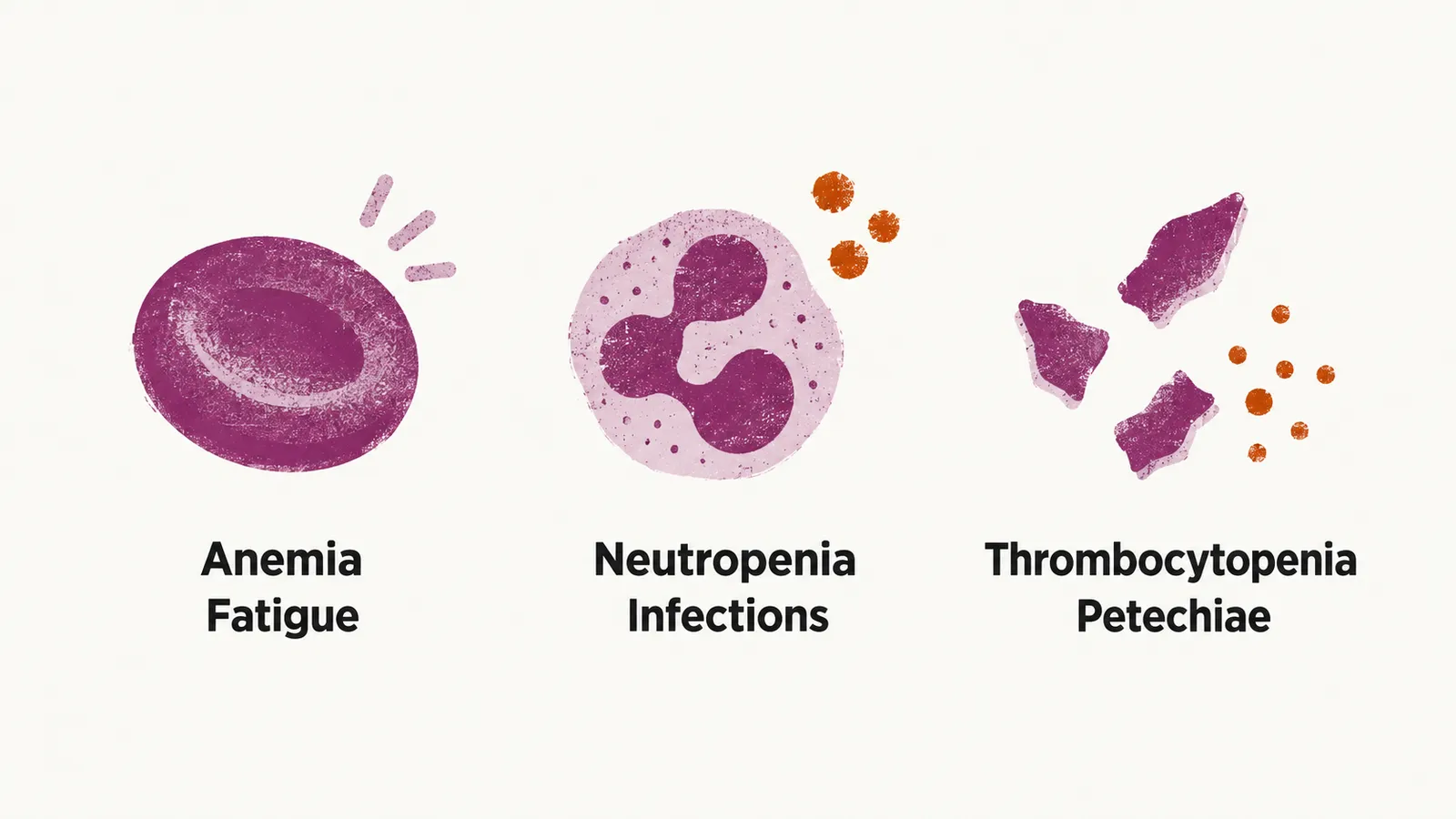
Not every patient has such symptoms. About half of the patients with MDS are asymptomatic, so they are diagnosed after an accidental blood test. Approximately 20% of patients with MDS have splenomegaly (an enlarged spleen), which is a reminder that MDS is a marrow disease but not confined to it.
Features that suggest transformation to acute myeloid leukemia (AML)
The presence of systemic symptoms such as weight loss, night sweats and fever is mostly indicative of transformation to AML, the leukemia into which MDS can progress. The cytopenias change as the disease progresses, and these symptoms mark a shift in its behaviour.
Associated autoimmune and inflammaging-related disorders
MDS is also associated with disease outside the marrow. Studies show that the chance of having autoimmune disorders (conditions in which the immune system attacks the body’s own tissues) in patients with MDS is significantly higher than in control groups; the most prevalent autoimmune disorders in these patients are hypothyroidism, rheumatoid arthritis and psoriasis.
Besides the higher chance of autoimmune disease in MDS patients, the chance of suffering from the related disorders of inflammaging (chronic low-grade inflammation that accompanies aging) is also higher:
- heart disorders
- lung disorders
- metabolic disorders
- bone and joint disorders
Whether a low blood count or a combination of these features really reflects MDS is decided by the laboratory findings and the diagnostic criteria.