Headache pain is not brain pain in the simple sense, because brain tissue itself is mostly insensitive to pain. Headache arises when pain-sensitive structures around the brain and skull are activated: meninges (the membranes covering the brain), blood vessels, cranial nerves, cervical nerves, and the trigeminal pain system.
Migraine is a network disorder, not just dilated vessels
Older teaching described migraine as vasospasm followed by vasodilation. Vascular change matters, but migraine is better understood as a network disorder involving brainstem activation, hypothalamic modulation, trigeminal pain fibers, meningeal vessels, and inflammatory neuropeptides (small signaling proteins released by nerve cells).
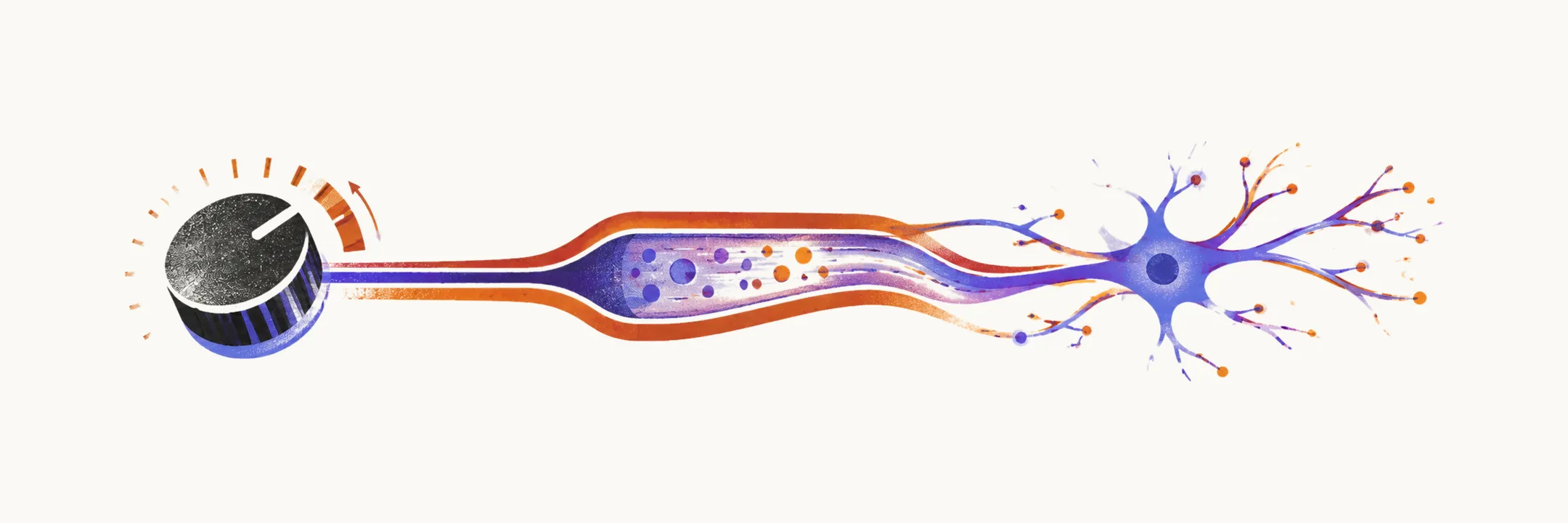
Calcitonin gene-related peptide (CGRP) is central to this picture. CGRP is released from trigeminal sensory pathways, dilates meningeal vessels, and amplifies inflammatory pain signaling around the meninges. Think of it less as a single migraine molecule and more as a volume knob on the trigeminal pain system: when it runs high, meningeal vessels and pain pathways get louder. This is why CGRP monoclonal antibodies (antibodies that block CGRP signaling) can prevent attacks in selected patients with frequent or resistant migraine.
Cortical spreading depression explains aura
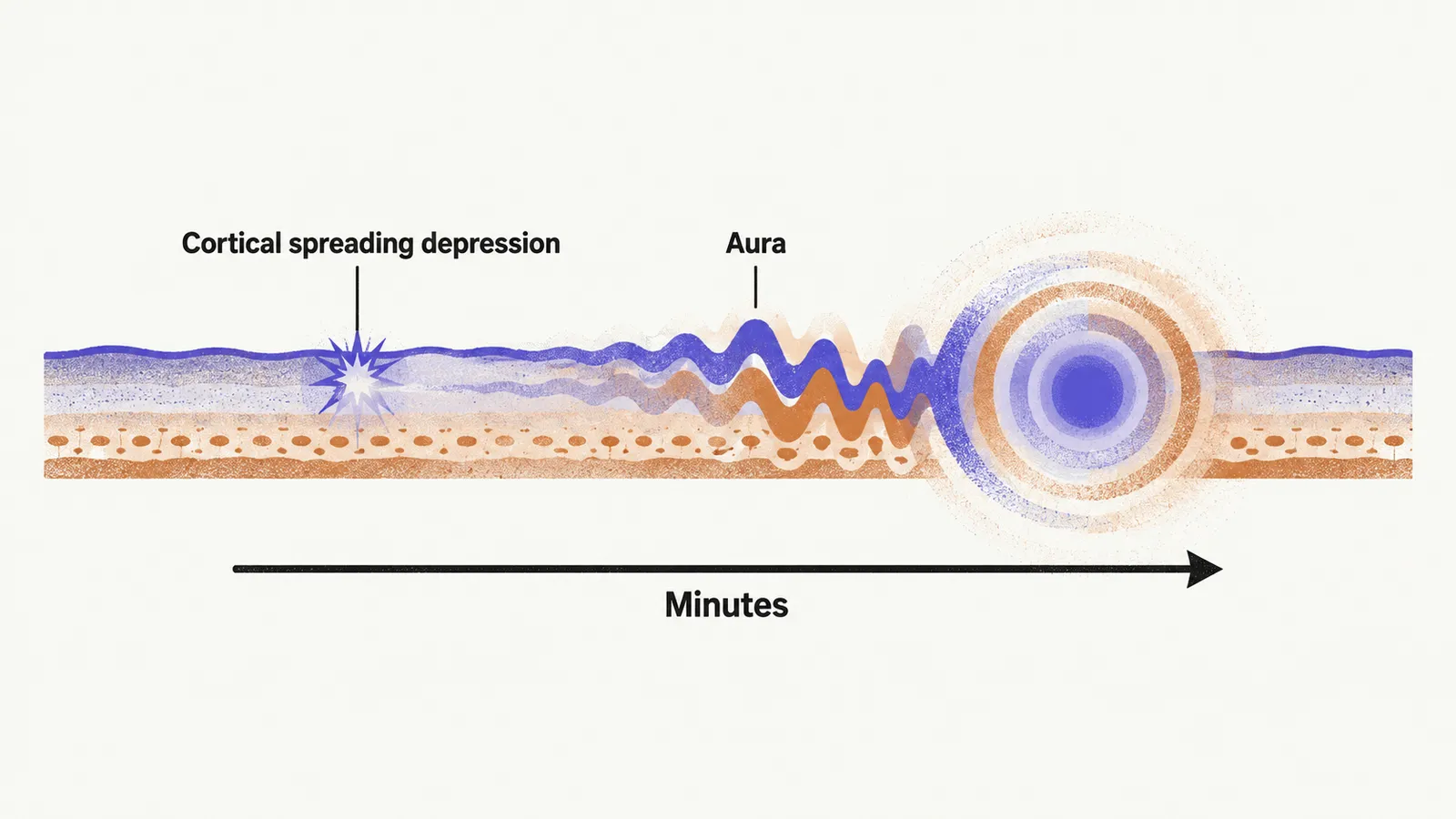
The network model must also account for aura, the temporary neurological symptoms that precede or accompany the headache in some patients. Cortical spreading depression (CSD) is a slow wave of altered neuronal and glial activity that travels across the cortex. In migraine with aura, this wave can disturb visual, sensory, or language areas and produce temporary positive and negative symptoms. Because the disturbance spreads across cortical tissue, aura often evolves gradually over minutes rather than appearing instantly: a visual aura may begin as shimmering lights or a blind spot and then spread across the visual field. The headache phase can follow because spreading depression can activate trigeminal meningeal pain pathways, so aura is part of the mechanism that feeds into pain, not merely a warning.
Why triptans work, and why they carry vascular risk
Triptans are the drugs that act on this same pain system in the acute attack. They are serotonin 5-hydroxytryptamine (5-HT) receptor agonists, principally at 5-HT1B and 5-HT1D receptors. Their logic is mechanical: 5-HT1B activation constricts cranial vessels dilated during the attack, while 5-HT1D activation reduces trigeminal neuropeptide release, including CGRP. Together this dampens both the vascular and the neurogenic inflammatory parts of the attack. The same vasoconstriction explains the danger: a drug that constricts cranial vessels can also constrict coronary arteries, which is why triptans are avoided in patients with significant ischemic heart disease or high vascular risk.
Cluster headache: trigeminal pain with autonomic signs
Migraine is not the only primary headache with a trigeminal pain pathway. Cluster headache belongs to the trigeminal autonomic cephalalgias (TACs). The trigeminal part explains the severe unilateral orbital, supraorbital, or temporal pain; the autonomic part explains the red eye, tearing, nasal congestion, eyelid swelling, sweating, small pupil, and drooping eyelid on the same side. The hypothalamus probably helps explain the clock-like pattern of cluster attacks, which may strike at similar times of day or in repeated bouts across weeks. That periodicity is one reason cluster headache feels biologically different from ordinary migraine.
Mechanism predicts treatment
CGRP biology explains CGRP antibodies for prevention, serotonin receptor biology explains triptans for acute migraine, trigeminal-autonomic activation explains the autonomic signs of cluster headache, and indomethacin responsiveness identifies paroxysmal hemicrania and hemicrania continua. The therapeutic consequences are developed in Headache Treatment. Applying any of this begins with deciding which pattern, or which secondary cause, is present, which is the work of Headache Diagnosis.