Headache treatment works best when it follows the diagnosis. Migraine, tension-type headache, cluster headache, paroxysmal hemicrania, and medication-overuse headache are not treated with the same logic. The organizing split is acute treatment, which tries to stop the current attack, versus preventive treatment, which tries to make future attacks less frequent, less intense, or shorter.
Acute migraine: start simple, escalate by severity
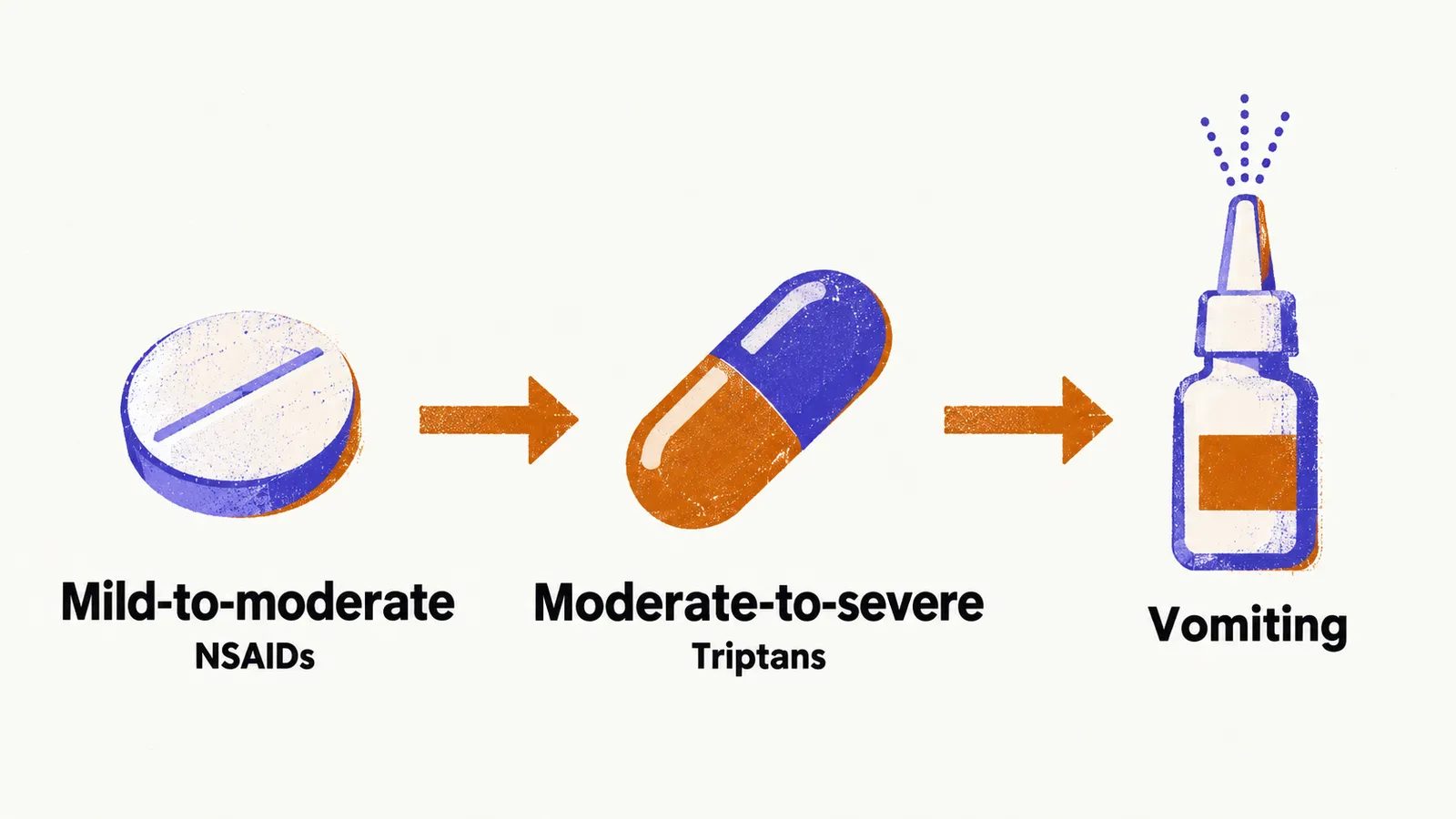
Mild-to-moderate migraine attacks are often treated first with acetaminophen or non-steroidal anti-inflammatory drugs (NSAIDs) such as ibuprofen, which targets the inflammatory pain signaling around meningeal vessels and trigeminal pathways early in the attack. Moderate-to-severe attacks, or attacks unresponsive to simpler drugs, often need triptans: serotonin (5-hydroxytryptamine, 5-HT) receptor agonists that reduce trigeminal neuropeptide release and constrict cranial vessels.
Timing matters. Triptans work better early, before the attack is fully established. Once vasodilation, central sensitization, nausea, and vomiting are advanced, an oral tablet may be too late or may not stay down. When migraine causes vomiting, the delivery route matters for its own pharmacological reason: nasal or subcutaneous options can make sense even with the same drug.
Triptan safety follows the mechanism
Triptans constrict vessels, which is part of why they work and also why they can be risky in ischemic heart disease, significant vascular disease, uncontrolled hypertension, or high-risk vascular profiles. The principle is a chain rather than a random contraindication: triptan action includes vasoconstriction, and vasoconstriction threatens an already vulnerable coronary circulation.
Migraine prevention: treat the frequency, not just the attack
Acute treatment addresses one attack, but preventive treatment enters consideration when attacks are frequent, disabling, or long, or when acute medication use grows excessive. Success does not always mean zero headaches; reducing the number, duration, and intensity of attacks can be a good outcome. Options include beta-blockers, antiepileptic drugs such as topiramate and valproate, antidepressants such as amitriptyline, botulinum toxin for chronic migraine, and CGRP monoclonal antibodies (antibodies against calcitonin gene-related peptide, a pain-signaling neuropeptide) for selected frequent or resistant migraine. Which patient receives which drug depends on comorbidities, contraindications, pregnancy potential, adverse-effect profiles, and local guidelines rather than a single fixed ladder.
Tension-type headache: prevention and trigger strategy
Prevention matters most once tension-type headache is frequent, and frequent tension-type headache needs prevention more than stronger rescue doses. Simple advice about the causes and consequences of medication overuse works in primary care, and an explanatory brochure supports that advice. Regular sleep, exercise, diet, and hydration schedules help, alongside alcohol restriction. A headache diary helps identify personal triggers. These measures are often sufficient alongside appropriate medication.
Cluster headache needs fast tools and bout suppression
Cluster attacks are short and brutal, so slow oral drugs are often useless for the acute attack. Oxygen and sumatriptan are the emphasized acute tools. Prevention works on a different timescale: verapamil is the classic preventive, with lithium used in selected cases, aiming to suppress the cluster period (the run of repeated attacks across weeks) rather than only rescuing each attack.
Indomethacin response is diagnostic
Among the related trigeminal autonomic cephalalgias, treatment response separates two syndromes from the rest. Paroxysmal hemicrania and hemicrania continua respond completely to indomethacin, a non-steroidal anti-inflammatory drug, and that response is part of the identity of each syndrome rather than mere treatment trivia. Short unilateral autonomic attacks with complete indomethacin response point toward paroxysmal hemicrania; continuous one-sided headache with flares and complete response points toward hemicrania continua.
Medication overuse: the treatment is withdrawal
Medication-overuse headache is the loop in which acute medication relieves individual attacks but sustains chronic headache through overfrequent use. Treatment requires reducing or withdrawing the overused medication while building a safer long-term plan. That can feel backwards to patients because the drug works in the short term, so the clinician has to explain the loop clearly.
Post-dural puncture headache and blood patch
Post-dural puncture headache follows cerebrospinal fluid (CSF) leakage after lumbar puncture or neuraxial procedures. Low CSF pressure lets pain-sensitive structures tug when the patient is upright, so an epidural blood patch treats the cause by sealing the leak rather than masking the pain. The clinical picture is detailed in Headache Secondary Causes.
Treatment follows the pattern
Choosing among these treatments depends on separating the primary patterns correctly. The features that separate migraine, tension-type headache, and cluster headache are compared side by side in Migraine versus Tension-Type versus Cluster Headache.