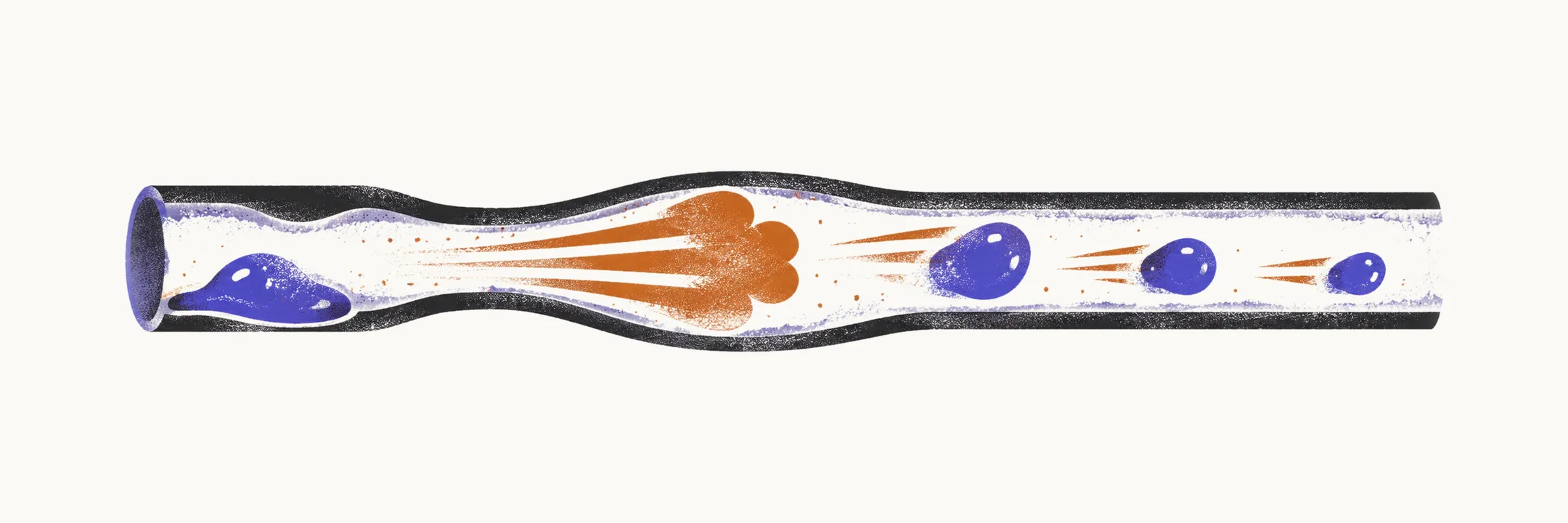
Cough is the manoeuvre that clears secretions from the airway, and in neurological disease it is not only a symptom to record but a function to measure. Retained secretions are a route to chest infection and to further respiratory failure, so a weak cough is treated as its own problem rather than as a detail of the underlying disease.
Measuring cough strength
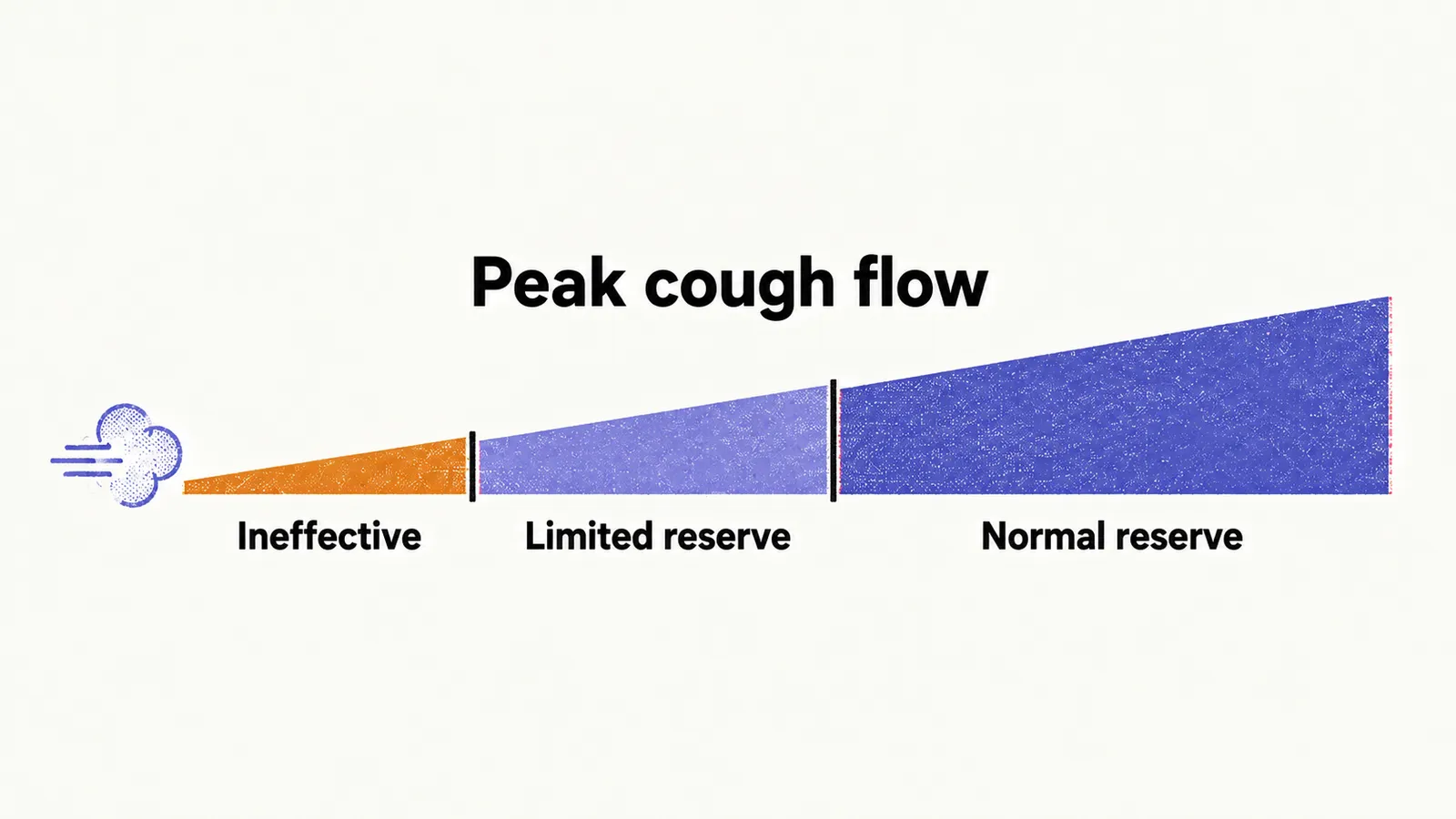
Peak cough flow — the fastest expiratory flow a cough can produce, measured in litres per minute — is used as a reserve gauge, showing how much cough strength the patient has in reserve. Roughly above 270-280 is normal reserve, roughly 180-270 is limited reserve, and below roughly 180 is ineffective. These bands align approximately with the published cough-augmentation literature, which commonly uses cutoffs near 270 L/min for a cough at risk and near 160 L/min for ineffective clearance, though exact values differ between reviews.
Supporting a weak cough
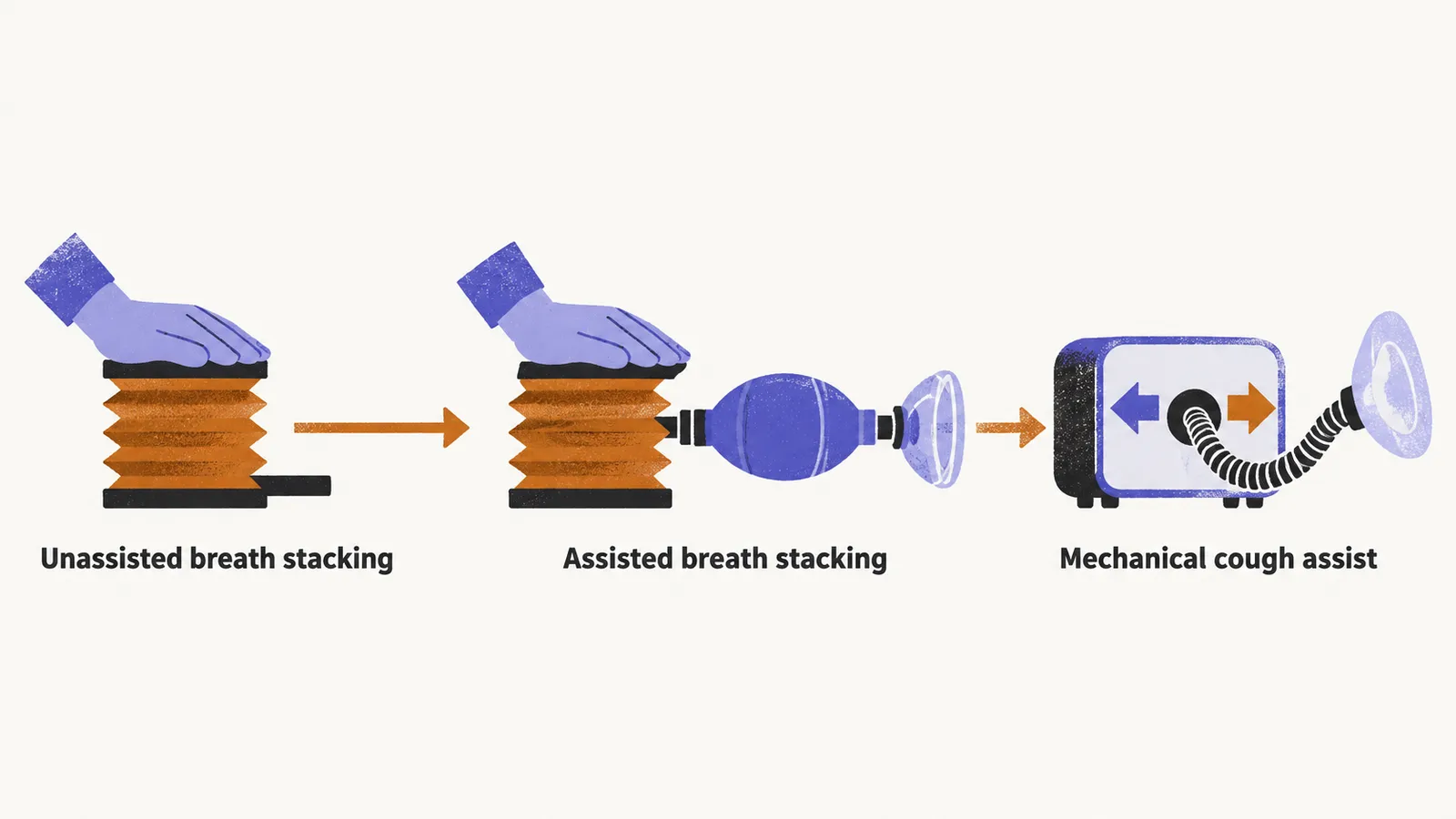
Once the measurement shows a weak cough, there are several ways to support it. Air stacking, also called breath stacking, means taking successive breaths without exhaling so that the cough starts from a larger lung volume. Mechanical cough assistance uses mechanical insufflation-exsufflation, in which the device delivers a positive-pressure breath and then negative pressure to imitate a cough. A manually assisted cough, in which a caregiver or clinician supports the cough by hand, is the other basic technique, and an optional thoraco-abdominal thrust can be added.
These techniques are used in steps. Guidance for motor neuron disease escalates: unassisted breath stacking or a manual assisted cough first, then assisted breath stacking, for example with a lung volume recruitment bag (a hand-held bag that delivers larger breaths), when these are not enough, and then a mechanical cough assist device when assisted breath stacking is not effective or during a respiratory tract infection. Whichever method is used, the device is chosen for the patient, its effectiveness is checked, and comorbidities such as chronic obstructive pulmonary disease are taken into account.
A caution about secretions
One caution matters throughout. When cough is weak, measures that increase or thin secretions without improving clearance can worsen the situation rather than help.
Clearance protects the airway, but it only works while there is still enough ventilation to move air. When the pump can no longer sustain ventilation itself, it has to be supported.