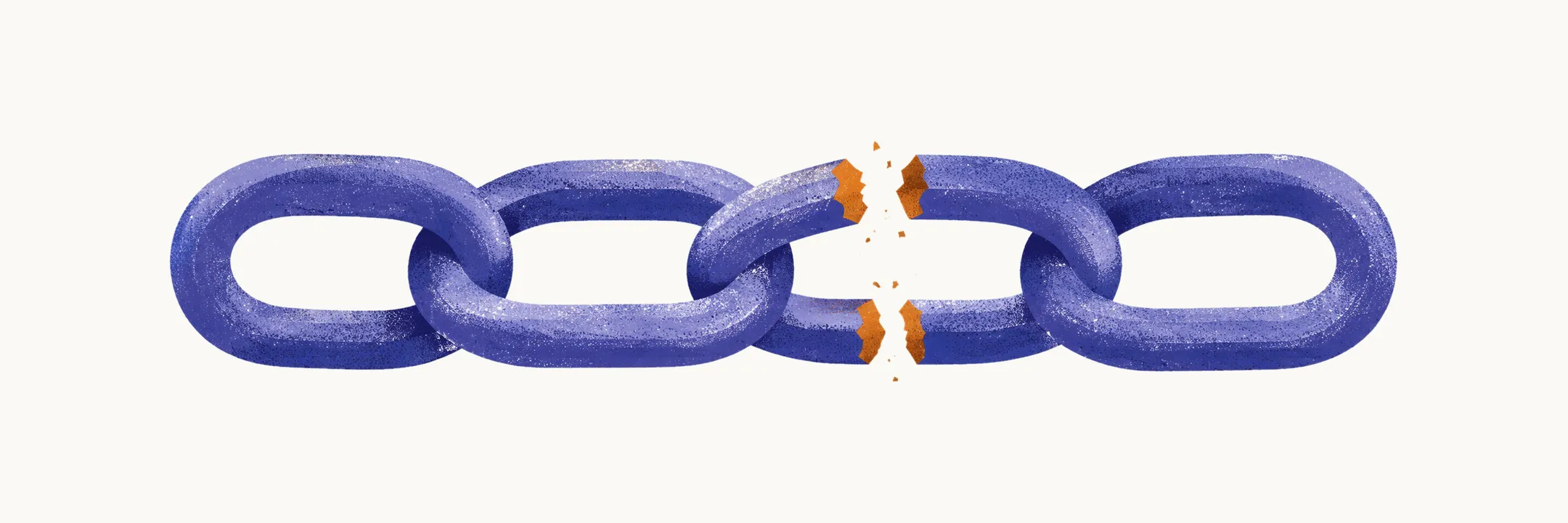
Ventilatory failure means that the respiratory system cannot maintain adequate arterial oxygenation, cannot clear carbon dioxide, or both. In neurological disease the failure often begins outside the lungs, in the machinery that moves air. The drive to breathe, the nerves that carry the signal to the respiratory muscles, the muscles themselves, the chest wall that contains them, and the cough that clears secretions can each be the weak link, while the lungs still exchange gas.
Four mechanisms outside the lungs
Ventilatory failure that begins outside the lungs is conventionally grouped into four mechanisms. The drive from the respiratory centres, the brainstem regions that generate each breath, can be depressed, as with opioids and sedatives. A lesion of the neural conduction pathways can interrupt the signal before it reaches the muscles. The respiratory muscles themselves can be diseased. The chest wall can be restricted, so the lungs cannot fill even when drive, nerves and muscles are intact.
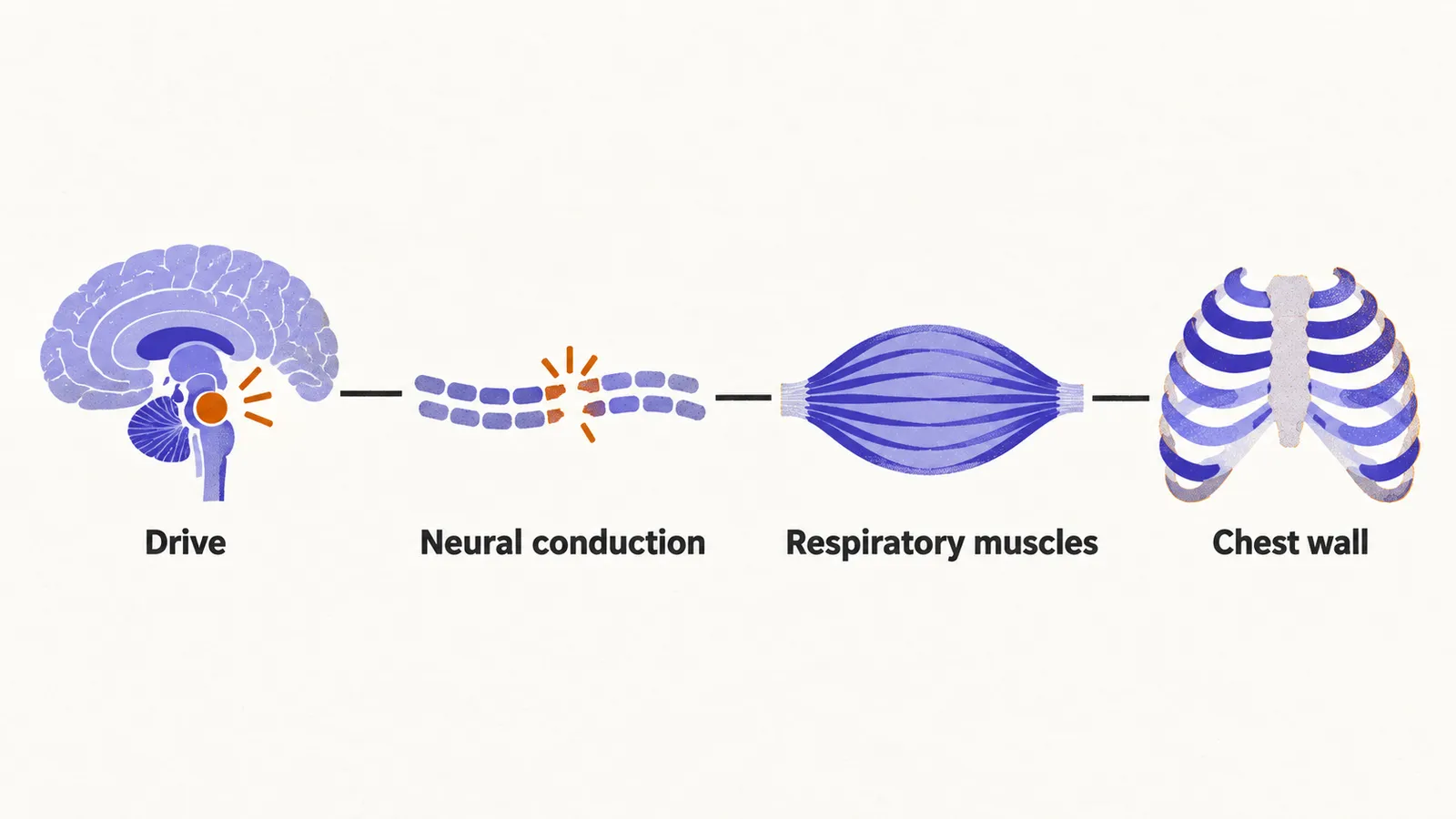
Many different diseases produce these failures. Examples span brain injury, spinal cord trauma, poliomyelitis, Guillain-Barré syndrome, botulism, amyotrophic lateral sclerosis (ALS), multiple sclerosis, myopathies, diaphragm paralysis, kyphoscoliosis, and severe obesity. The list is long because the pump can fail at any of its stages, and the same ventilatory failure can arise from very different diagnoses.
Load against capacity
Knowing where the weakness lies does not by itself say when breathing will fail. A complementary framing is load against capacity. Respiratory load rises with fever, sepsis, pain, anxiety, secretions, bronchospasm, upper-airway obstruction, or stiff lungs and chest wall. Capacity falls when respiratory drive or muscle force is reduced. Failure arrives when load exceeds what the weakened pump can sustain.
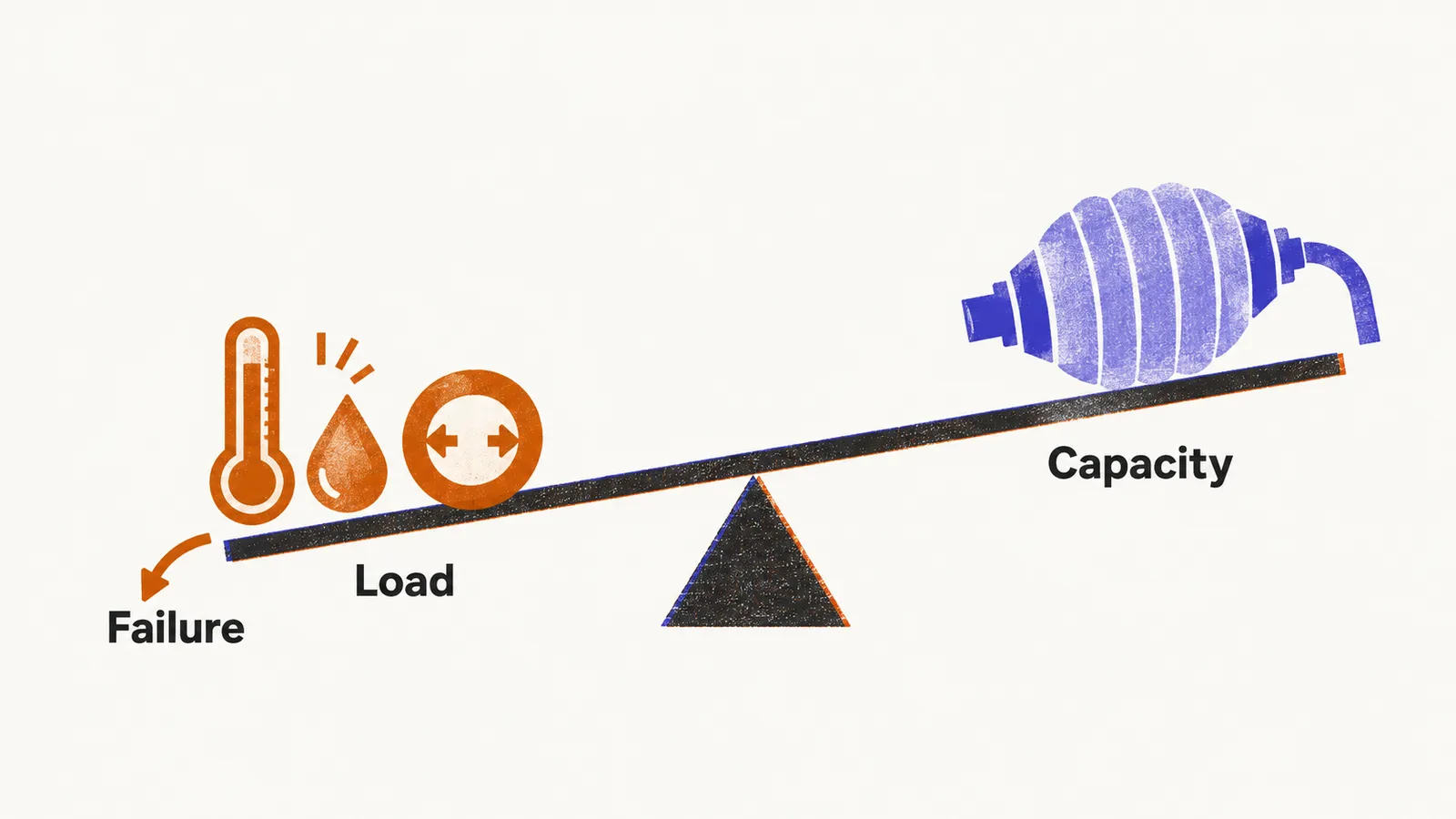
This is why fever and infection can tip a patient who seemed stable: they raise the load without raising the capacity to meet it.
Why a low oxygen saturation can mislead
A low oxygen saturation therefore does not always mean primary lung disease. In neuromuscular weakness it can be the visible sign of a deeper problem: weak ventilation (hypoventilation) with carbon dioxide retention (hypercapnia) underneath. Pulse oximetry, which reads oxygen saturation through the skin, measures how much oxygen the blood is carrying; it says nothing directly about carbon dioxide clearance.
Recognising that the pump rather than the lung is the problem is the first step. The next is measuring how well the pump works, with tests of volume, pressure and gas exchange rather than oximetry alone.