
Respiratory care in neurological disease is planned before crisis rather than assembled during one. Function declines over the course of the illness, and fever, infection or retained secretions can add load faster than a weakened pump can meet it, so deterioration can be abrupt even when the underlying decline has been gradual. Planning ahead is what keeps testing, equipment and expertise in place before they are urgently needed.
One pathway, not separate problems
In practice the assessment, secretion and ventilation tasks belong to one pathway. It begins with baseline assessment: blood gas testing (measuring oxygen and carbon dioxide in arterial blood) and respiratory function testing (measuring how well the pump moves air), together with nocturnal evaluation (overnight assessment of breathing) and detection of a weak cough and of hypoventilation (breathing too shallow or too slow to clear carbon dioxide). It continues with secretion management (keeping the airway clear of mucus) and ventilation management (supporting breathing when the pump falls short), and includes theoretical and practical training for patients and caregivers. In motor neuron disease guidance, the multidisciplinary team works with a respiratory ventilation service, so that testing, decisions about ventilation and monitoring are coordinated rather than arranged separately.
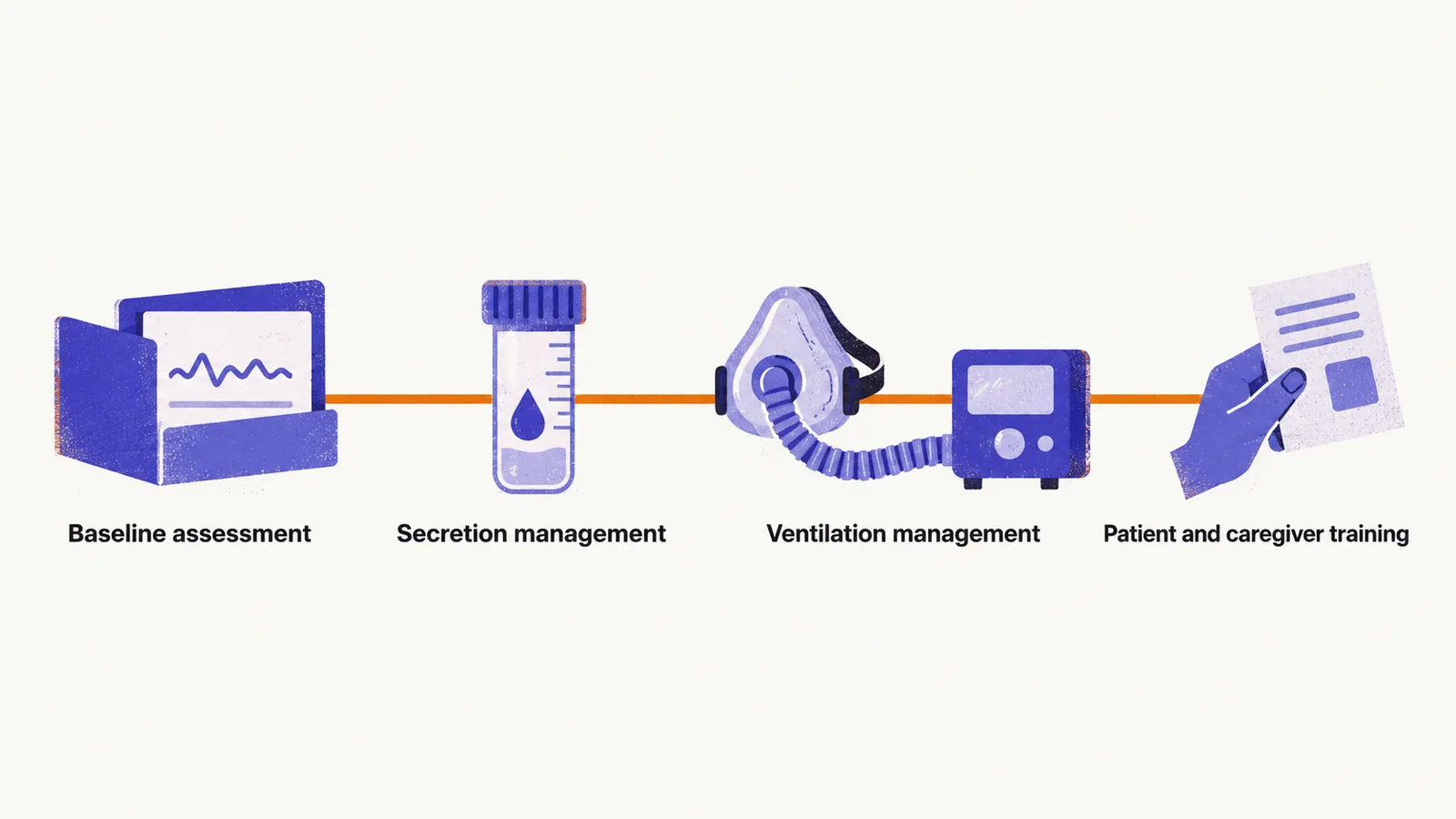
The team around the patient
The team is multiprofessional: respiratory therapists and physiotherapists, pulmonologists, neurologists, rehabilitation physicians, psychologists, occupational and speech therapists, and nutritionists, with paediatric expertise where relevant. The plan also covers the practicalities around the patient — how equipment is maintained, how the patient and caregivers reach clinical and technical help when something fails, and how they are trained to use the equipment and manage secretions.
Decisions that are easier to make in advance
Because respiratory function can deteriorate quickly, decisions that would be difficult to make in an emergency, including advance care planning (recording the patient’s wishes for future care) and preferences about ventilation and hospital admission, are discussed while there is time and while the patient can take part.
With a plan in place, a deterioration in breathing is met by known measurements, ready equipment and agreed roles.