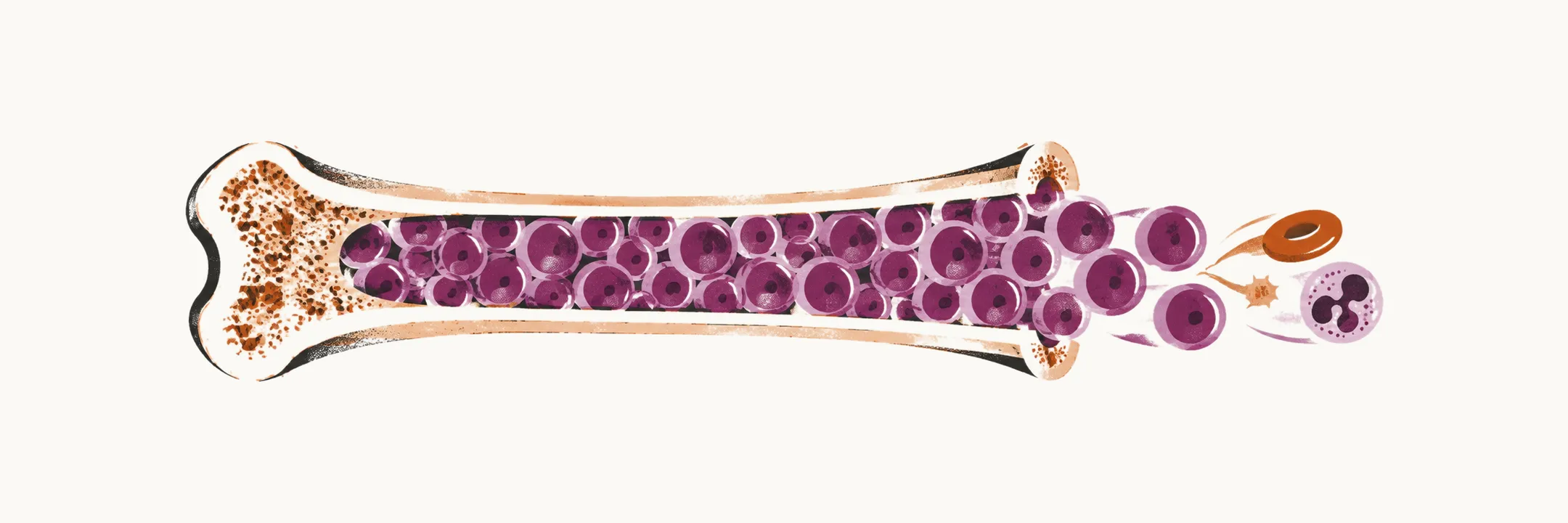
Acute lymphoblastic leukemia (ALL) is a malignancy of immature lymphoid progenitor cells, the cells that would normally develop into lymphocytes. The leukemic cells — lymphoblasts — fail to mature and multiply without control, filling the bone marrow and crowding out normal blood production, and they can collect in organs beyond the marrow. Two consequences organize the disease: bone marrow failure, which produces anemia (too few red cells), thrombocytopenia (too few platelets) and neutropenia (too few neutrophils), and extramedullary infiltration, the spread of blasts outside the marrow, which enlarges the lymph nodes, liver and spleen and can involve the central nervous system.
Start with epidemiology and etiology, which introduces the disease; pathophysiology and presentation then build the clinical picture, and diagnosis, subtypes and treatment follow from it, with prognosis last.
Choose a route through the topic
- Epidemiology and etiology of ALL covers who develops ALL, the exposures and congenital syndromes that raise the risk, and the recurrent chromosomal translocations of B- and T-lineage disease, including those that involve the immunoglobulin and T-cell receptor loci.
- Pathophysiology of ALL covers what makes the lymphoid progenitor leukemic, the maturation block that lets lymphoblasts accumulate, how marrow failure produces the cytopenias, and how blasts spread beyond the marrow.
- Presentation of ALL covers the symptoms produced by each cytopenia, the bone and joint pain of marrow infiltration, and the organ involvement that follows extramedullary spread.
- Diagnosis of ALL covers the peripheral blood findings that are too variable to confirm the disease, the bone marrow aspirate that confirms it and separates it from acute myeloid leukemia (AML), and the lumbar puncture that detects central nervous system involvement.
- Morphologic and immunologic subtypes of ALL covers the FAB morphologic groups, the marker threshold that defines a positive result, the immunologic subtypes from pro-B to mature B-ALL and T-ALL, and how biphenotypic leukemia differs from bilineage leukemia.
- Treatment of ALL covers the phases of combination chemotherapy, central nervous system–directed therapy, tyrosine kinase inhibitors for Philadelphia-positive disease, and transplantation and targeted agents for high-risk disease.
- Prognosis of ALL covers the survival difference between children and adults, the patient and disease features used for risk stratification, and minimal residual disease as the strongest predictor of relapse.