Acute lymphoblastic leukemia (ALL) is a cancer of immature lymphoid cells (lymphoblasts) in the bone marrow. It is the most frequent neoplasm of childhood, and it also occurs in adults, at a much lower rate.
Frequency and age
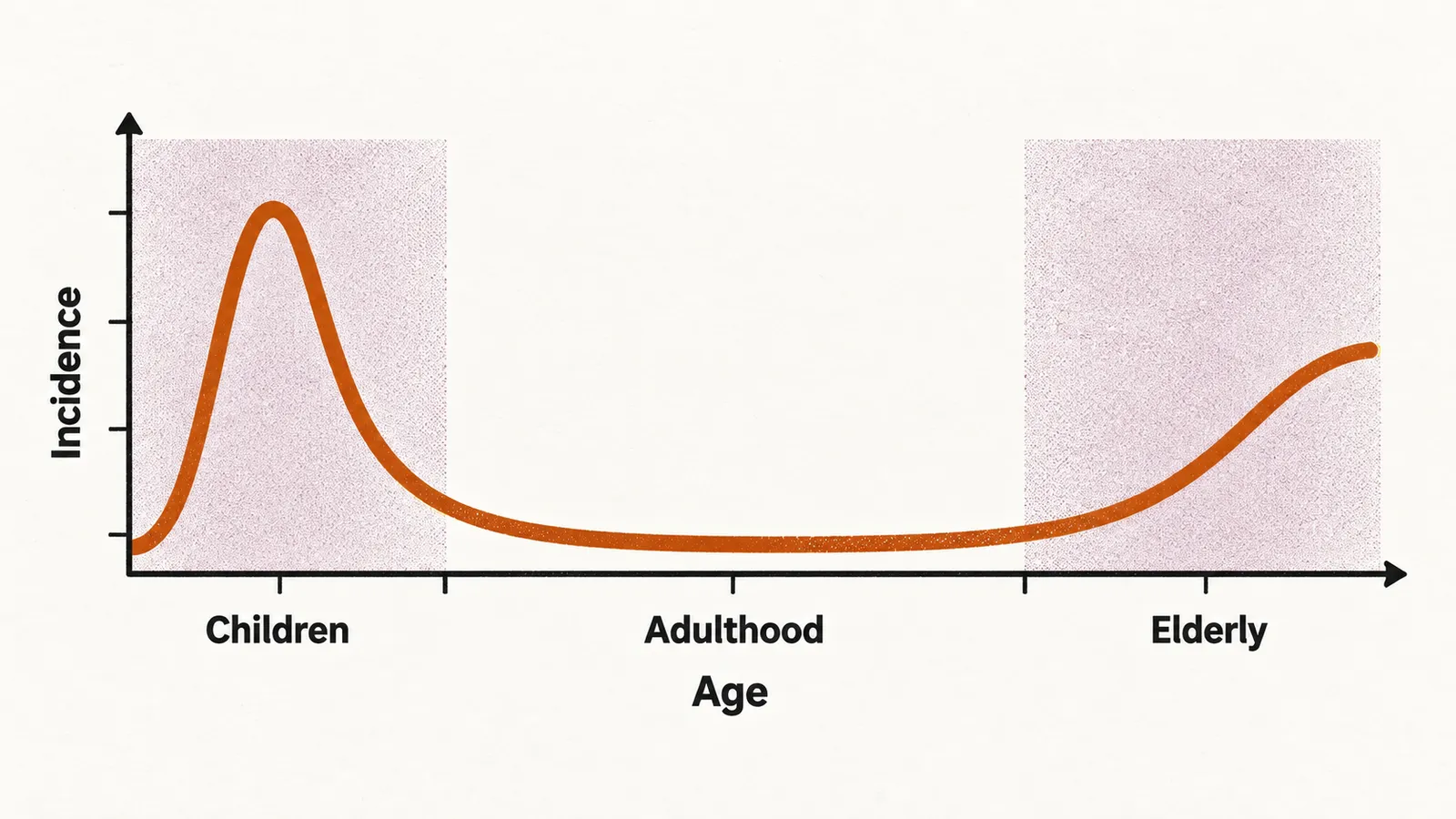
ALL is the most frequent neoplasm in children, with a peak age of 3 to 4 years old.
With increasing age, the incidence in adulthood decreases significantly, to 0.7 to 1.8 per 100,000 adults; in elderly ages, however, it increases again.
Causes and risk factors
The etiology of ALL is unknown, but some exposures and inherited conditions are linked to acute leukemia in general.
Internal and external exposures can cause leukemia, mostly through alkylating agents or topoisomerase inhibitors (two classes of drugs that damage DNA). In the case of ALL, some cases of secondary ALL follow the treatment of AML, myelodysplastic syndrome, or breast cancer.
Some congenital disorders increase the chance of getting acute leukemia. For AML they increase the risk at older ages and for ALL at younger ages, and they are:
- Fanconi anemia
- Klinefelter’s syndrome
- Bloom’s syndrome
- ataxia-telangiectasia
- neurofibromatosis
- Down syndrome
Infection, by contrast, has no established role: there is no evidence for a relation between infection and acute lymphoblastic leukemia.
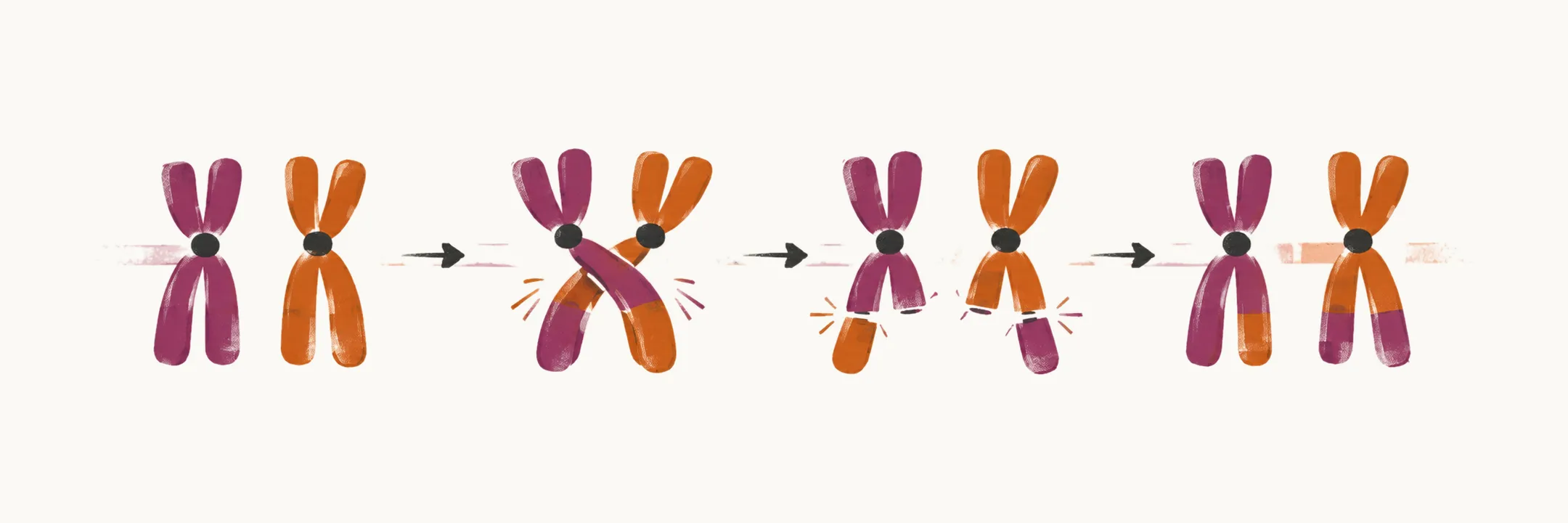
Chromosomal translocations
A chromosomal translocation is an exchange of material between two chromosomes; it is called balanced when no genetic material is lost. The leukemic cells of ALL often carry such a change, and the same few translocations recur from patient to patient. The recurrent balanced chromosomal translocations in ALL are:
| Translocation | Genes involved | Association |
|---|---|---|
| t(12;21)(p13;q22) | ETV6 and RUNX1 | characteristic of childhood B-ALL |
| t(1;19)(q23;p13.3) | TCF3 and PBX1 | |
| t(9;22)(q34;q11.2) | BCR-ABL1 | the most frequent abnormality in adults; more common with age |
| t(v;11q23) | KMT2A (previously MLL) |
Most of these translocations deregulate genes that control the differentiation and proliferation of lymphoid precursor cells. A different mechanism operates in mature B-ALL, where t(8;14)(q24;q32) places the MYC gene beside the immunoglobulin heavy-chain locus, so that MYC comes under the transcriptional control of the promoter and enhancer elements of that locus. The same transcriptional deregulation operates through the T-cell receptor (TCR), whose alpha/delta locus at 14q11 is the site of the typical T-ALL breakpoints.