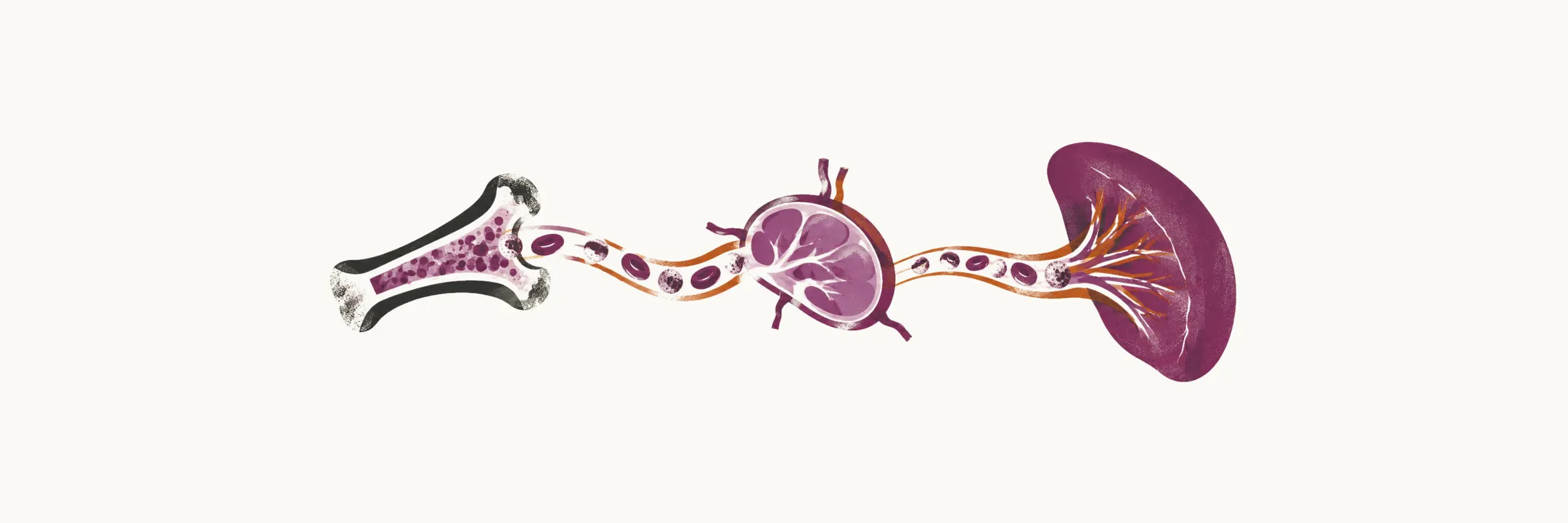
Acute lymphoblastic leukemia (ALL) usually announces itself through the failure of normal blood production, but infiltration of tissues outside the marrow produces signs of its own. The onset is most often acute, though in a minority of patients the illness evolves slowly over weeks to months.
Symptoms of bone marrow failure
Most patients first notice the consequences of the cytopenias (low counts of blood cells), and the symptoms follow the cell line that is most affected. These symptoms are, most of the time, the very first complaints of patients before diagnosis.
- Anemia causes fatigue, reduced exercise tolerance, pallor and breathlessness.
- Neutropenia leads to fever and infections, and both low- and high-grade fevers are common at presentation.
- Thrombocytopenia causes petechiae (pinpoint skin hemorrhages), easy bruising and bleeding from the skin and mucosal surfaces; the tendency to bleed rises as the platelet count falls, and spontaneous bleeding becomes a concern below about 20 × 10⁹/L.
Systemic features
Fever, night sweats and unintentional weight loss — the so-called B symptoms — are frequently present, although they may be mild. Fever overlaps with the infections that neutropenia permits, so it does not by itself distinguish the two.
Bone and joint pain
Marrow and periosteal infiltration by blasts often causes bone pain, which can be severe and is frequently atypical in distribution. In B-precursor ALL, bone pain, joint swelling and limping may be the presenting problem, and in about 5% of patients bone pain is the only symptom, which delays the diagnosis.
Organ infiltration
Because lymphoblasts spread beyond the marrow, they settle in the lymphoid organs and in some other tissues. The liver, spleen and lymph nodes may enlarge; hepatomegaly, splenomegaly and lymphadenopathy (enlargement of the liver, spleen and lymph nodes) are found in up to half of adults at presentation. A markedly enlarged spleen can produce left upper quadrant fullness and early satiety, reported by about 10–20% of patients.
Infiltration of the thymus can produce an anterior mediastinal mass, which occurs in about 10% of newly diagnosed ALL, especially T-cell ALL; depending on its size it may cause cough or breathlessness, or obstruct the superior vena cava.
Central nervous system involvement produces headache, vomiting, lethargy and neck stiffness, and may cause cranial nerve deficits. It is uncommon as a first symptom, but it is more frequent in T-cell and mature B-cell disease.
Testicular involvement appears as painless, usually unilateral testicular enlargement, and is present in about 2% of boys at diagnosis.
Because none of these findings is specific to ALL, the diagnosis is established by examining the blood and bone marrow.