
Acute lymphoblastic leukemia (ALL) is treated with combination chemotherapy given over two to three years, with therapy directed at the central nervous system in every patient and targeted agents added for particular subtypes. The aim is to eradicate the leukemic clone and allow normal hematopoiesis (blood cell production) to recover.
The phases of chemotherapy
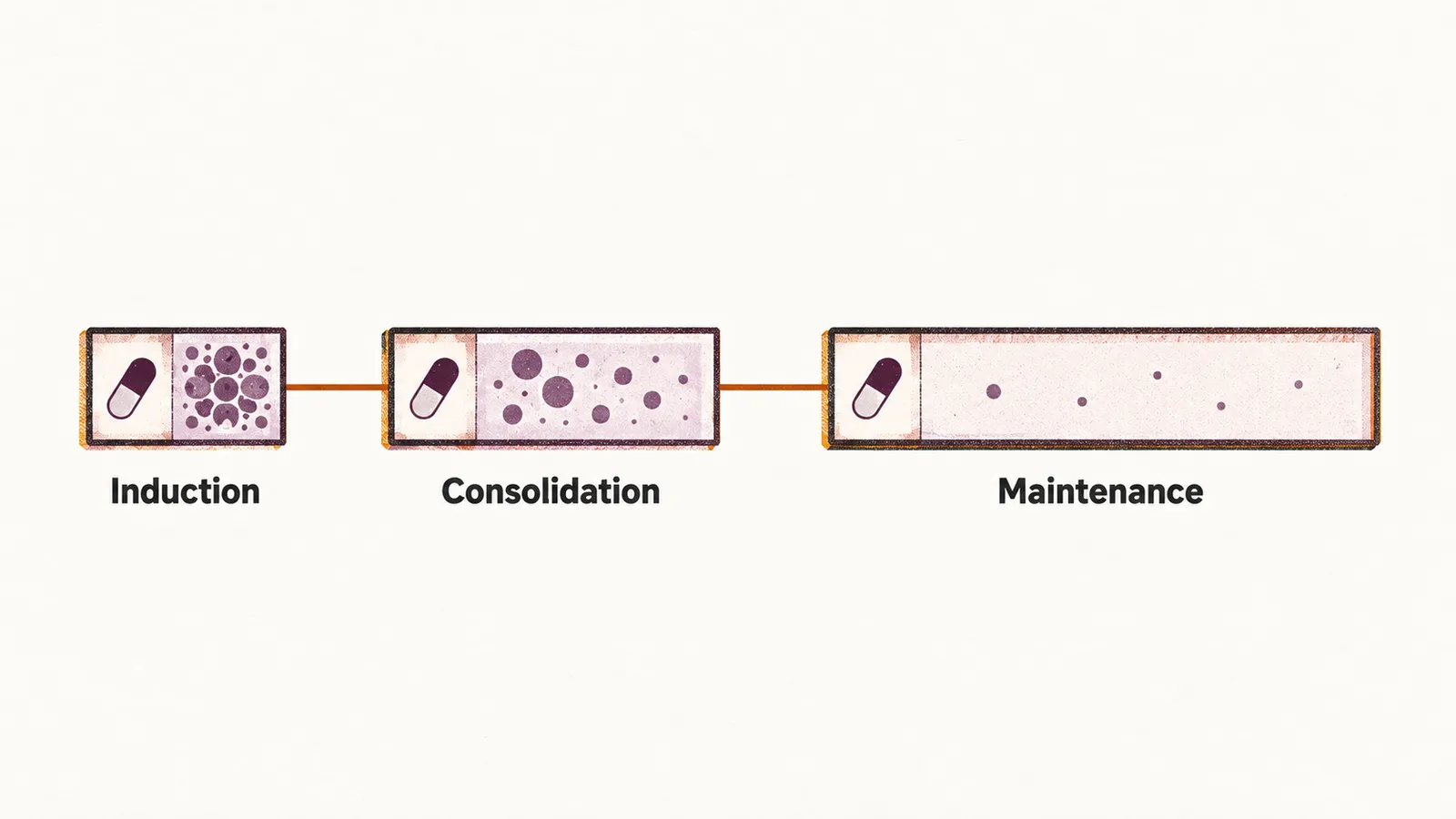
Treatment begins with induction, roughly four weeks of three to four drugs whose purpose is to clear the marrow of blasts and restore normal blood production — a state called complete remission. The agents act at different points in the leukemic cell, and the combination is drawn from corticosteroids (prednisone or dexamethasone), vincristine, an anthracycline such as daunorubicin or doxorubicin, and L-asparaginase, sometimes with cyclophosphamide.
Consolidation (also called intensification) follows induction. Its purpose is to eliminate the residual leukemic cells that survive induction but are too few to see, and it uses similar drugs, including methotrexate, cytarabine, 6-mercaptopurine, cyclophosphamide, vincristine, corticosteroids and asparaginase. Maintenance then continues for two to three years, usually with daily 6-mercaptopurine and weekly methotrexate plus periodic vincristine and corticosteroid pulses, to prevent the disease from returning.
Adolescents and young adults with ALL do better with pediatric-inspired regimens that include asparaginase than with the older adult regimens, and these are now the recommended first-line approach for this age group.
Central nervous system–directed therapy
The central nervous system is a sanctuary site: the blood-brain barrier restricts the entry of many drugs, so leukemic cells can survive there even when the marrow looks clear. Every patient therefore receives intrathecal chemotherapy (injected into the cerebrospinal fluid) — methotrexate, sometimes alternating with cytarabine and a corticosteroid — together with high-dose systemic methotrexate and cytarabine that reach the cerebrospinal fluid. Cranial radiation is now reserved for selected patients rather than used routinely. Without this directed therapy, involvement of the central nervous system would be a common cause of relapse.
Philadelphia-positive disease
When the leukemic cells carry BCR-ABL1, the Philadelphia chromosome, a tyrosine kinase inhibitor is added to chemotherapy. Imatinib, dasatinib and ponatinib are the agents in use, and their addition has substantially improved the outcome of this subtype, which is the most frequent cytogenetic abnormality in adults.
Supportive care
Because the same treatment suppresses normal marrow, supportive care is an essential part of management. Rapid destruction of leukemic cells can release their contents and cause tumor lysis syndrome, so hydration and drugs such as allopurinol are used to prevent it; prophylaxis against infection and transfusion support are also given as needed.
Response and transplantation
The response to treatment is measured by minimal residual disease (MRD), the leukemic cells present in numbers too small to detect under the microscope. A poor response or persistent MRD identifies patients who need more intensive treatment. Allogeneic hematopoietic stem cell transplantation can eliminate residual disease that chemotherapy has not cleared and is used for patients with high-risk features or persistent MRD.
Targeted agents
For relapsed or refractory B-cell ALL, targeted agents have become central. Blinatumomab is a bispecific T-cell engager that links CD19 on the blasts to CD3 on T cells, so the patient’s own T cells attack the leukemic cells. Inotuzumab ozogamicin is an antibody–drug conjugate directed at CD22. CD19-directed CAR T cells are the patient’s T cells engineered to recognize CD19. These agents are also being used earlier in high-risk disease.