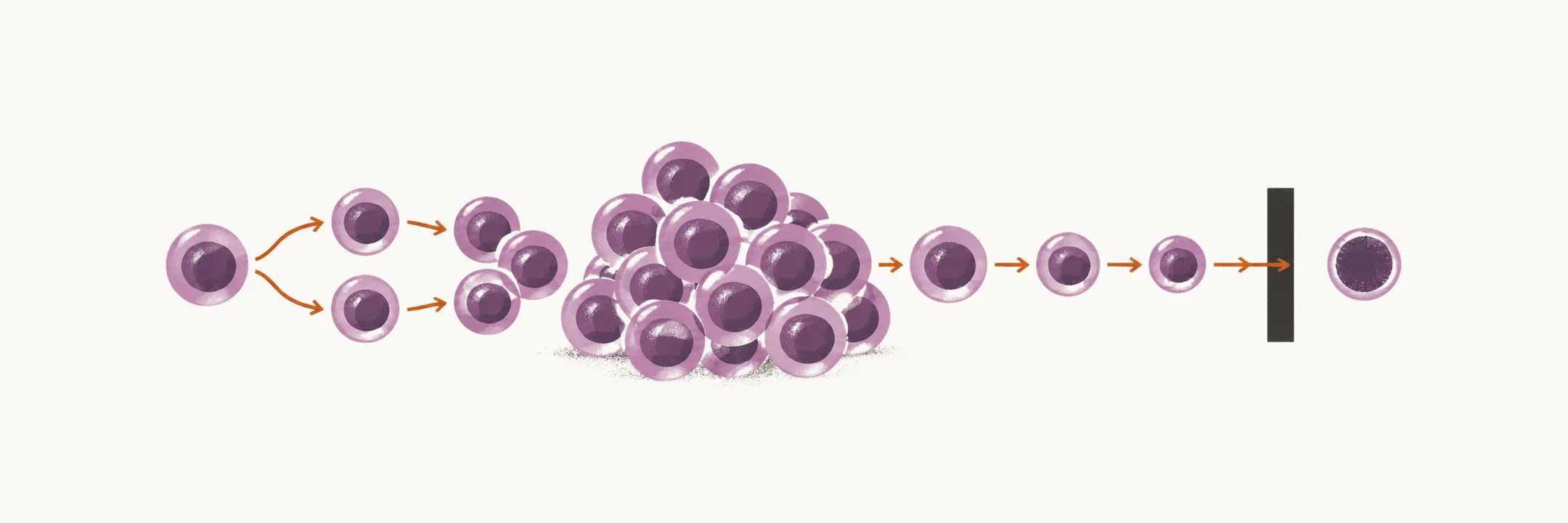
Acute lymphoblastic leukemia (ALL) is a clonal malignancy of the bone marrow: a single lymphoid progenitor cell becomes cancerous and its descendants gradually take over the marrow. Understanding what makes those cells leukemic explains why the disease produces both a failure of normal blood production and signs in organs far from the marrow.
Differentiation arrest and the leukemic clone
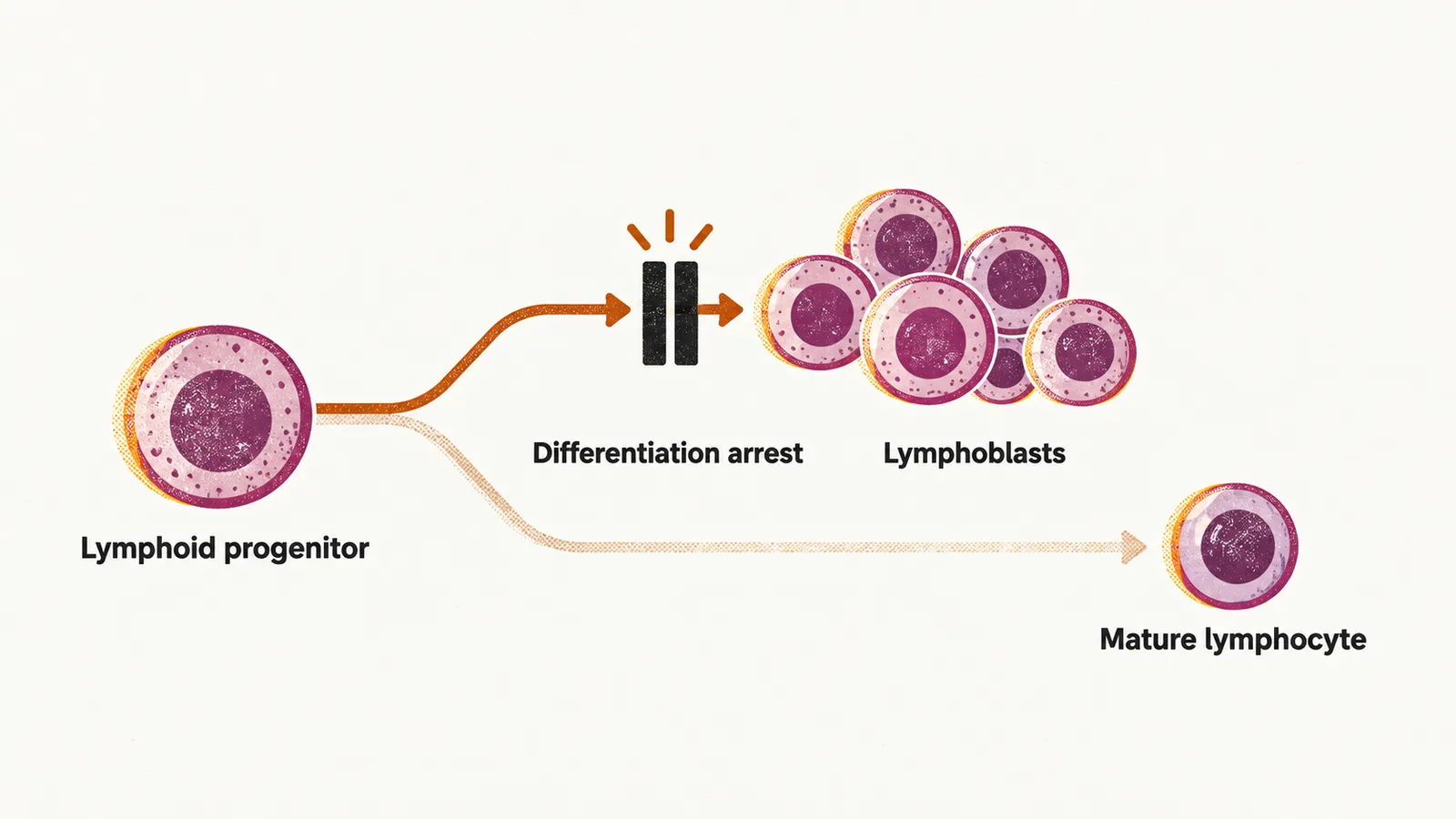
Blood cells normally develop in an orderly sequence, from a stem cell in the bone marrow through progressively more specialized stages to a mature, working cell. In ALL, a lymphoid progenitor — the cell that would normally become a lymphocyte — acquires genetic abnormalities, often a balanced chromosomal translocation or an abnormal chromosome number, that interrupt this sequence. The affected cell continues to divide, but it can no longer mature.
The defining abnormality is therefore a differentiation arrest rather than simple overgrowth: the transformed cell produces a population of lymphoblasts, immature lymphoid cells frozen at an early stage of development that never become functioning lymphocytes. Because every descendant inherits the same block, the lymphoblasts are not used up in the normal way, and they accumulate while the marrow loses the capacity to make its other cells.
Bone marrow failure and the cytopenias
As lymphoblasts fill the marrow, they displace the normal hematopoietic cells and disturb the specialized niches in which red cells, platelets and neutrophils develop. Production of each line falls, so the patient develops anemia from reduced red cell production, thrombocytopenia from reduced platelet production, and neutropenia — also called granulocytopenia — from reduced neutrophil production. The lymphoblasts themselves are immature and nonfunctional, so they do not take over the work of the cells they displace: they cannot carry oxygen, form clots, or fight infection. The clinical picture that follows is a direct consequence of the marrow being unable to make enough normal cells.
Spread beyond the marrow
Lymphoblasts also leave the bone marrow and settle in other tissues, a process known as extramedullary spread. They home to lymphoid organs, so the lymph nodes, liver and spleen enlarge, and in some subtypes they infiltrate the thymus, the central nervous system and the testis. Because ALL is a systemic disease from the outset, a patient can present with organ-related signs that have little to do with the marrow. Which of these two processes — marrow failure or extramedullary infiltration — dominates is what gives each patient a different clinical picture.