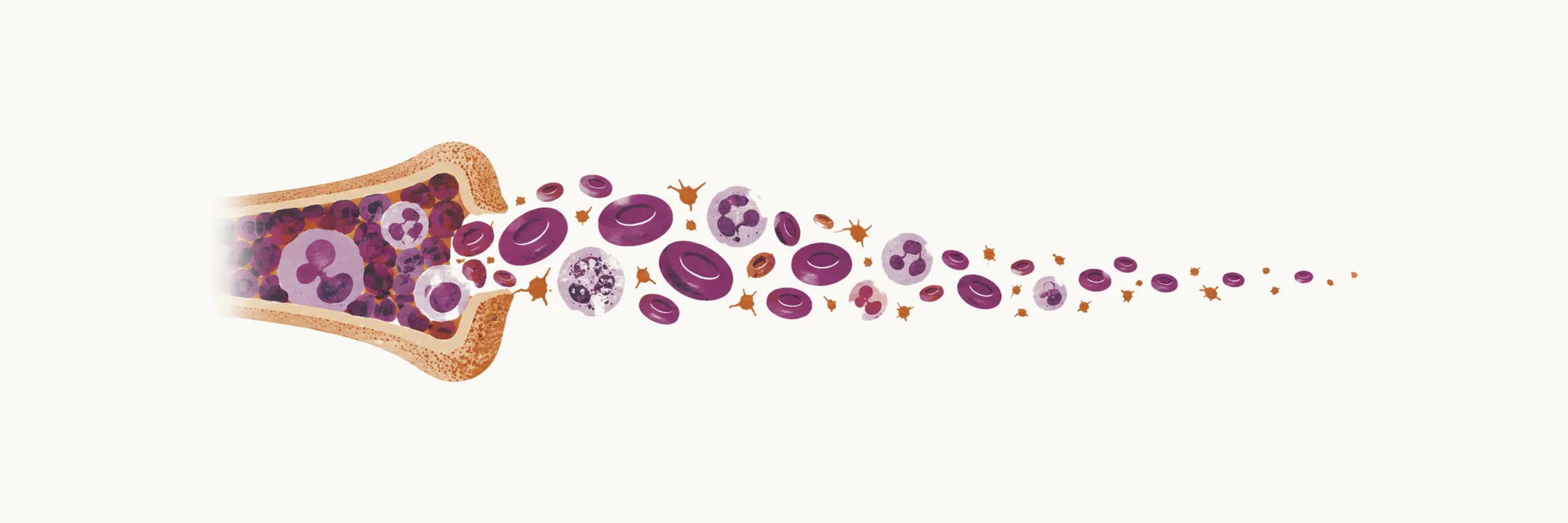
The complaints that bring a patient with acute myeloid leukemia to medical attention are usually non-specific, because they are produced by the failure of normal blood counts rather than by the leukemia cells themselves.
Symptoms from the failing blood counts
Patients with AML usually present first with non-specific signs, which begin gradually or abruptly. They are due to anemia (low red cells), leukocytosis (raised white cells), leukopenia (low white cells) or thrombocytopenia (low platelets), and each of these produces its own picture.
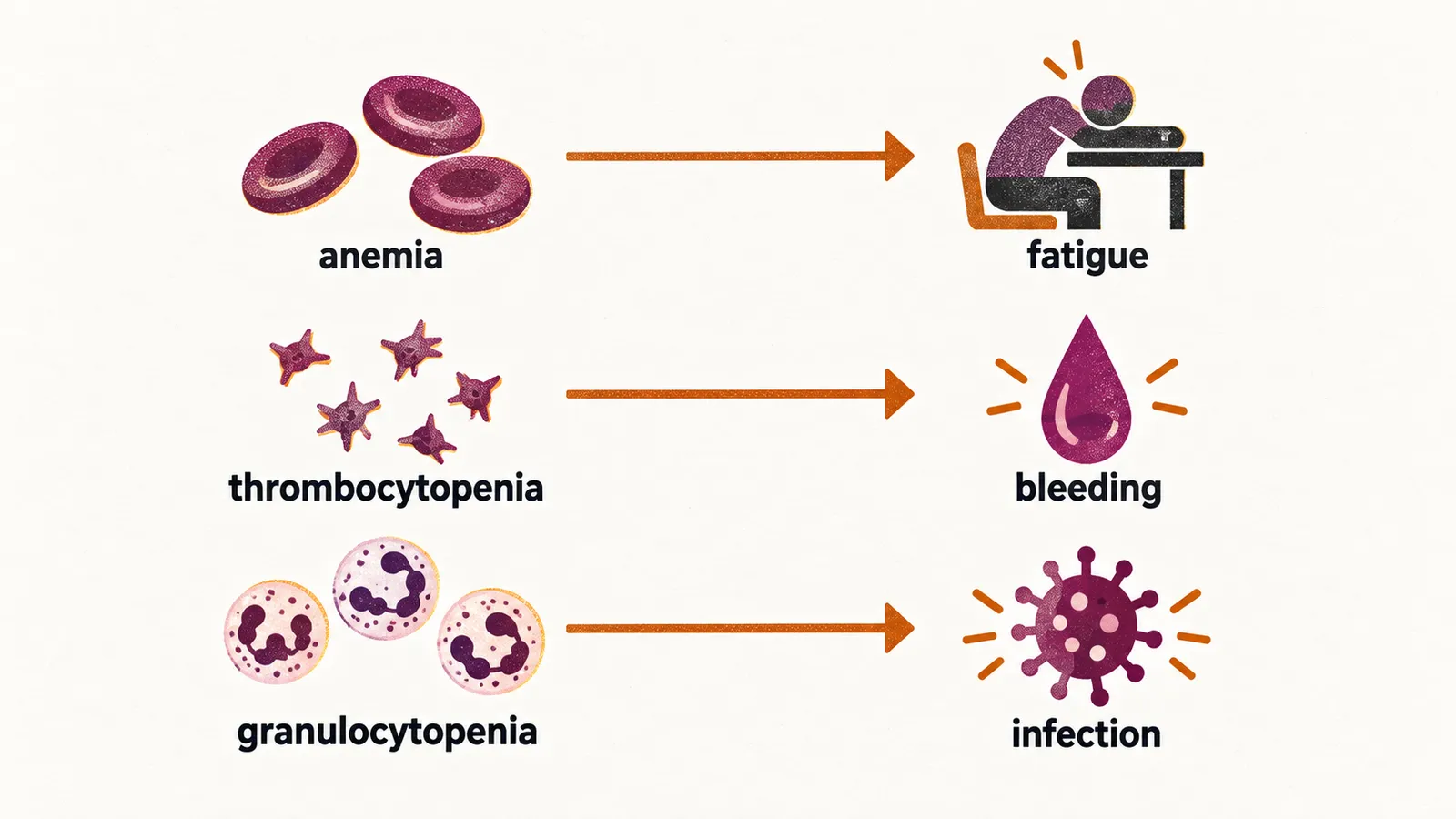
Anemia causes fatigue. In AML it is usually not severe and is most of the time normocytic normochromic, and because the marrow no longer produces red cells efficiently the reticulocyte count is reduced.
Bleeding follows thrombocytopenia. In more than 75% of cases of AML the platelet count is less than 100,000 per microliter, and about 25% have a count less than 25,000. Bleeding can also be seen in the monocytic forms of AML, and in APL (acute promyelocytic leukemia) disseminated intravascular coagulation (DIC) appears as a complication, one sign of which is a low platelet count with microangiopathic bleeding. CNS bleeding is more common in ALL (acute lymphoblastic leukemia) than in AML.
Infection follows granulocytopenia (a low count of granulocytes, the white cells that fight infection), and fever is present in 10% of patients. Patients may also report anorexia and weight loss. Hepatomegaly, splenomegaly, lymphadenopathy and bone pain are rarely present.
Organ infiltration
Marrow failure is only part of the picture, because the blasts do not stay in the marrow. Myeloid sarcoma is a tumor full of myeloid blasts, mostly found in the skin, GIT (gastrointestinal tract), lymph node and testis, and it can be the first sign of the disease. In monocytic AML, infiltration of blasts into the gingiva, skin, soft tissues and meninges is a specific complication of the forms carrying 11q23 chromosomal abnormalities. In acute leukemia, in both AML and ALL, infiltration of blasts together with urate accumulation can cause renal insufficiency.
Complications
The main complications that can be seen in acute leukemia, several of which repeat the marrow failure and infiltration described above, are:
- hemorrhagic complications, including CNS bleeding, pulmonary hemorrhage and pulmonary edema
- infection
- tumor lysis syndrome, which is similar to the cytokine release syndrome: there is a high level of cytokines, together with a change of electrolytes, namely hyperkalemia and hypocalcemia
- infiltration syndrome of the CNS or GIT
- coagulopathy before and after chemotherapy