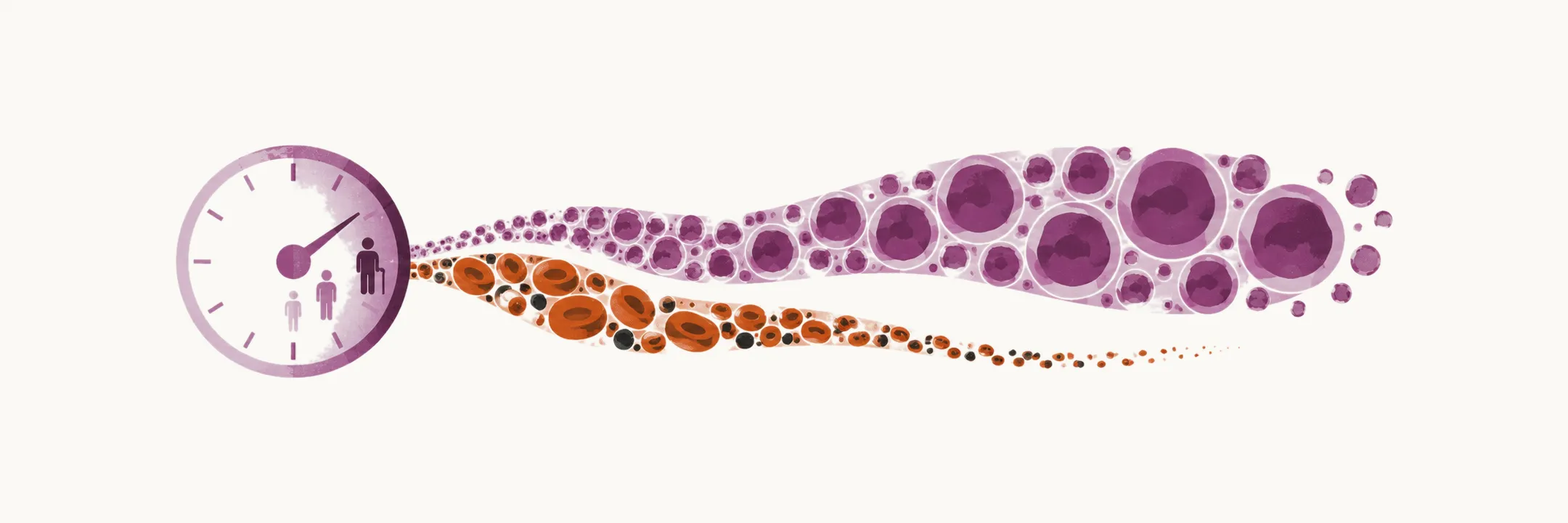
Acute myeloid leukemia is uncommon in the population as a whole, but it is the most common acute leukemia of adulthood, accounting for roughly 8 in 10 acute leukemias in adults, and it is responsible for about half of all deaths from leukemia. About 4.4 new cases are diagnosed per 100,000 people each year, and the disease represents about 1% of all new cancer diagnoses. Approximately 0.5% of people will be diagnosed with AML at some point during their lifetime.
Age dominates the pattern. The median age at diagnosis (the age that splits cases into a younger half and an older half) is about 70 years, and AML is most often diagnosed between 65 and 74 years, so the modest overall rate hides a high rate in older people set against a low rate in the young. Fewer than 10% of cases occur before age 35. The disease is also more common in men than in women, at about 5.2 compared with 3.7 new cases per 100,000 per year. Because the incidence climbs with age, and the population is aging, the number of people diagnosed each year is expected to keep rising.
The outlook is poor, and it depends heavily on age. Overall, about 33% of people diagnosed with AML are alive 5 years later. That single figure conceals a wide range: children and younger adults do substantially better, while the outcome in older adults is much worse. Two forces drive the difference: in older patients the disease is more often genetically resistant to treatment, and coexisting illness limits how much intensive chemotherapy can be tolerated. Genetic resistance in turn raises the question of how a normal blood cell acquires the genetic changes that make it leukemic.