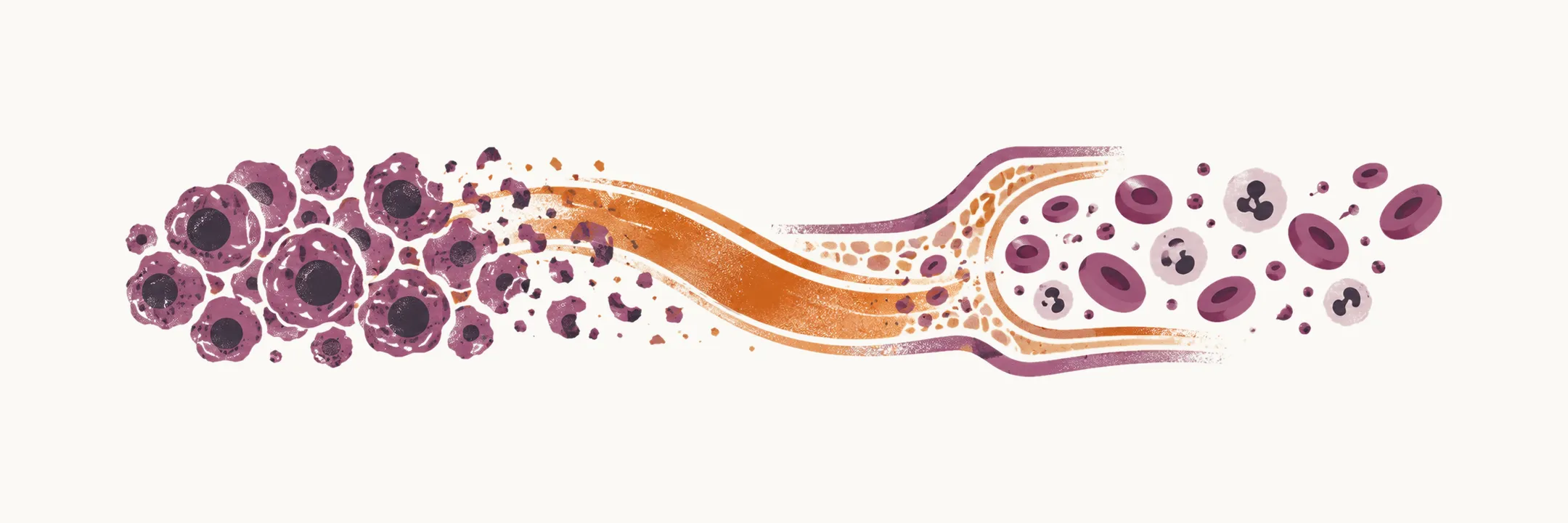
The chromosomal and molecular information used to classify acute myeloid leukemia is also what tells the clinician how the disease is likely to behave.
Prognosis
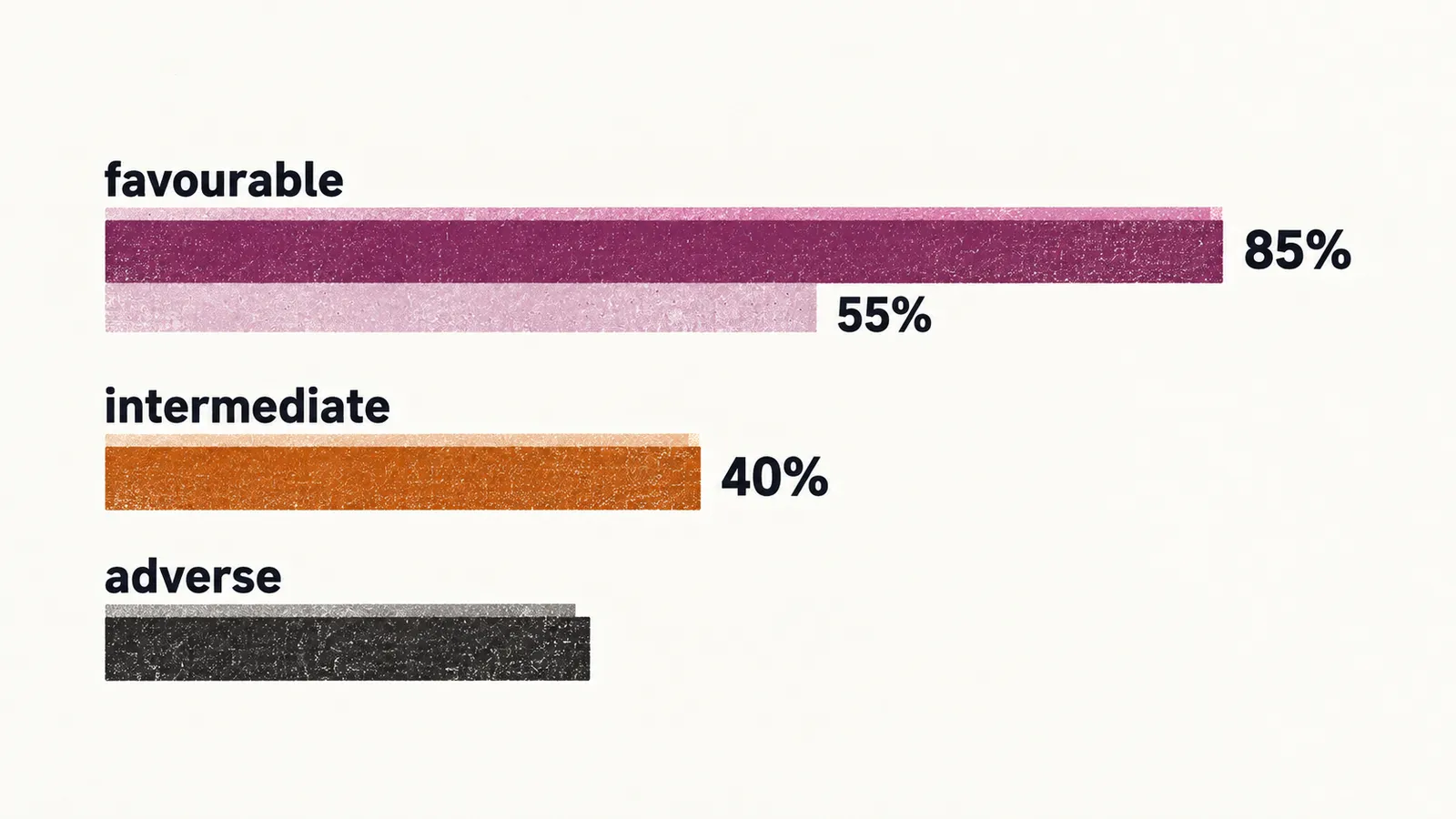
The chromosomal and molecular information that is used for the classification of AML is widely used for the prognostic evaluation of the patient. Patients are placed into three prognostic groups on the basis of their genetic and molecular abnormalities:
- favourable: t(15;17), which has a very good prognosis with a cure rate of 85%; t(8;21) and inv(16), with a good prognosis of about a 55% cure rate; and CN-AML (cytogenetically normal AML, with no visible chromosomal abnormality) with an NPM1 mutation but no FLT3-ITD
- intermediate: no cytogenetic abnormalities with just mutations, with a prognosis of a 40% cure rate
- adverse: patients with a TP53 mutation, t(6;9), inv(3), monosomy 7 or del(7q)
Even among these favourable cases, t(15;17), t(8;21) and inv(16) carry a worse prognosis when a monosomal karyotype is also present — a monosomal karyotype means two or more distinct monosomies (each the loss of one copy of a chromosome), excluding loss of the X or Y chromosome, or one single autosomal monosomy together with at least one structural chromosome abnormality.
The main genomic mutations that are important for prognosis stratification are NPM1, FLT3-ITD, CEBPA and TP53. A further group also matters: the tyrosine kinase receptor gene KIT, the transcription factor genes RUNX1 and WT1, and the epigenetic modifiers DNMT3A, TET2, ASXL1 and IDH1. All the mutations above, except KIT, can be found mostly in cases of CN-AML.
Other risk factors matter alongside the genetics. Age is one: the older the patient, the worse the prognosis. The presence of cytopenia is related to a lower complete remission and survival rate. The persistence of measurable residual disease (MRD) after cycles of therapy is considered a negative prognostic factor.
Treatment
Treatment of patients with acute leukemia begins with remission induction, in which intensive chemotherapy is used to clear the blasts and restore normal blood counts. The standard regimen combines seven days of cytarabine with three days of an anthracycline, and the aim is a complete remission — fewer than 5% blasts in the marrow with recovery of the neutrophil and platelet counts. Remission is not cure: because residual leukemic cells survive, post-remission therapy is then given to prevent relapse.
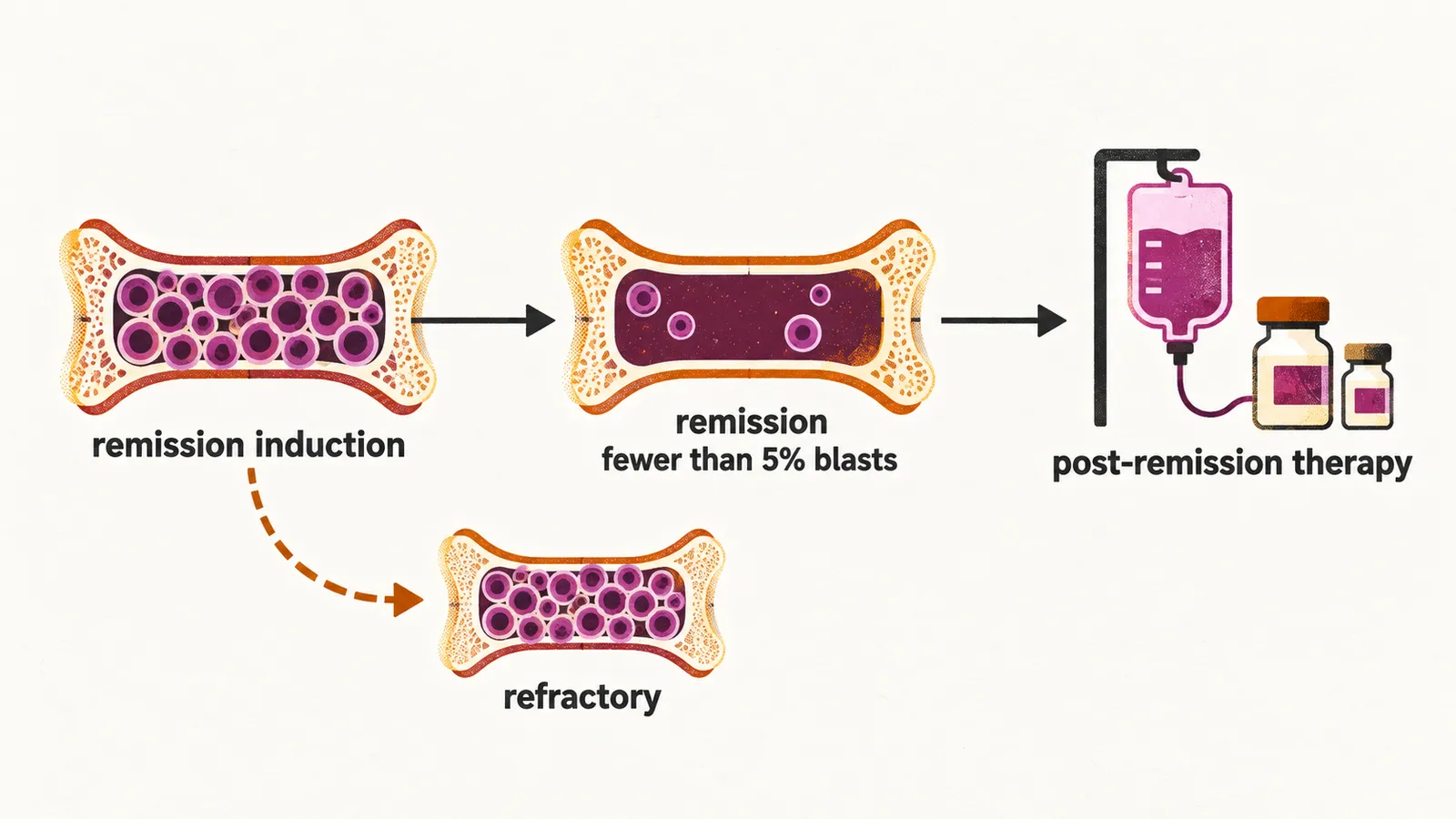
If the blast cells are not cleared after a first and a second cycle of treatment, the disease is called refractory acute leukemia, which has the worst prognosis.
Acute promyelocytic leukemia (APL), the subtype carrying t(15;17), is treated differently, because its PML-RARA fusion responds to a drug that forces the malignant promyelocytes to mature rather than killing them directly. All-trans retinoic acid, often combined with arsenic trioxide, has turned APL into the most curable subtype of AML.