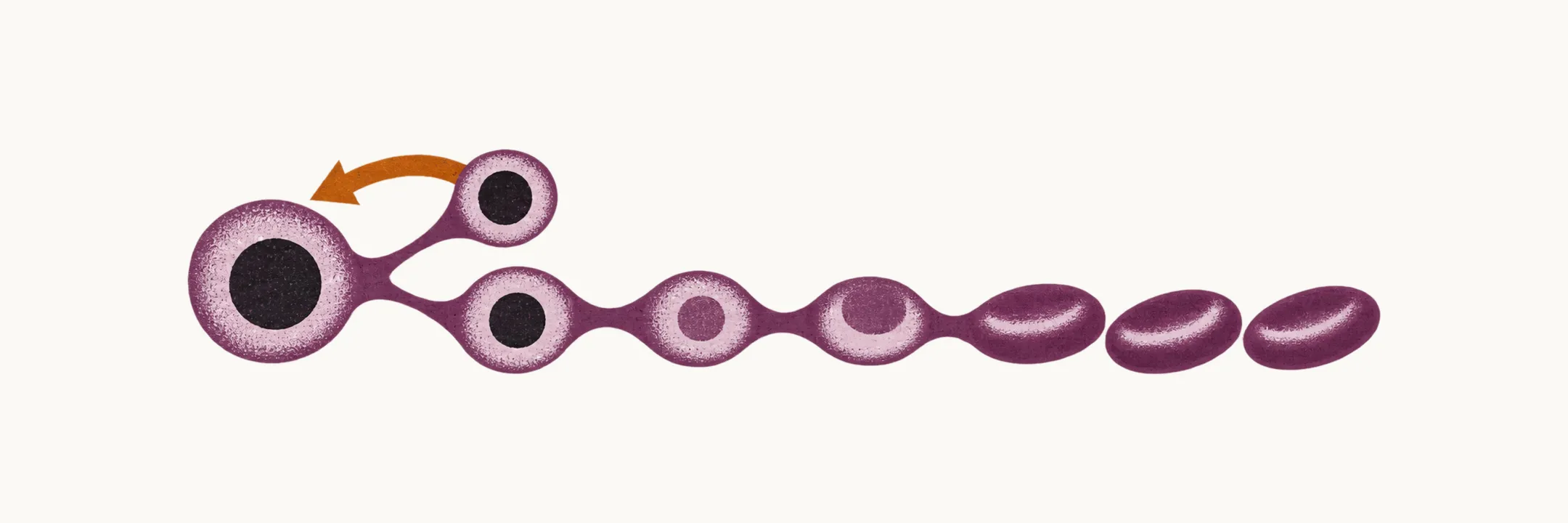
All the cells in the peripheral blood, and some cells in different organs, come from the hematopoietic stem cells (HSCs), the blood-forming stem cells of the bone marrow. A stem cell is defined by two abilities at once: it renews itself, and it produces specialized descendants. Because most mature blood cells are short-lived, the pool has to do both continuously.
The red-cell branch of that output is erythropoiesis, the formation of red blood cells. It runs through a progenitor, an intermediate cell already partway to specialization, that red cells share with platelets.
Choose a route through the topic
The first five routes follow the stem cell itself: what defines it, the niche and marrow compartment where it lives, and how it differentiates and renews. The last two follow the red-cell branch, from the place of the red cell among the blood cells to the stages of its formation.
- Stem Cell Properties, Division, and Potency explains what defines a stem cell: self-renewal and differentiation, the symmetric and asymmetric forms of division, the totipotent, pluripotent and multipotent classes, and the uses proposed for stem cells.
- The Stem-Cell Niche in Bone Marrow explains the microenvironment that houses multipotent stem cells and controls when they stay quiet and when they divide.
- Hematopoietic Stem Cells in the Bone Marrow follows the bone-marrow compartment itself: the hematopoietic and stromal stem cells, the progenitors they feed, the surface markers that show developmental stage, and how the cells are collected and home back to the marrow.
- Differentiation of Hematopoietic Stem Cells explains what drives differentiation, and the plasticity and proliferative capacity that are lost along the way.
- Self-Renewal of Hematopoietic Stem Cells explains how the pool maintains itself, how that changes with age, and the advantages and drawbacks of stem cells taken from umbilical cord blood.
- Red Blood Cells and Hematopoiesis places the red cell among the blood cells by number and lifespan, then follows the shared megakaryocyte and erythroid progenitor that erythropoietin and thrombopoietin direct towards red cells or platelets.
- Sites and Phases of Erythropoiesis follows the sites of red cell production from yolk sac to bone marrow, and the stages of red cell formation up to the reticulocyte that leaves the erythroblastic island.
Begin with stem cell properties, which defines self-renewal, differentiation and the classes of potency that the rest of the topic builds on.