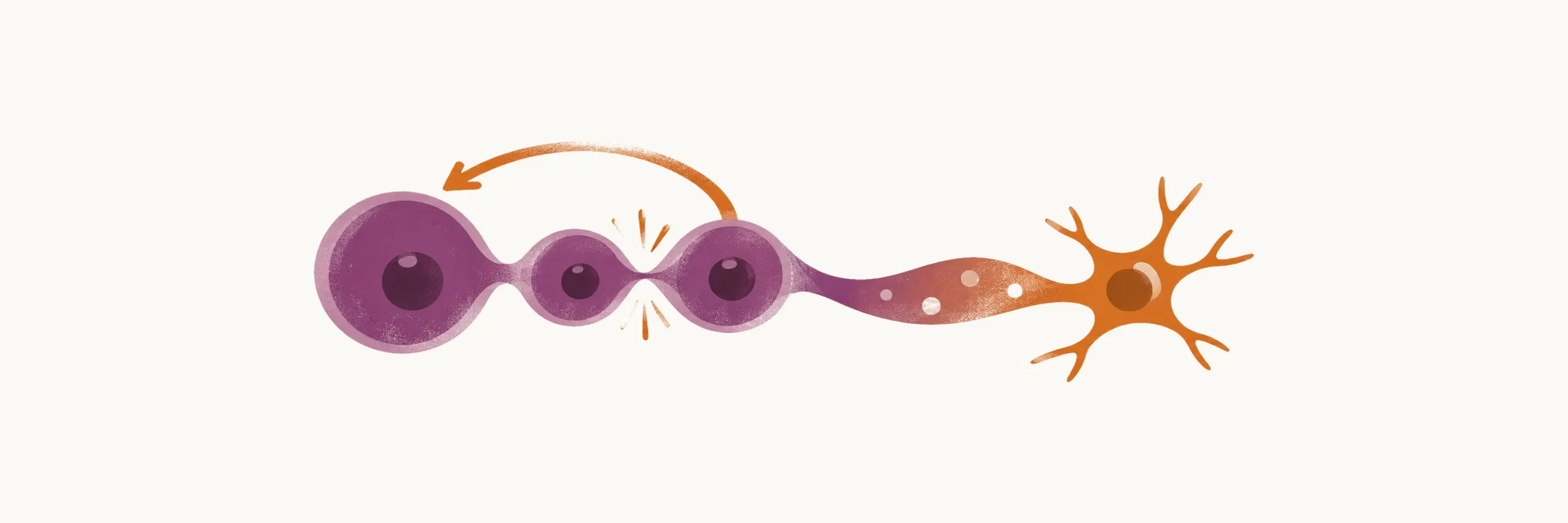
A stem cell is an unspecialized cell that can renew itself and also give rise to specialized cells. Those two abilities, self-renewal and differentiation, are what separate a stem cell from an ordinary cell, and they run through every branch of blood formation.
General properties of the stem cells
Three properties define a stem cell. It is unspecialized. It can divide and renew itself indefinitely, making new copies of itself through self-renewal. And it can undergo differentiation, changing into a specialized cell. Self-renewal is what lets a small pool persist for life, and differentiation is what supplies the body with its mature cells.
Forms of cell division in the stem cells
A stem cell can divide in two ways. In symmetric division the mother cell gives rise to two cells of the same kind, either two differentiated cells or two new stem cells. In asymmetric division it gives rise to one differentiated cell and one stem cell.
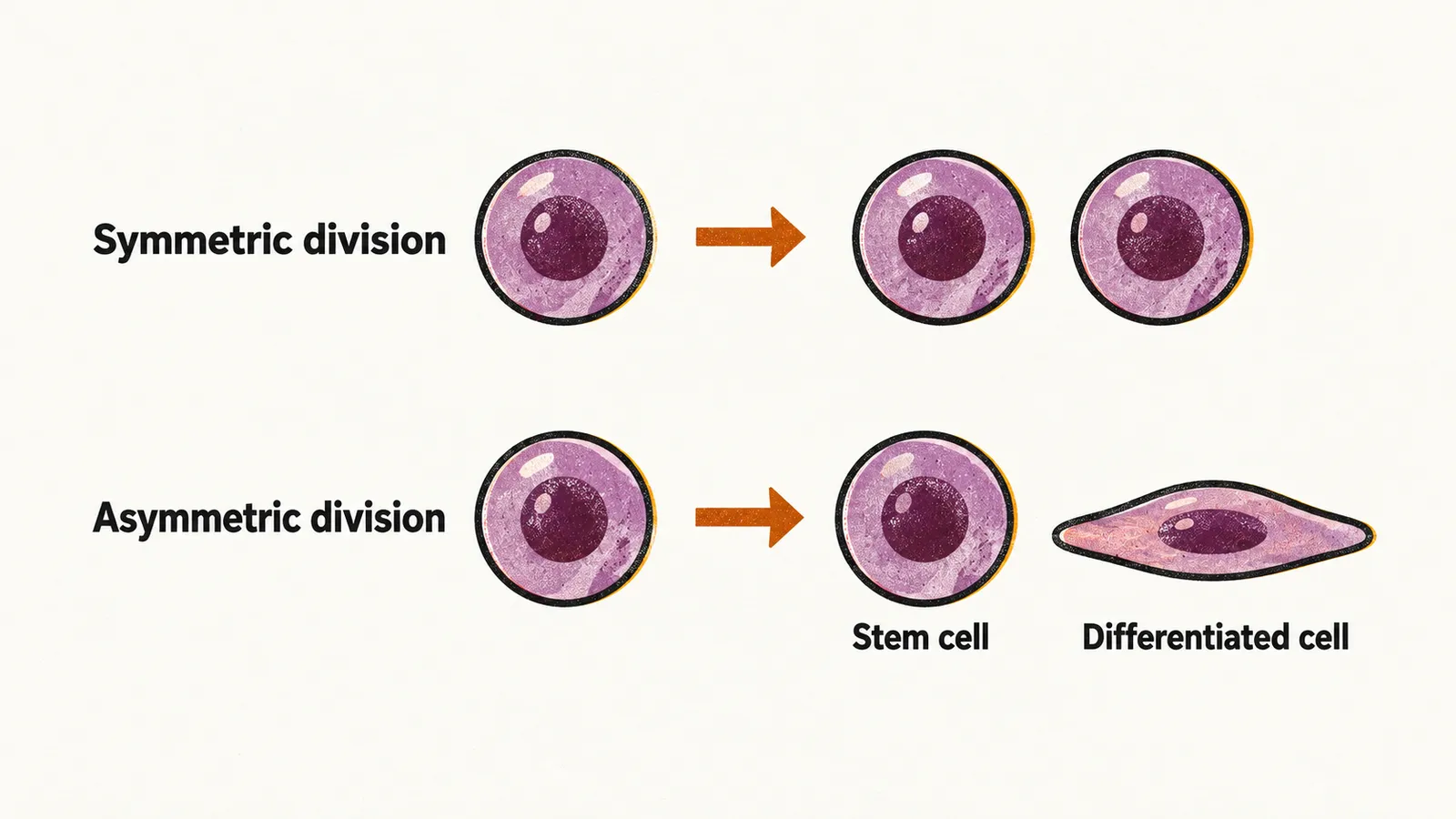
Both forms occur. Asymmetric division is the one that maintains the pool while producing differentiated cells: it keeps one daughter a stem cell and commits the other to differentiation, so the number of stem cells does not fall as mature cells are made.
Plasticity and the three classes of potency
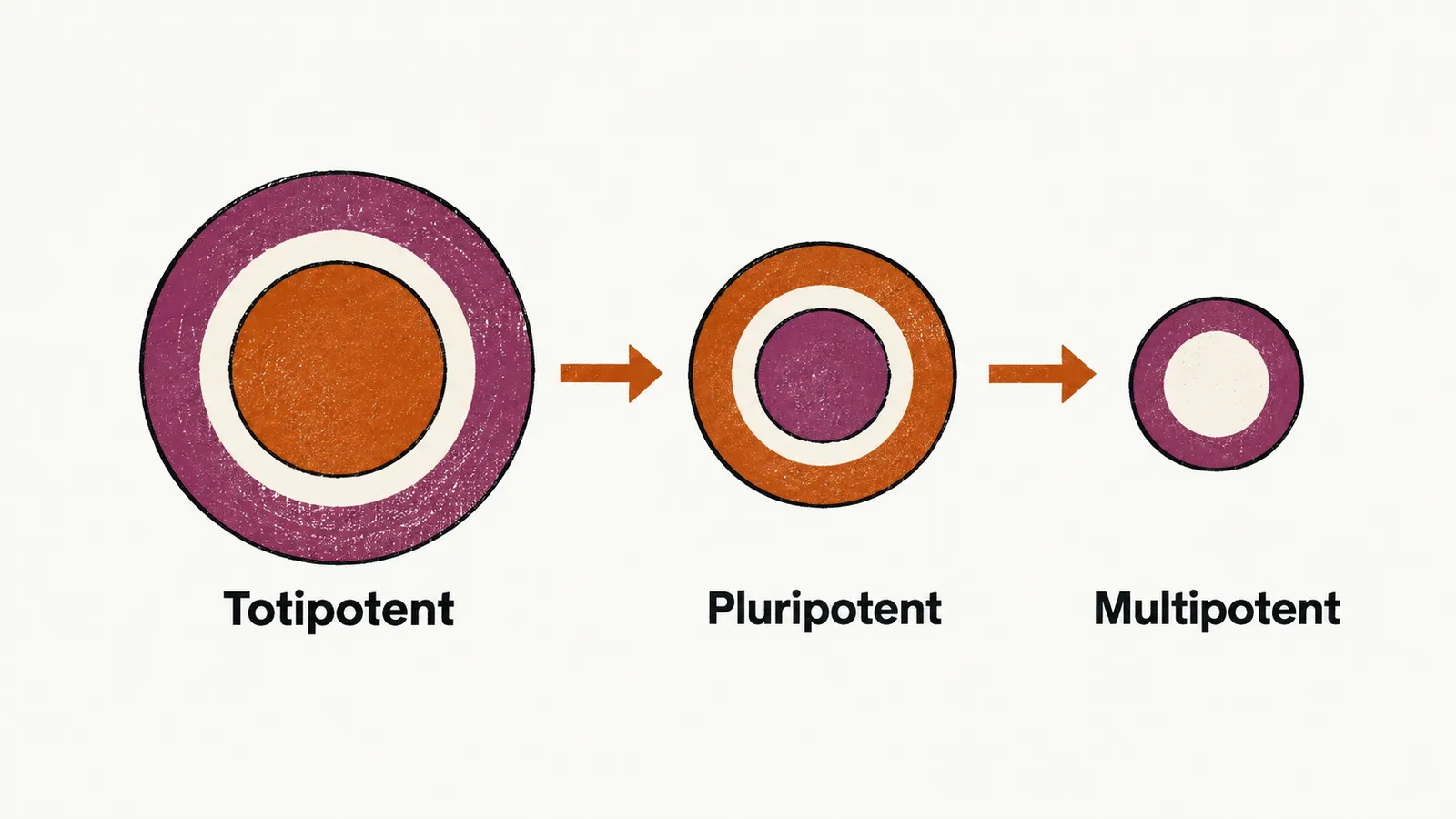
Stem cells share a feature called plasticity: the ability to differentiate into different kinds of specialized cell. The degree of plasticity defines three classes, ordered from the widest potential to the narrowest:
- Totipotent stem cells are the cells present before the blastocyst (the early embryonic ball of cells) forms. They can produce both the trophoblast, the outer cell layer of the blastocyst, and the inner cell mass, the cluster of cells inside it, that is, an entire organism.
- Pluripotent stem cells, also called embryonic stem cells, lie inside the inner cell mass of the blastocyst and can produce all three germ layers of the embryo.
- Multipotent stem cells, also called adult stem cells, are more restricted and give rise to several kinds of specialized cell within their lineage.
The hematopoietic stem cells are the multipotent stem cells of the blood.
Potential uses of the stem cells
Uses proposed for stem cells include:
- studying molecular and cellular processes in vitro;
- studying human diseases;
- studying the effect of drugs on cells;
- generating cells and tissue for cell and tissue therapies, such as corneal regeneration.
For the blood, the stem cells that matter are the multipotent ones. They are found in one particular part of a tissue, a microenvironment that controls how they behave.