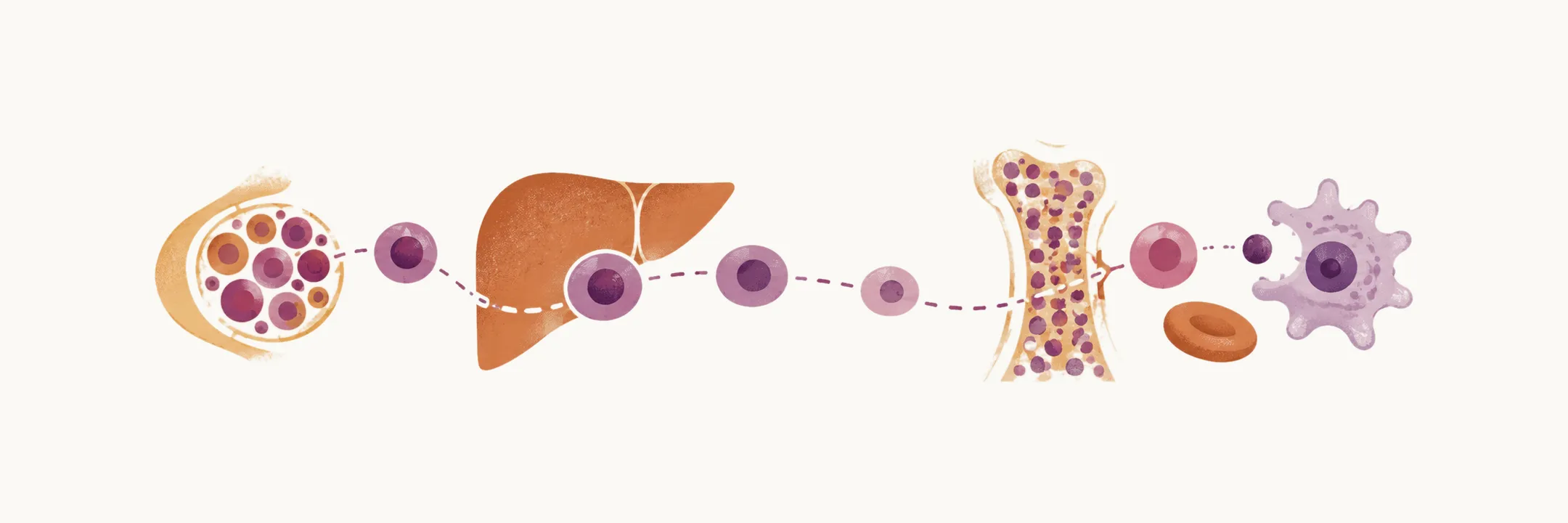
Erythropoiesis is the formation of red blood cells (RBCs) from the megakaryocyte and erythroid progenitors (MEPs), the shared precursors of red cells and platelets. Red cell production changes its site as the body develops, and inside the marrow it runs through defined stages, the later ones on a scaffold of macrophages.
Sites of erythropoiesis
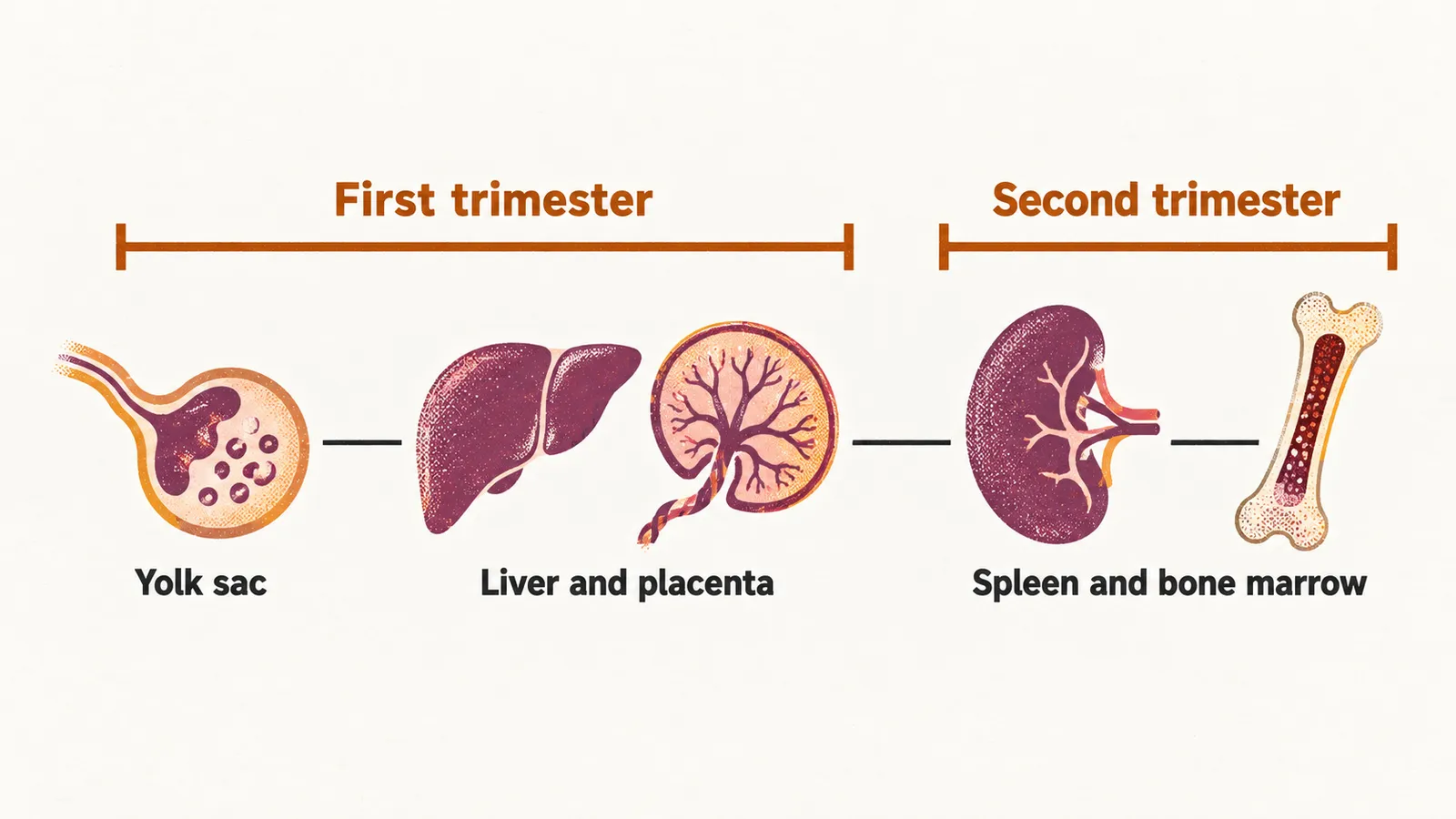
In the adult, erythropoiesis occurs in the red bone marrow, in the embryo in the yolk sac, and in the fetus in the liver and spleen. The site moves from the yolk sac towards the bone marrow as development proceeds, in this order:
- First trimester, yolk sac. The yolk sac first produces oxygen-delivering RBCs, and also the resident macrophages found throughout the body, such as the microglia of the brain.
- First trimester, after the yolk sac. Red cell production moves to intraembryonic sites such as the placenta and the fetal liver. These sites produce stem cells, red blood cells, platelets, and the cells of innate immunity, the first-line defence cells.
- From the second trimester. Blood cells form in the spleen and bone marrow. The cells of adaptive immunity, the antigen-specific defence cells, are postponed from the first to the second trimester, and they are made in the bone marrow.
Phases of erythropoiesis
Erythropoiesis runs through two main stages. The first is the erythropoietin-dependent stage, in which the early erythroblasts, the first red cell precursors of the marrow, prepare for the large-scale formation of hemoglobin by building ribosomes. The second is hemoglobin synthesis. The erythropoietin-dependent stage ends at the close of the early erythroblast stage, and the erythropoietin-independent stage begins with the first stage of the late erythroblast cell.
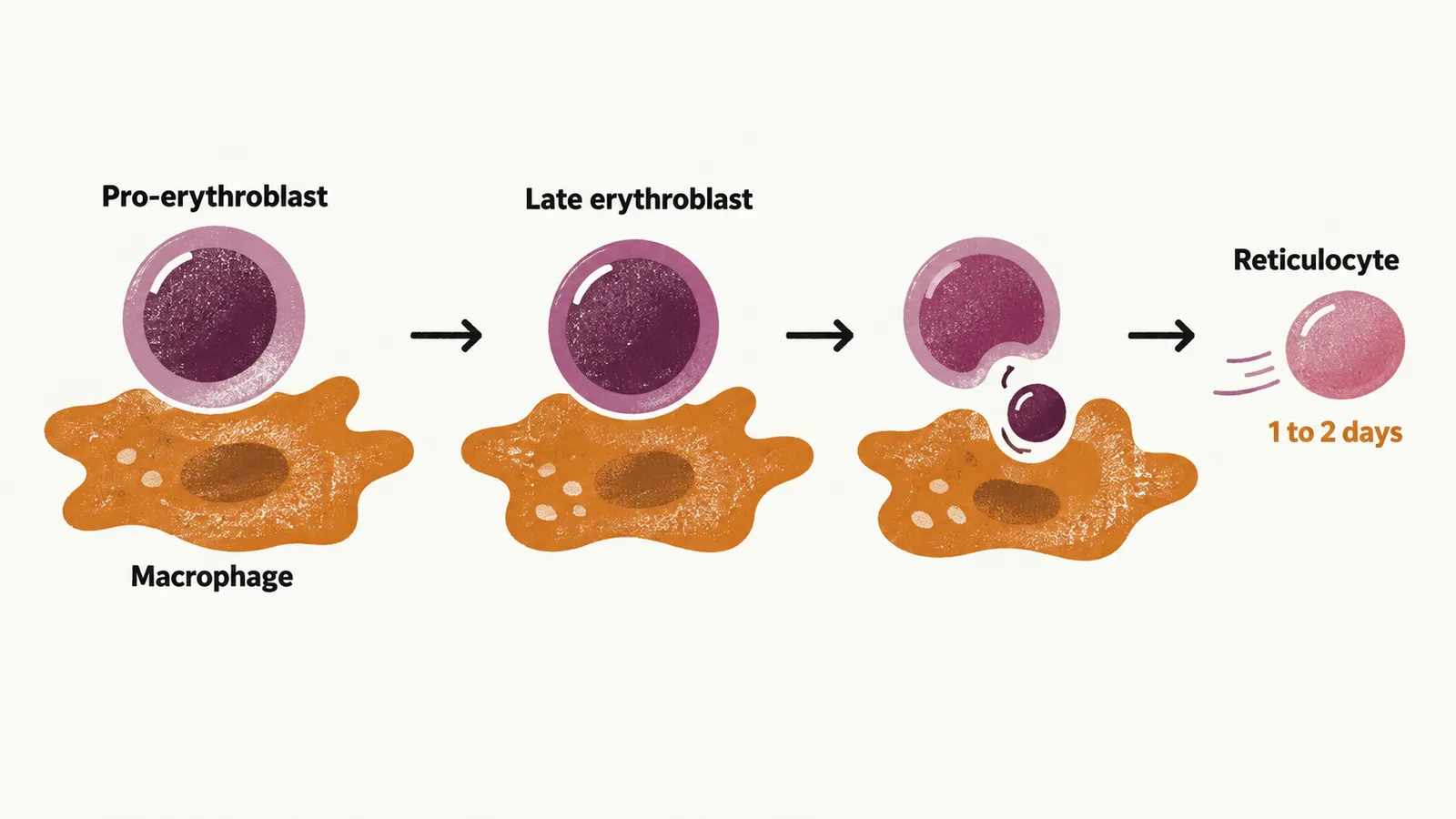
The process takes place mainly on the surface of macrophages, and this complex of cells is called an erythroblastic island. The macrophages of the island secrete the factors that drive erythropoiesis. Once the pro-erythroblast forms in the bone marrow from the MEP, it sits on the macrophage surface, and the later changes happen there.
The cell that leaves the island has already lost its nucleus: the late erythroblast expels the nucleus, and the macrophage phagocytoses it, that is, engulfs and digests it. What enters the blood is an immature red cell, the reticulocyte, which still holds residual ribosomes and organelles and matures into a full red cell over the next 1 to 2 days in the circulation.