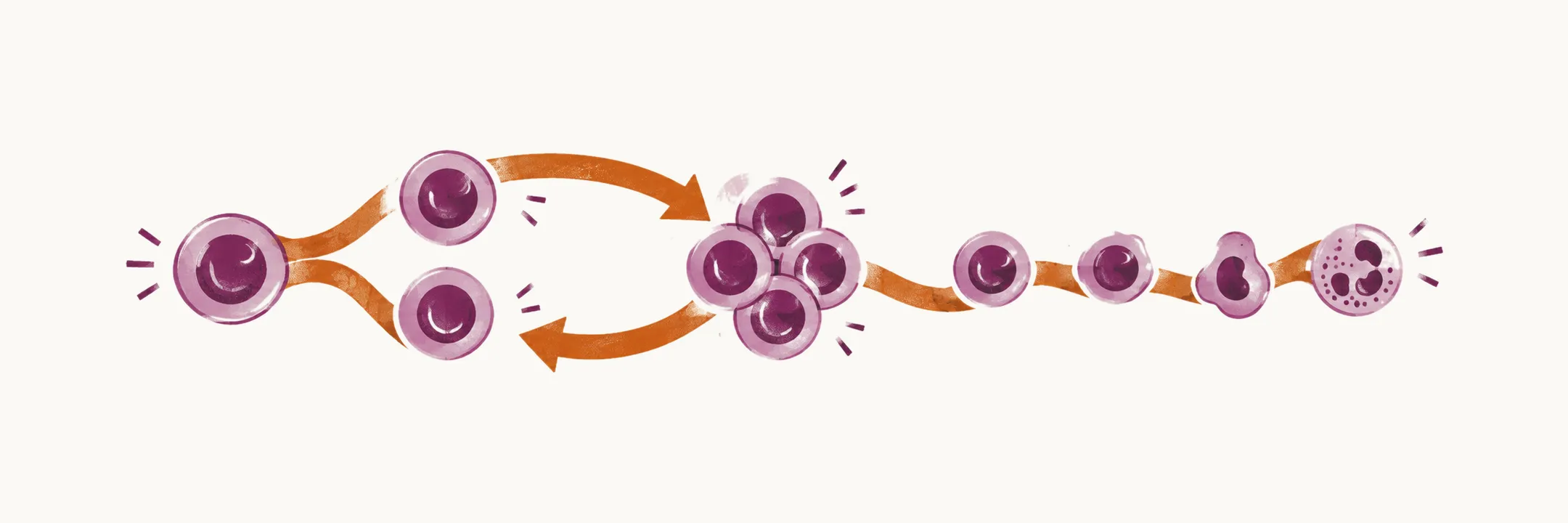
Self-renewal means a stem cell dividing to make more stem cells. Blood formation depends on it, because the blood cells that differentiation produces are short-lived and most terminally differentiated blood cells cannot divide at all; only stem cells, memory B and T cells, tissue-resident macrophages, and some myeloid committed progenitor cells retain that ability. The stem cell pool therefore has to renew itself continuously to replace what is lost.
Stem cells differ in how ready they are to divide
Stem cells can regenerate themselves by definition, but they are not uniform in how readily they do it, and two groups are recognised. Deep-quiescent stem cells, also called deep reserved stem cells, are dramatically resistant to the cytokines that would start them dividing. Part of the reason may be their very high concentration of cyclin-dependent kinase inhibitors such as p57, or CDKN1C, which restrain the cell cycle; signals from the niche cells also seem to enforce the quiescent state, through molecules such as IL-18, angiogenin and angiopoietin-1. The second group, the more proliferative and replenishing stem cells, sits closer to division and supplies the steady output of new cells.
Effect of age on proliferation
How readily stem cells divide also depends on the age of the person, through two routes. Intrinsically, the amount of the cyclin-dependent kinase inhibitor p16INK4a increases. Extrinsically, the sympathetic stimulation reaching the hematopoietic stem cells declines. Together these changes push the pool towards reduced regenerative capacity.
Limited data, chromatin and epigenetic factors
The data on self-renewal are still very limited, but the field matters for medicine because hematopoietic stem cells (HSCs) can be used to cure different disorders. What is known points to chromatin and epigenetic control, that is, control by how DNA is packaged and chemically marked. Changing the chromatin state can activate self-renewal. One family involved is the polycomb group of zinc-finger proteins, which contribute to keeping certain genes accessible. Among the genes they influence are three kinds:
- genes that modify cell-cycle regulators such as the cyclin-dependent kinase inhibitors, including Bmi-1, Gfi-1 and Asxl1;
- transcription factors such as the Hox gene HoxB4, which can drive extensive self-renewal by attaching to its DNA-binding motif;
- epigenetic modifiers such as the DNA methyltransferase DNMT3a, which adds methyl groups to DNA, and Tet2, which removes them.
Stem cells from the umbilical cord
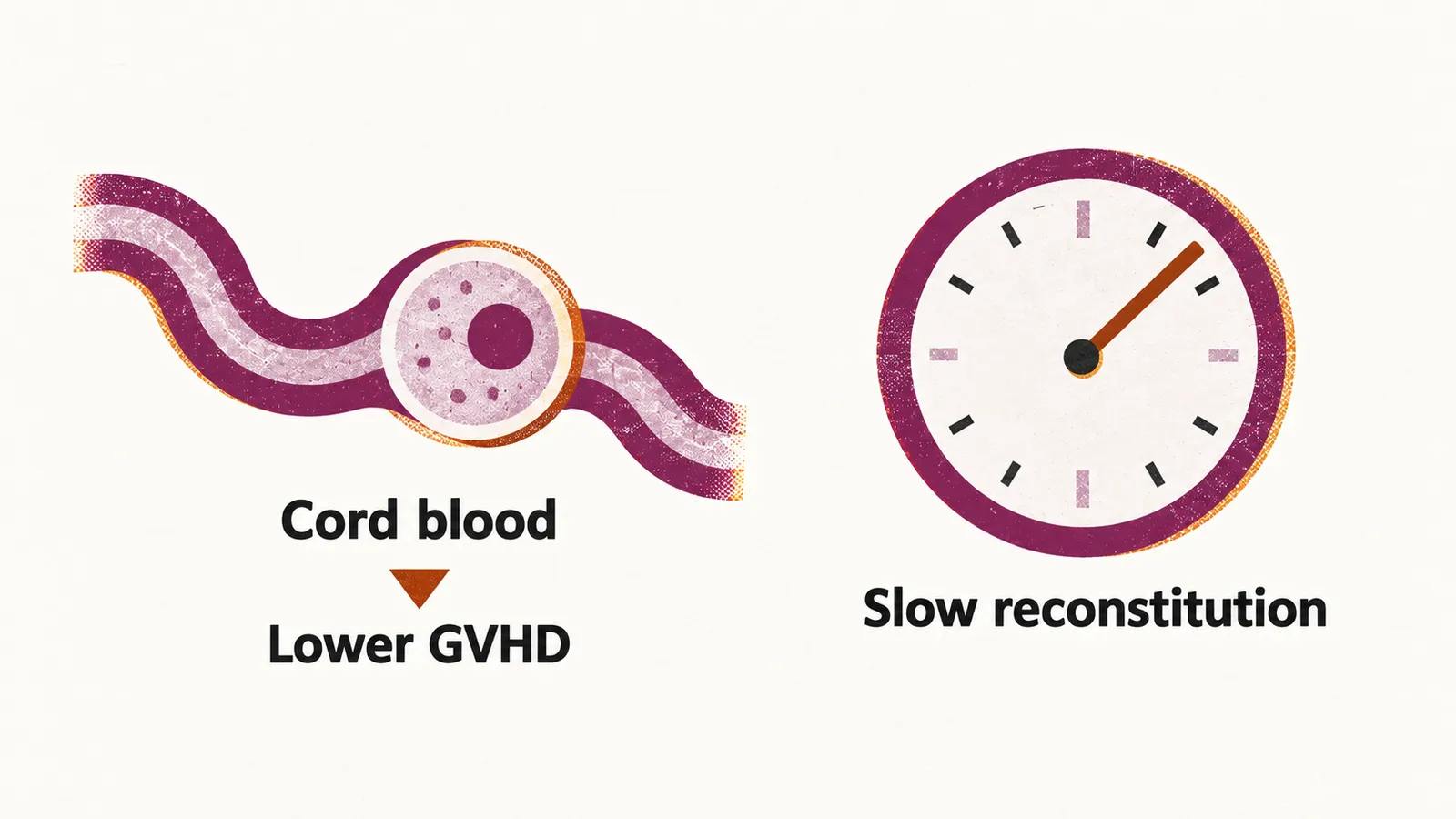
Because HSCs can be used to cure disorders, the source of the stem cells matters. Stem cells taken from umbilical cord blood carry a trade-off. The advantage is a lower incidence of graft-versus-host disease (GVHD), the immune attack by donor cells on the recipient. GVHD is less frequent after cord blood transplantation than its marked HLA mismatch (a difference in the tissue-type proteins between donor and recipient) would suggest, thought to reflect the small number of mature donor T cells in cord blood. The drawback is slow reconstitution, the rebuilding of the blood system after transplantation: stem cells from cord blood rebuild it very slowly, because a cord-blood unit contains relatively few stem cells, so counts recover later and the risk of early infection is higher than with other sources.
The cells that all this renewal supplies are, above all, the mature blood cells, and the most numerous of them are the red blood cells.