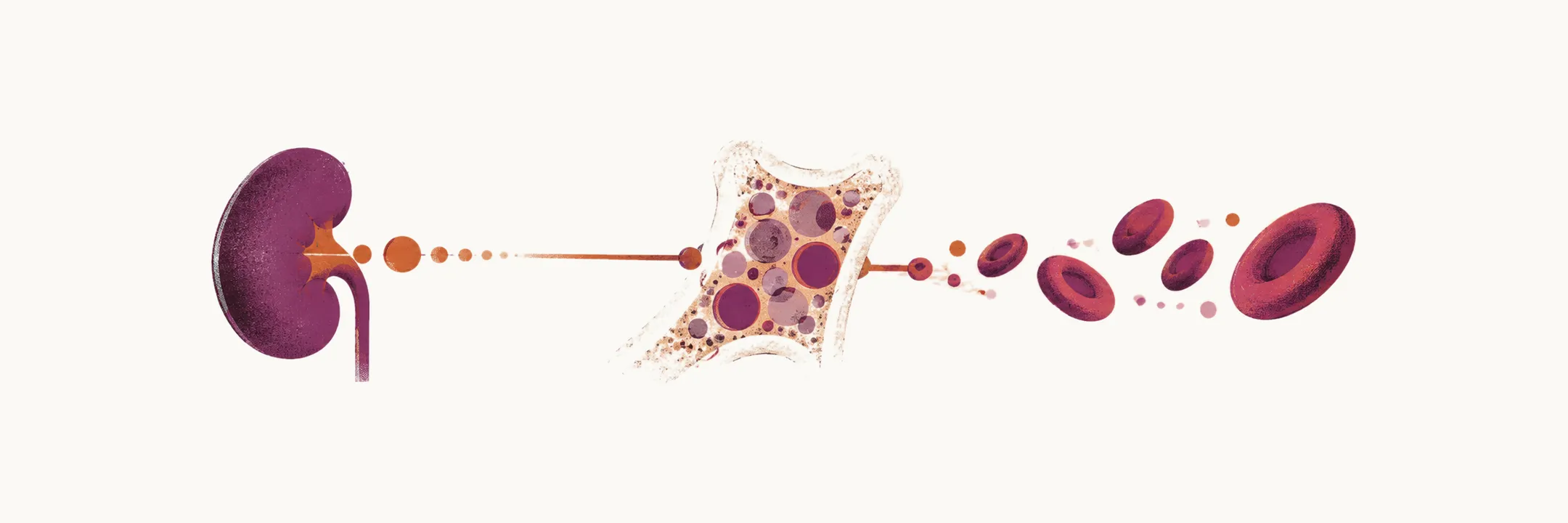
The red blood cell is the endpoint of one branch of hematopoiesis. It is the most abundant cell in the blood, and it is produced by a process shared with every other blood cell up to a common progenitor.
Red blood cells
Red blood cells (RBCs) are the most abundant cells in the blood. Their concentration is higher in men than in women: the hematocrit, the fraction of blood volume taken up by red cells, is about 42% to 53% in men and about 37% to 47% in women. RBCs make up about 90% of all the cells in the blood. Their average lifespan is about 120 days, so the bone marrow has to replace them continuously, producing about 2.3 million cells per second.
Hematopoiesis
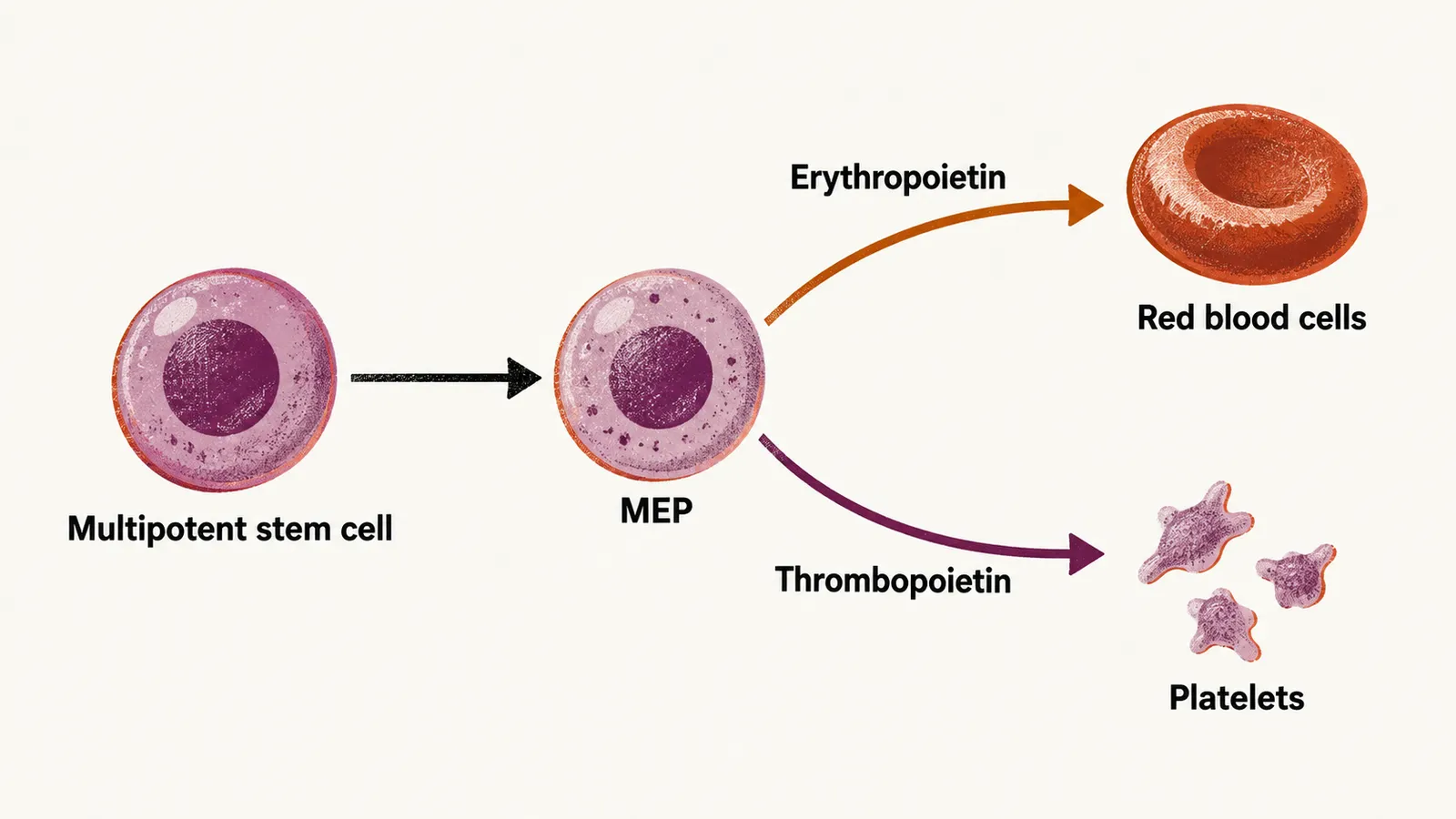
Hematopoiesis is the formation of blood cells: all the cells found in the blood, which are erythrocytes (red blood cells), platelets, and the several kinds of white blood cell. All of them derive from multipotent stem cells (MSCs).
The erythrocyte and the platelet share a single upstream precursor, the megakaryocyte and erythroid progenitor (MEP), a progenitor being an intermediate cell already committed to a narrower set of descendants. Different growth factors, proteins that stimulate cells to grow and differentiate, separate their fates from that point. Erythropoietin drives differentiation towards red blood cells, and thrombopoietin drives differentiation towards megakaryocytes and platelets.
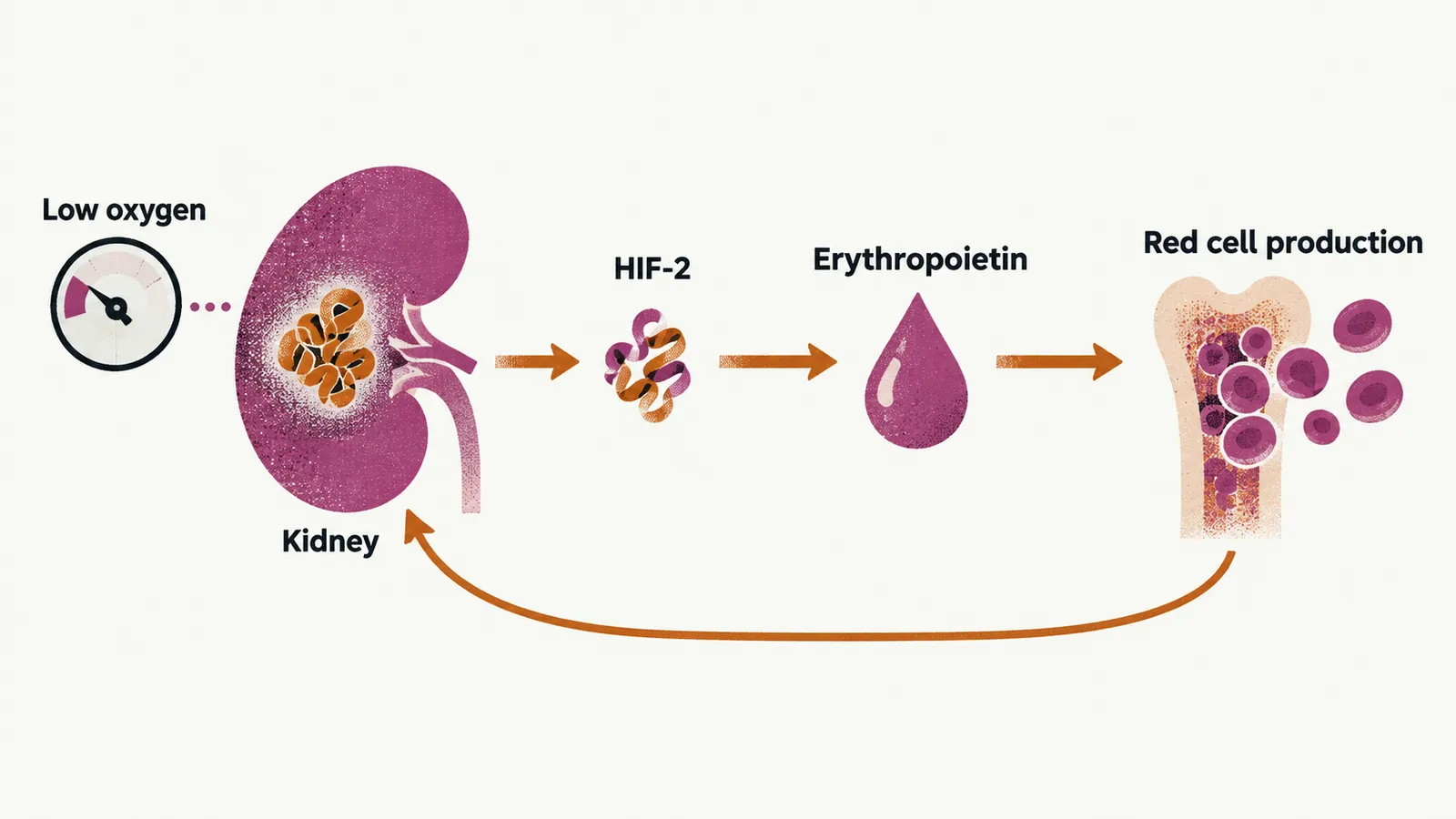
The red cell line depends heavily on one signal. Erythropoietin is produced mainly by the kidney, in interstitial fibroblast-like cells of the cortex, and its release is controlled by the oxygen supply reaching those cells. When tissue oxygen falls, the transcription factor HIF-2, which switches genes on in response to low oxygen, stabilises and switches on erythropoietin, which then rescues erythroid precursors from death and raises red cell production. The kidney therefore acts as the sensor that matches red cell output to the body’s oxygen needs, which is one reason anemia develops in chronic kidney disease.
Erythropoietin acts on the erythroid precursors, and those precursors pass through defined stages, in changing sites of production, before a mature red cell enters the blood.