The stem cell compartment of the bone marrow holds more than one kind of stem cell. Hematopoietic stem cells (HSCs) build the blood; stromal stem cells beside them build the supporting tissue. The pool of HSCs is tiny and its output is enormous: an adult carries about 100,000 HSCs, yet they give rise to hundreds of billions of new blood cells each day. Their importance shows in their absence: without HSC production and proper intervention, a person lives only about 2 to 4 weeks, because the short-lived blood cells are never replaced.
The two forms of stem cells in the bone marrow
Two kinds of stem cell sit inside the bone marrow. Hematopoietic stem cells are first made in the fetal liver and settle in the bone marrow once bone calcification begins. Stromal stem cells are the second kind; they form supporting tissue rather than blood.
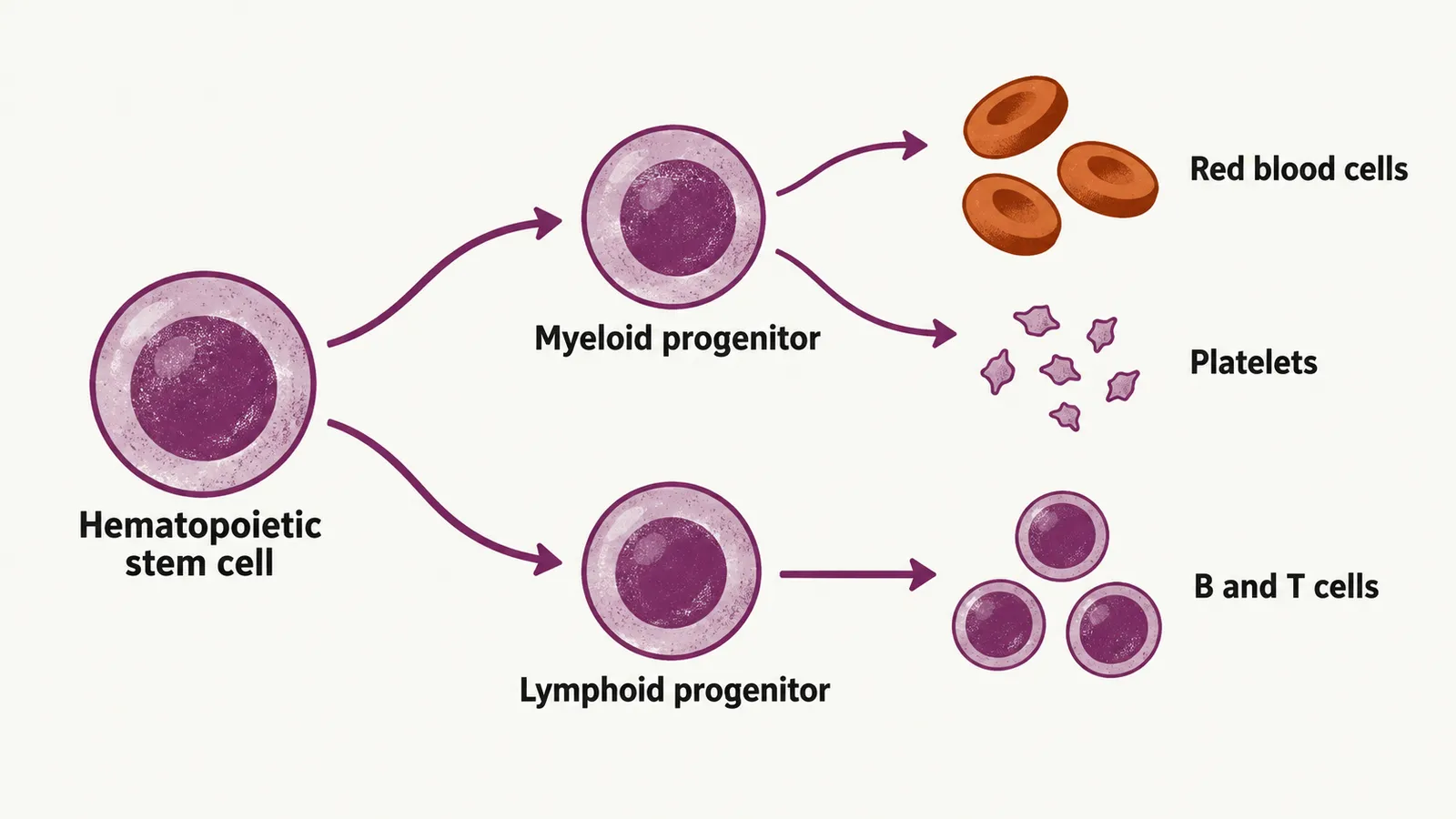
The hematopoietic stem cells are not yet committed to any one blood-cell type. They give rise to multipotent stem cells, and those in turn give rise to the myeloid progenitor cells and the lymphoid progenitor cells. A progenitor is an intermediate cell that has already narrowed its options, and these two begin the two great lineages of blood.
What the progenitors produce
Each progenitor feeds one lineage of blood cells:
- The myeloid progenitor cells produce red blood cells, neutrophils, eosinophils, basophils, monocytes, macrophages, and megakaryocytes, which then release platelets.
- The lymphoid progenitor cells produce B lymphocytes, T lymphocytes and natural killer cells.
The stromal stem cells, sitting beside the hematopoietic ones, form a different set of cells: bone cells (osteocytes and osteoblasts), adipocytes, and the hematopoietic supportive stromal cells.
Surface markers of the developmental stage
Marrow cells at different stages look alike under the microscope, so their developmental stage is read from proteins on their surface, known by their CD (cluster of differentiation) numbers. A cell that carries CD34 is still immature: the hematopoietic stem cells have it, and the fully developed cells do not. The reverse is true of CD38 and HLA-DR: the stem cells lack them, and cells gain them as they mature. Checking the markers therefore places a cell along the path from stem cell to mature blood cell.
Where hematopoietic stem cells are found and how they are collected
Hematopoietic stem cells exist in two forms: resident in the bone marrow, and circulating in the blood. That is what makes them collectable. They can be taken directly from the bone marrow by puncture; they can be mobilised into the blood by injecting cytokines, the signalling proteins that regulate blood cells, and then collected from the blood; or they can be obtained from cord blood.
Homing of the circulating stem cells to the bone marrow
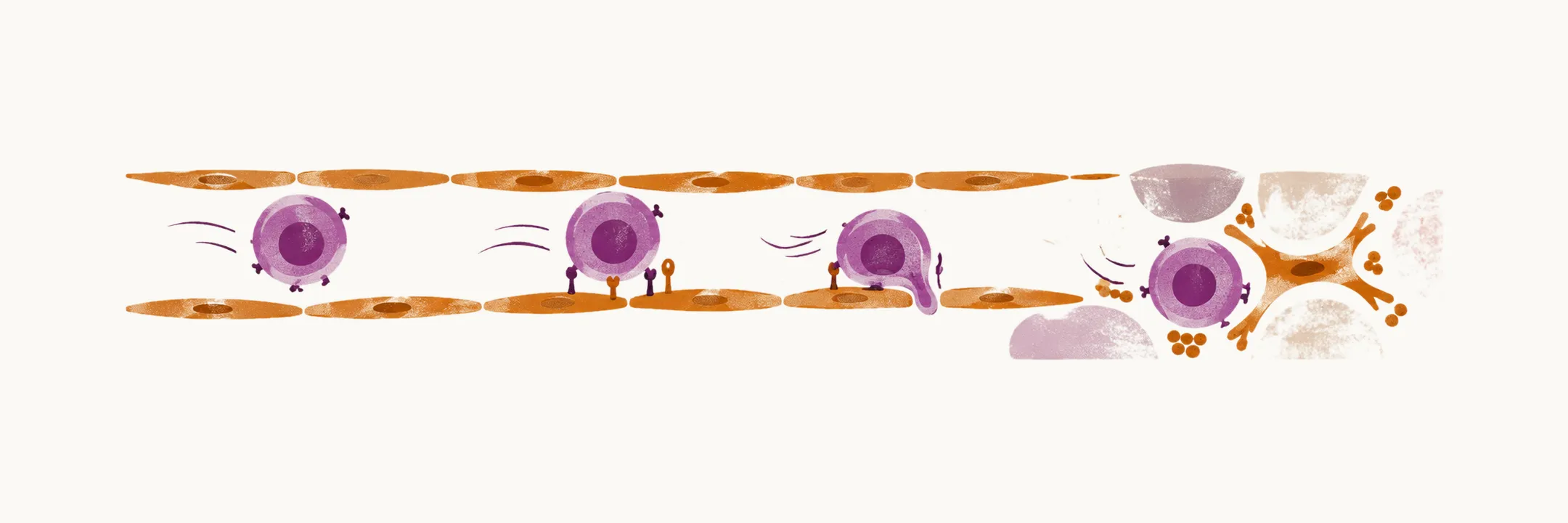
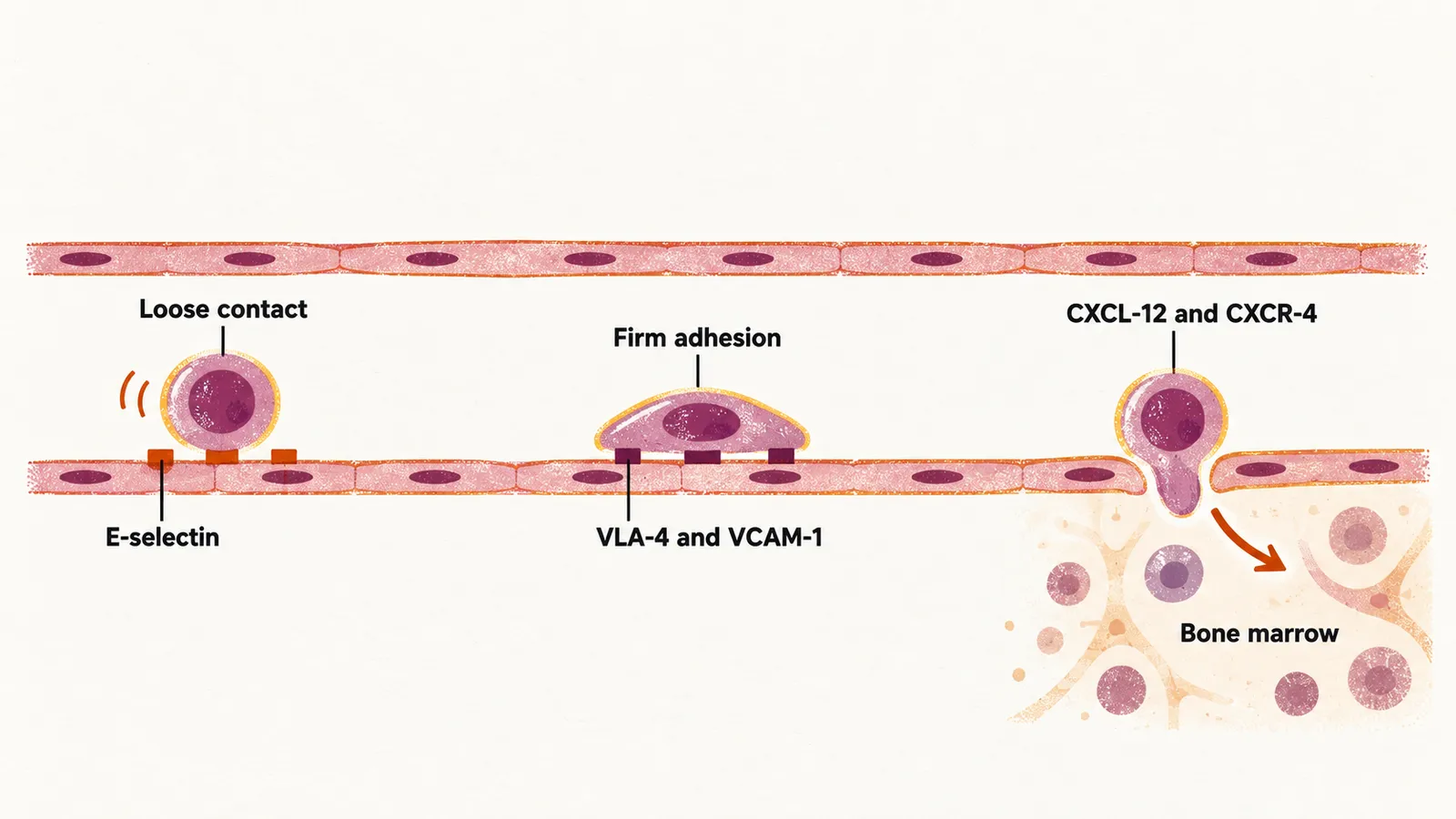
Circulating stem cells must find their way back to the marrow, and they do it in steps. First they engage the endothelial cells, the cells lining the blood vessel, loosely: CD44 and CD162 on the stem cell bind the P- or E-selectin on the endothelial cell, so the stem cell rolls along the vessel wall. That loose contact allows the stem cell’s integrins, its adhesion receptors, to become activated, producing a firm adhesion between VLA-4 on the stem cell and VCAM-1 on the endothelial cell. Together with CXCL-12 and the CXCR-4 receptor on the stem cell, this directs the cell from the circulation into the bone marrow.
What controls the output of the HSCs
The number of blood cells is held within a constant window, and negative feedback is one of the mechanisms that does this: as mature cells accumulate, they restrain further self-renewal and differentiation.
Beyond that, several other pathways control the formation of new cells from HSCs, though they are not yet clear enough. Two points are known. Regulators that act on more mature cells do not change the number or size of the HSC niche, as with erythropoietin, which affects the red cell precursors and not the stem cells. Conversely, regulators that act on the HSCs themselves have no effect on the more differentiated progenitor cells; these include the cyclin-dependent kinase inhibitors, Bmi-1, microRNA-processing enzymes such as Dicer, and a pyruvate kinase isoform.