Allogeneic HSCT is the form of hematopoietic stem cell transplantation in which the recipient receives HSCs from a genetically different donor, so HLA (human leukocyte antigen) compatibility between the two is what limits the immunological reaction.
The steps of allogeneic HSCT
As in autologous HSCT, in allogeneic HSCT the graft is preceded by conditioning, a regimen of chemotherapy whose intensity may be myeloablative (strong enough to destroy the marrow) or reduced; the conditioning clears space in the marrow and adds to the destruction of the diseased cells, and then the HSCs from the donor can be infused into the body of the recipient.
Donor matching
To reduce the risk of complications of allogeneic HSCT, HSCs that are highly compatible with the recipient have to be used, and this is done mainly through the comparison of the HLA genes of the donor and the recipient.
The ideal donor for allogeneic HSCT is an HLA-identical sibling. A genetically identical monozygotic twin is not an allogeneic donor, because a transplant between genetically identical people is syngeneic.
How the patients who receive a donor transplant are chosen
Whether a patient is offered a transplant from a donor depends on several factors: the age of the recipient, the urgency of the situation, the indication for HSCT, and the expertise of the center. Together these factors decide whether the expected benefit of a donor graft outweighs its risks for that patient.
Source of the graft: peripheral blood, bone marrow or cord blood
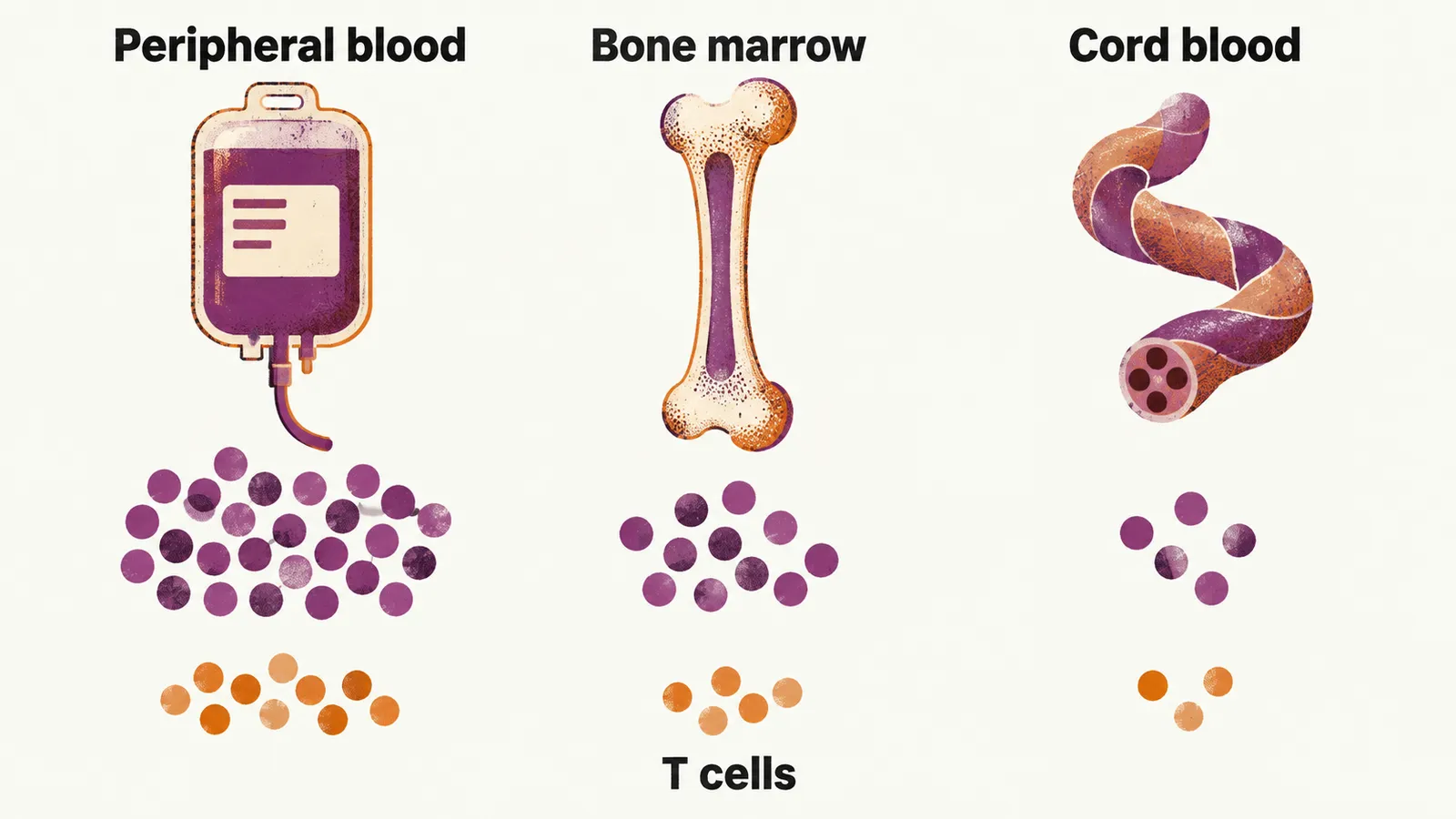
The HSCs can be obtained from three sources, and the source matters because it changes the cell yield and the complications that follow. Peripheral blood, the commonest source, requires the HSCs to be mobilised, that is moved out of the bone marrow into the blood, and it yields a larger number of stem cells. Sometimes the HSCs are instead taken directly from the bone marrow, which carries less contamination of the HSCs with T cells than peripheral blood does, and therefore some sorts of complications, such as graft-versus-host disease (GvHD), the attack of donor T cells on the recipient’s tissues, are diminished a lot. The third source is cord blood, which is immunologically immature, which allows less strict matching, but it contains fewer cells and engrafts (begins to produce blood cells) more slowly.