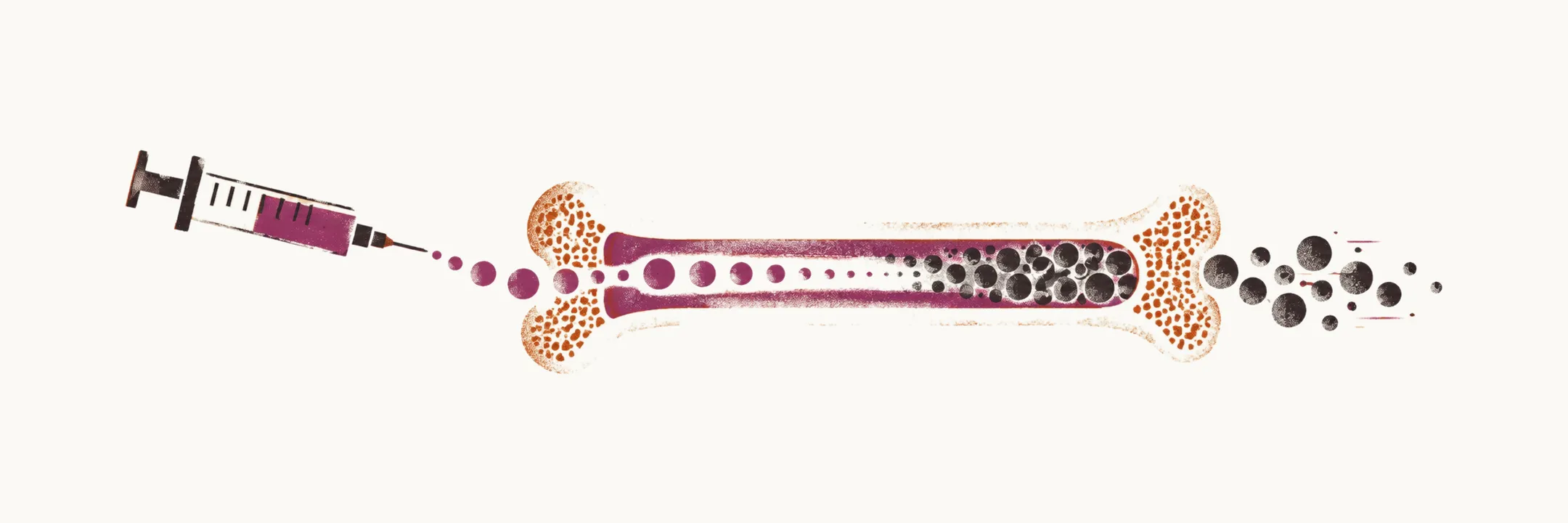
Conditioning is the course of chemotherapy, and sometimes radiotherapy, given in the days immediately before the stem cells are infused. It is the part of the transplant that prepares the body for the graft: it clears space in the bone marrow, weakens the immune system enough that the graft is not rejected, and, in malignant disease, adds to the destruction of the diseased cells.
Why conditioning is needed
A graft cannot usefully be infused into an untreated patient. The marrow is already occupied by the patient’s own stem cells, so space has to be made for the new ones. The patient’s immune system is also intact, and its T cells would recognise the donor cells as foreign and destroy them, so conditioning has to suppress that response long enough for the graft to take hold. In hematological malignancy the same high-dose drugs reduce the number of malignant cells and so lower the risk of relapse.
There is a price for this. Conditioning damages the marrow, and the patient passes through a period with too few blood cells, including the white cells that fight infection. That period lasts until engraftment, when the transplanted stem cells begin to produce blood cells again. The intensity of the regimen is the main way this balance is set.
Three levels of intensity
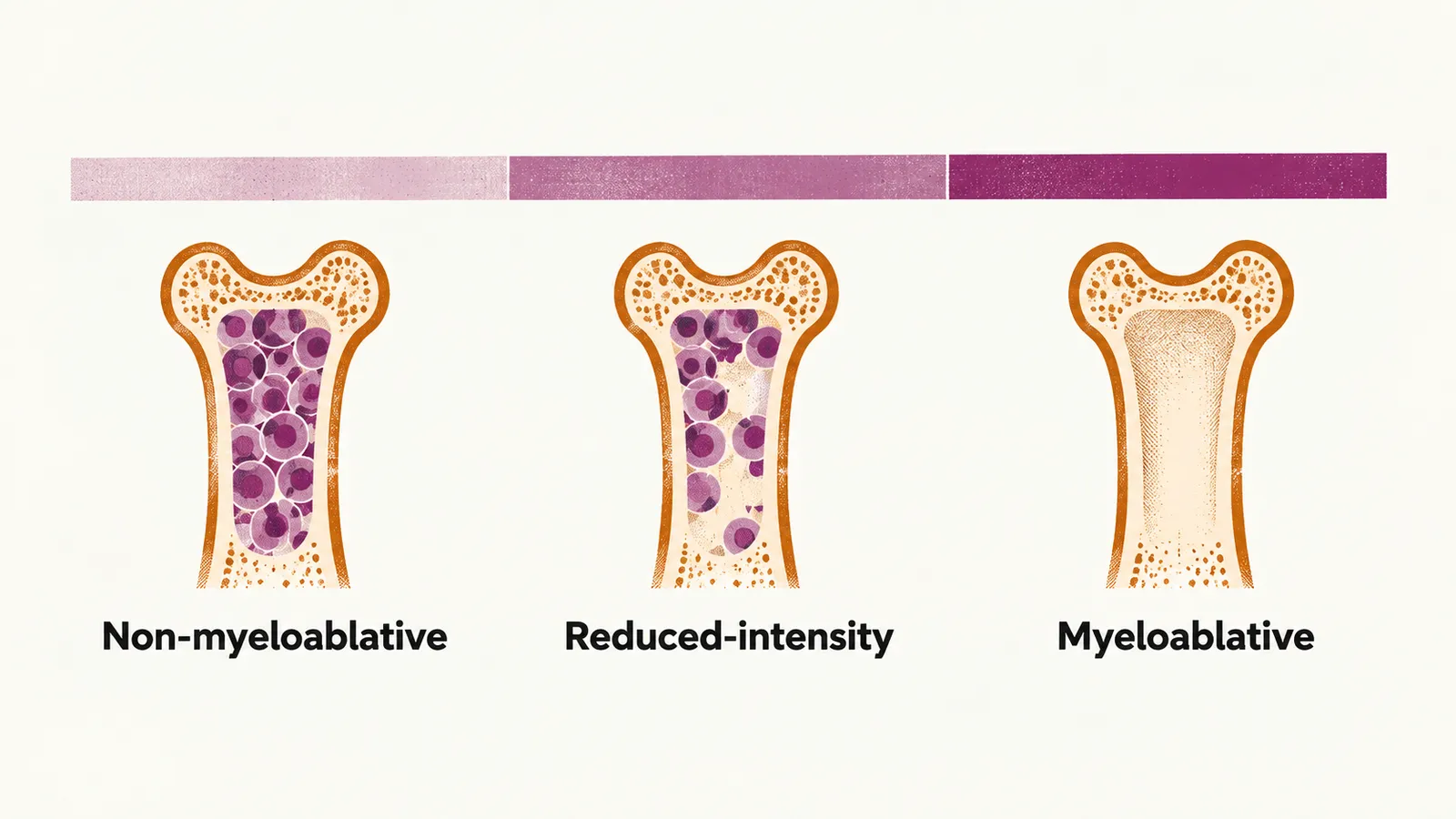
For allogeneic transplants, conditioning is classified by intensity into three approaches. Myeloablative regimens are strong enough to destroy blood cell formation in the marrow, and reduced-intensity regimens are milder but still leave low blood counts for a long time; both require the graft to restore the marrow. Non-myeloablative regimens cause little fall in the blood counts and may allow the patient’s own marrow to recover on its own.
| Feature | Myeloablative (MAC) | Reduced-intensity (RIC) | Non-myeloablative (NMA) |
|---|---|---|---|
| Effect on the marrow | Destroys blood cell formation; needs graft support | Prolonged low blood counts; usually needs graft support | Little change in blood counts; may recover without support |
| Main mechanism | High-dose toxicity to the stem cells | Intermediate between the two extremes | Mainly immunosuppression rather than marrow ablation |
| Relapse risk | Lowest | Higher, with lower non-relapse mortality | Highest |
Myeloablative regimens use alkylating agents such as busulfan, cyclophosphamide or melphalan, with or without total body irradiation (TBI), at doses expected to destroy the marrow so completely that it cannot recover without a graft. Their toxicity limited their use historically, and they are best tolerated by younger and fitter patients. Reduced-intensity and non-myeloablative regimens were developed so that older and less fit patients could be transplanted; instead of relying on drug toxicity alone, they lean more on the donor immune cells in the graft to remove the disease, which is why they carry a higher relapse risk but lower treatment-related mortality.
What the regimens contain
Conditioning combines drugs that destroy cells with drugs that suppress the immune system. Busulfan, cyclophosphamide, melphalan and treosulfan are used for their cell-killing effect, and total body irradiation acts in the same way. Fludarabine is a strong immunosuppressant rather than a myeloablative drug, and it forms the backbone of the gentler regimens. Antibodies such as anti-T lymphocyte globulin (ATG) or alemtuzumab may be added to remove T cells, either in the patient or in the graft, which reduces the risk of graft rejection and of graft-versus-host disease (GvHD), the attack of donor T cells on the patient’s tissues.
How conditioning shapes what follows
The intensity of the conditioning is not only a choice about the disease; it sets much of what happens after the transplant. A more intense regimen produces deeper and longer falls in the blood counts and more organ toxicity, and the toxic metabolites of the conditioning are the trigger of endothelial complications such as sinusoidal obstruction syndrome, an injury of the small vessels of the liver. A less intense regimen leaves more of the patient’s immune system intact, which changes the balance between rejection and GvHD. The same regimen is also the reason the types of infection change over time after the transplant.
Conditioning only prepares the body. The graft it prepares for is either the patient’s own cells or a donor’s, and that difference changes how the cells are collected and which complications follow.