Complications after HSCT are grouped by how long after engraftment, the point at which the transplanted stem cells begin to make blood cells, they appear. The first weeks are dominated by infection and by the toxicity of the conditioning, the chemotherapy given to prepare the body for the graft; the period after engraftment adds viral infection and acute graft-versus-host disease (GvHD), the reaction in which donor T cells attack the patient’s tissues (see Immune Reactions After HSCT); and the late period brings chronic GvHD and the problems of prolonged immunosuppression.
Timing of the complications
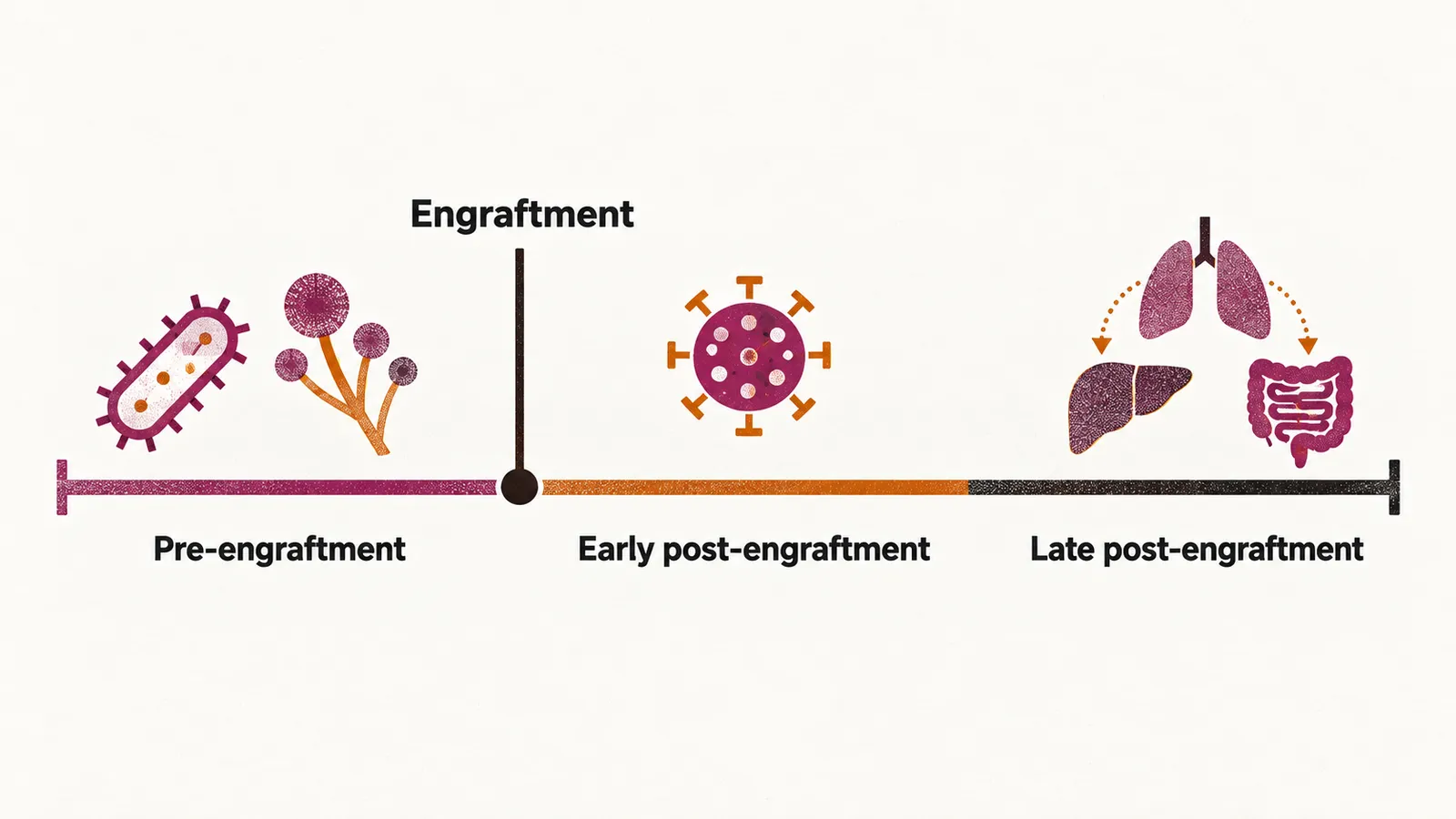
Complications are classified into three categories by the time of onset. Until engraftment happens the patient has almost no white cells, and this is why infection dominates the first period.
| Period | Timing | Main problems |
|---|---|---|
| Pre-engraftment | Before the graft begins to produce cells | Bacterial and fungal infections, and the toxicities of myeloablative chemotherapy |
| Early post-engraftment | 30 to 100 days after engraftment | CMV (cytomegalovirus) infection and acute GvHD |
| Late post-engraftment | More than 100 days after engraftment | Chronic GvHD |
Infection over the timeline
The organisms that threaten a transplant patient change as the immune system changes. Before engraftment, the patient is neutropenic, so bacterial and fungal infections are the main danger, together with the mucosal damage and other toxicities of the conditioning regimen. After engraftment the white cells return, but cellular immunity is still impaired, and infection with CMV (cytomegalovirus) — usually a reactivation of virus the patient already carries — becomes the characteristic problem of this period, which is also when acute GvHD appears. In the late period, immunity remains impaired, especially in patients who still have chronic GvHD or remain on immunosuppressive treatment, and encapsulated bacteria, fungi and viruses can all cause late infection.
Late complications
Beyond infection, the late period carries the consequences of chronic GvHD and of prolonged immunosuppression, and long-term survivors face a raised risk of a further malignancy. Because these problems appear years after the procedure, follow-up continues well beyond the transplant itself.
Endothelial cell dysfunction
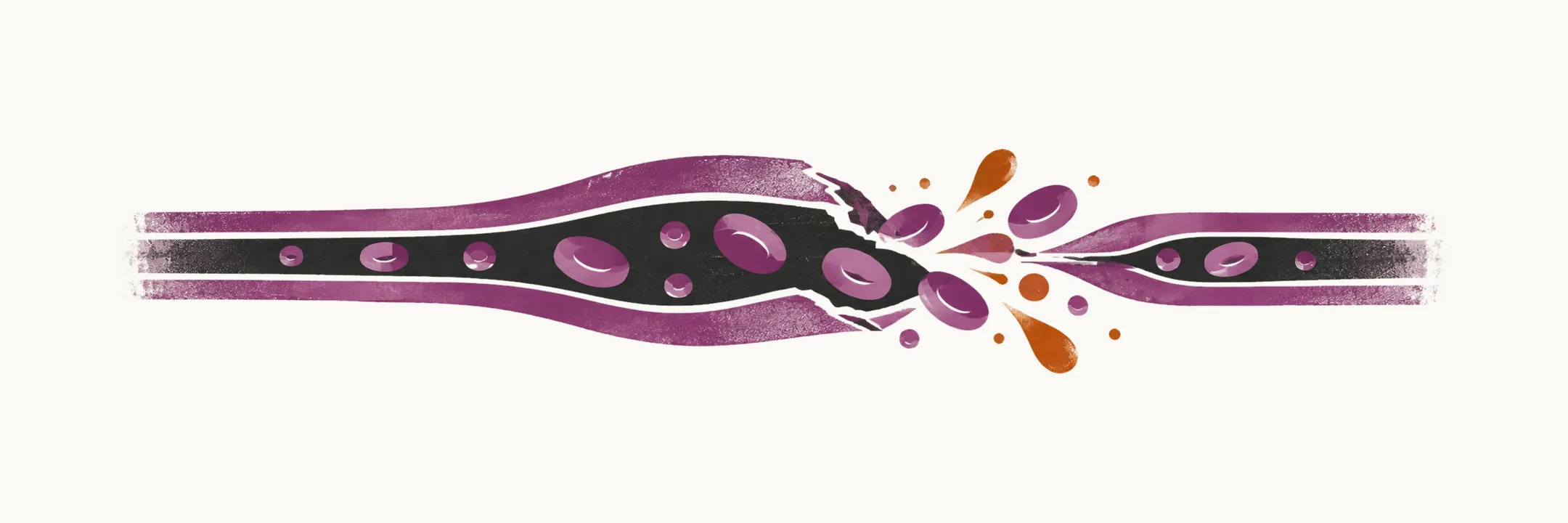
Not every complication is an infection or an immune reaction. The remaining complications are related to endothelial cell dysfunction. The conditioning and the transplant damage the endothelial cells that line the blood vessels, and damaged endothelium loses its normal control of hemostasis: vasoconstriction, over-activation of platelets and capillary leakage all follow. The best-defined of these syndromes is sinusoidal obstruction syndrome, in which endothelial injury in the liver produces an enlarged, tender liver, weight gain from fluid retention, jaundice and ascites; transplant-associated thrombotic microangiopathy is another. The same capillary leak accounts for much of the fluid shift and organ dysfunction seen around engraftment.