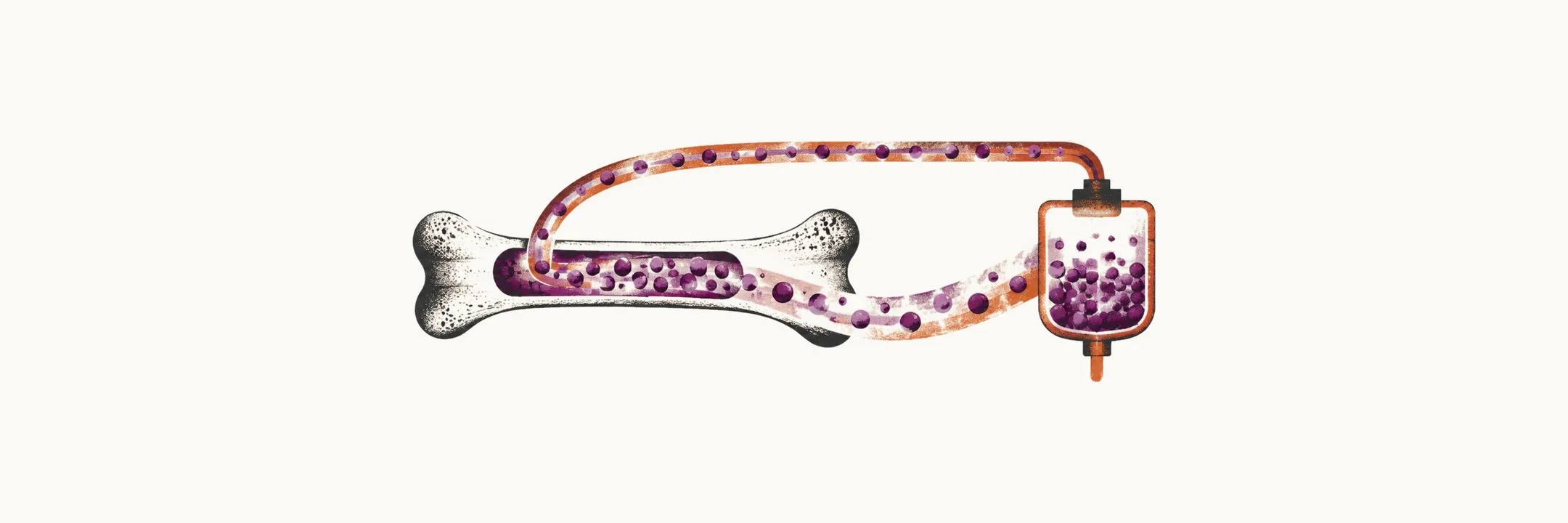
Autologous HSCT is the form of hematopoietic stem cell transplantation in which the recipient receives their own HSCs, so there is no immunological reaction.
The two steps of autologous HSCT
Autologous HSCT has two steps. The first is myeloablative chemotherapy, the conditioning regimen that destroys the HSCs and the neoplastic cells remaining in the bone marrow. The second is reinfusion of the patient’s own HSCs, collected beforehand, to restore the marrow that the chemotherapy has emptied.
Mobilisation of the HSCs and apheresis
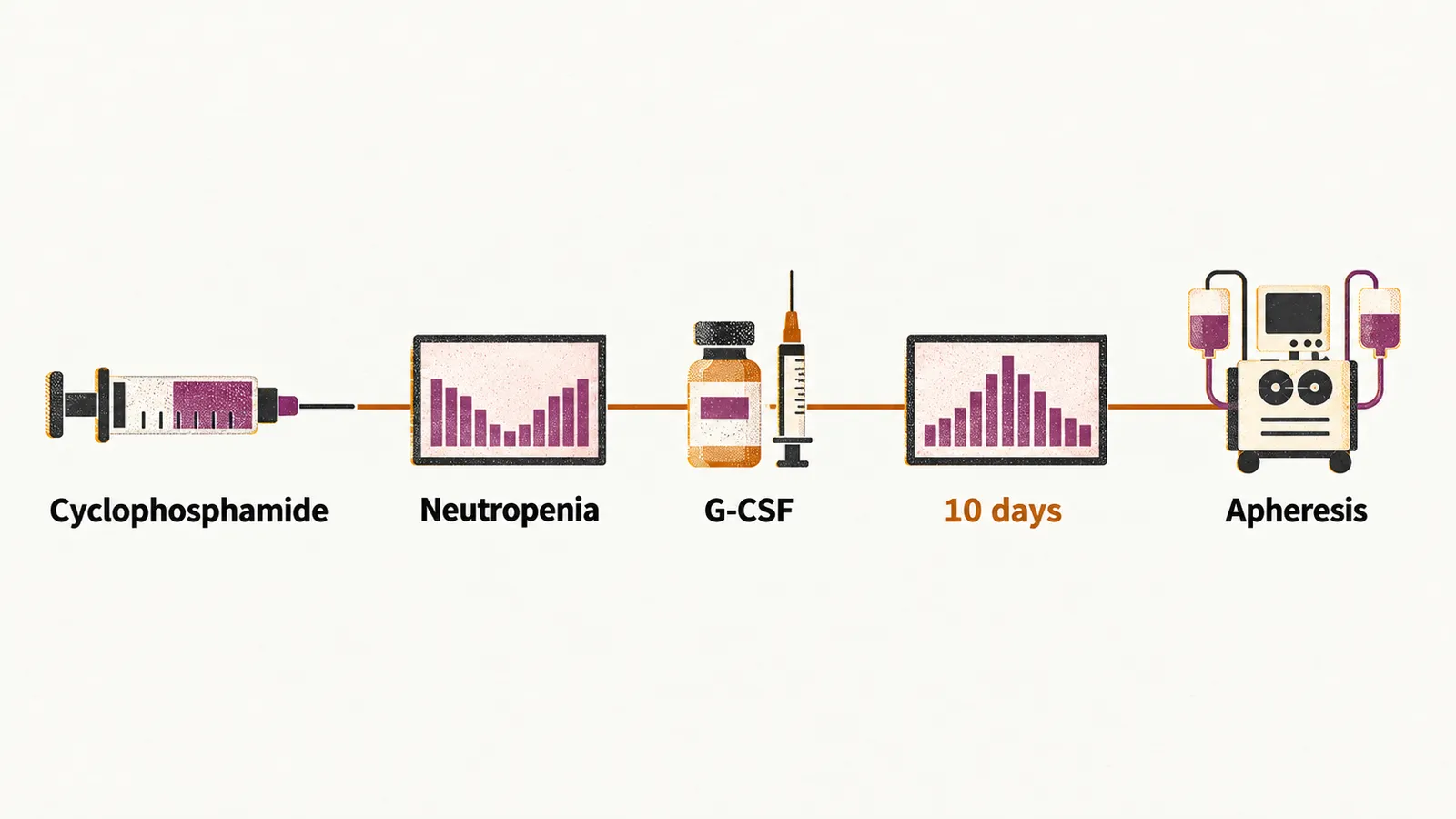
Because the cells must be collected beforehand, the first practical task is mobilisation, the process of moving the patient’s own HSCs out of the bone marrow into the peripheral blood, where they can be collected. It is usually done with growth factors given alongside the chemotherapy used for myeloablation. Cyclophosphamide is given for chemotherapy and myeloablation; neutropenia (a low number of neutrophils, the white cells that fight bacterial infection) then develops in the patient; G-CSF (granulocyte colony-stimulating factor) is injected, and about 10 days later the number of HSCs in the peripheral blood peaks, as the recovering marrow releases them. The CD34+ cells are then harvested by apheresis, a process that separates the wanted cells from the rest of the blood. Apheresis requires two central venous catheter lines, one for extraction and the other for returning the blood to the systemic circulation.
What determines the efficacy of the transplant
The efficacy of autologous HSCT depends on two things. The first is the level of remission reached with the myeloablative chemotherapy: a conditioning regimen that clears as much disease as possible leaves less for the graft to fail against. The second is the purity of the HSCs. Because the cells come from the patient, they can be contaminated with the patient’s own neoplastic cells, and if those cells are returned with the graft the chance of relapse is high.
Diseases treated with autologous HSCT
Once the cells have been collected, the question is which diseases this procedure serves. Autologous HSCT is used in some disorders as first-line treatment (the initial treatment), and in others as second-line treatment after a relapse of disease that was treated first line. It is used first line in mantle cell lymphoma, multiple myeloma and peripheral T-cell lymphoma, and second line in DLBCL (diffuse large B-cell lymphoma) and follicular lymphoma.
Because the graft is the patient’s own, none of this involves a donor. When the cells come from another person, the immunological reaction that autologous transplantation avoids becomes the central problem.