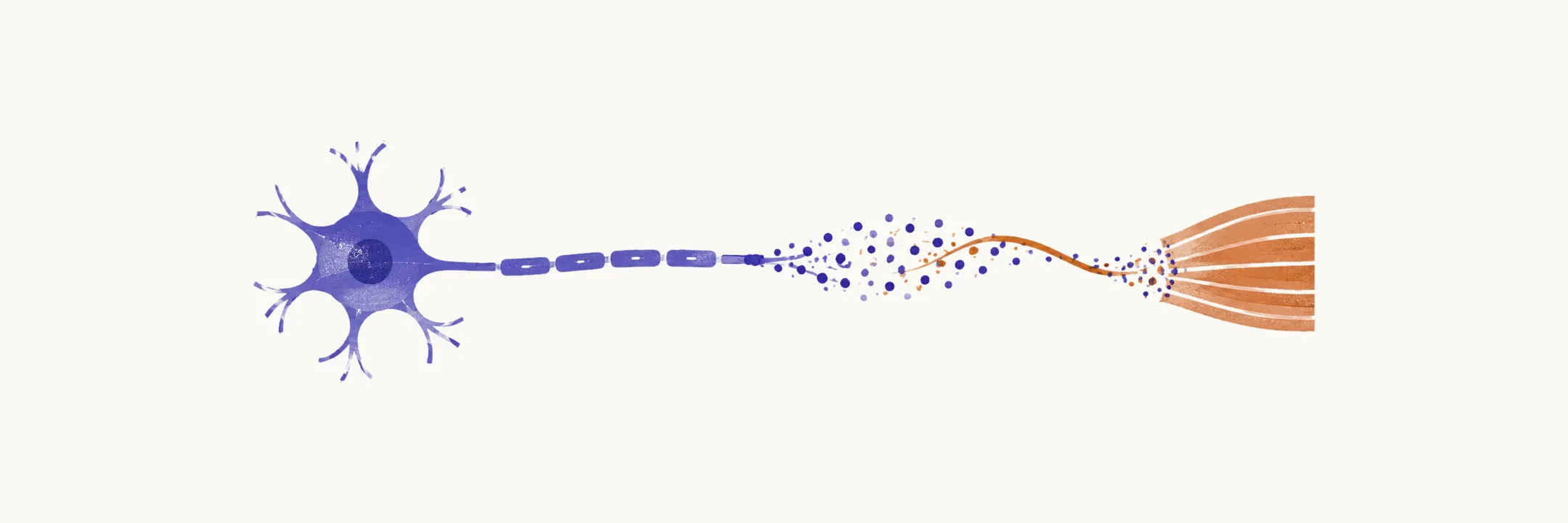
Spinal muscular atrophy (SMA) is an autosomal recessive disease of the anterior horn cells, the motor neurons in the spinal cord whose axons run to muscle, and the most important treatable peripheral cause of the floppy infant. Loss of motor neurons produces a paralytic hypotonia: the infant is floppy and weak in matching proportion, with absent reflexes. Because treatment can only preserve neurons that are still alive, recognizing SMA early determines how much function the child keeps.
Genetics: SMN1 loss, SMN2 modification
Each person carries SMN1 on both copies of chromosome 5, producing full-length SMN protein needed for motor neuron survival. In about 95% of cases, SMA results from homozygous deletion of SMN1, and the motor neurons progressively degenerate.
A nearby backup gene, SMN2, differs by a single nucleotide in exon 7. That change alters splicing, the step that joins the coding segments (exons) of an RNA transcript into a finished message: most SMN2 transcripts leave out exon 7, so only about 10–15% of them make functional protein. SMN2 copy number is the main severity modifier: SMA type 1 typically comes with 1–2 copies and type 4 with 3–5, but the correlation is imperfect and exceptions occur, so copy number guides expectations without fixing the prognosis alone.
Clinical picture
Weakness is symmetric and proximal, worse in the legs, with classic bedside signs: tongue fasciculations, absent deep tendon reflexes, frog-leg posture, severe head lag, and slipping through on vertical suspension. The face often stays expressive while the body is profoundly weak, and cognition and sensation are spared, so the infant looks alert. Respiratory failure drives mortality in severe disease: weakness of the intercostal muscles between the ribs, with relative sparing of the diaphragm, produces a bell-shaped chest and paradoxical breathing, in which the chest draws in as the abdomen rises.
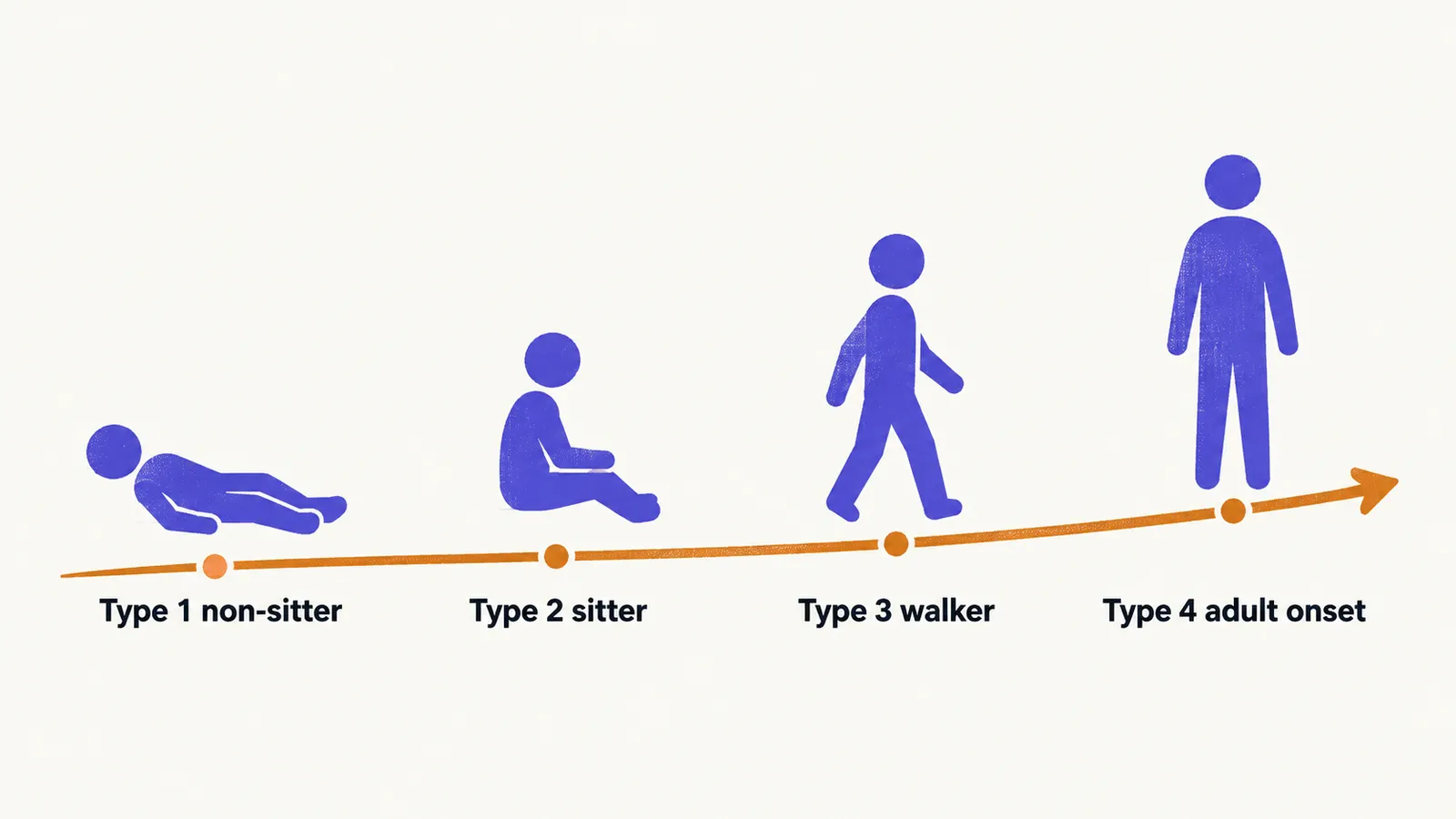
Functionally, severity runs from never sitting (type 1, historically fatal by age 2 without treatment) through sitting without walking (type 2) and walking with later loss (type 3) to adult onset (type 4). Modern usage increasingly describes non-sitters, sitters, and walkers, since treatment can move a child across the old boundaries.
The three disease-modifying therapies
All three raise functional SMN protein and all work best earliest, before motor neurons are lost.
- Nusinersen, approved in 2016, is an antisense oligonucleotide, a short synthetic strand that binds SMN2 RNA and corrects its splicing toward exon 7 inclusion; because it does not cross the blood-brain barrier it is given intrathecally (into the spinal fluid), starting with loading doses and continuing lifelong.
- Risdiplam, approved in 2020, is a small molecule acting on the same splicing step and is taken orally.
- Onasemnogene abeparvovec, approved in 2019, is gene therapy: it delivers a functional SMN1 copy inside an AAV9 vector, a modified virus, as a single intravenous infusion; it requires antibody screening with steroid cover and liver monitoring, since the vector can injure the liver.
Newborn screening by heel-prick blood spot now identifies affected infants before symptoms in many countries, which is exactly the window in which therapy preserves the most. Presymptomatic treatment trials have produced children developing normally at ages when untreated type 1 disease would have been fatal.
Supportive care
Disease-modifying drugs do not remove the need for multidisciplinary management: respiratory surveillance with non-invasive ventilation and cough assistance, nutritional and swallowing support, physiotherapy, orthopedic monitoring, and cardiac review. Responses to treatment have also revised an old assumption: motor units that appeared permanently lost can regain function when SMN protein returns early enough, so timing matters more than the static classification suggests.
The floppy infant with SMA is profoundly weak in the body yet alert, often with an expressive face. A floppy infant whose face is weak and whose brain is also affected needs a different explanation.