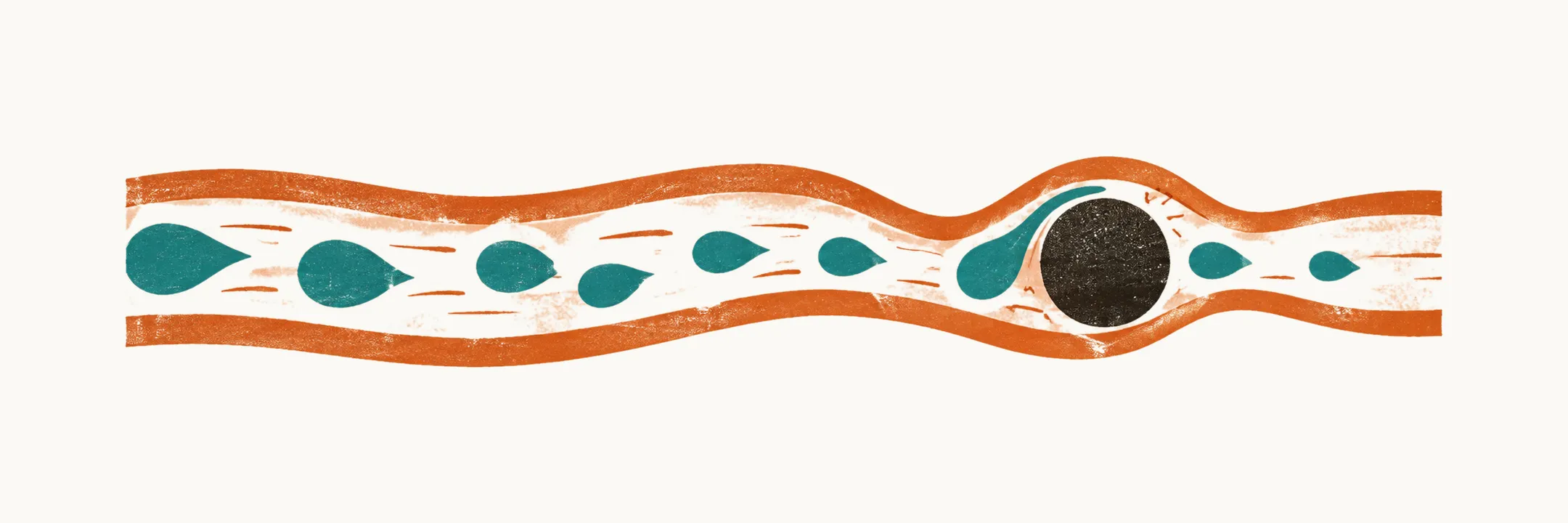
In early childhood the two patterns that dominate the differential of chronic diarrhea are both non-organic: neither is caused by inflammation, malabsorption or a structural defect of the bowel, and they behave quite differently. Functional diarrhea is a chronic diarrhea diagnosis in its own right, made from the pattern of the stools in a child who is thriving. The loose stool of overflow around constipation is not diarrhea at all: it is stool leaking past a retained fecal mass. Both are reached through the growth chart and a small set of tests rather than through the stool alone, and both get worse when they are treated as something else.
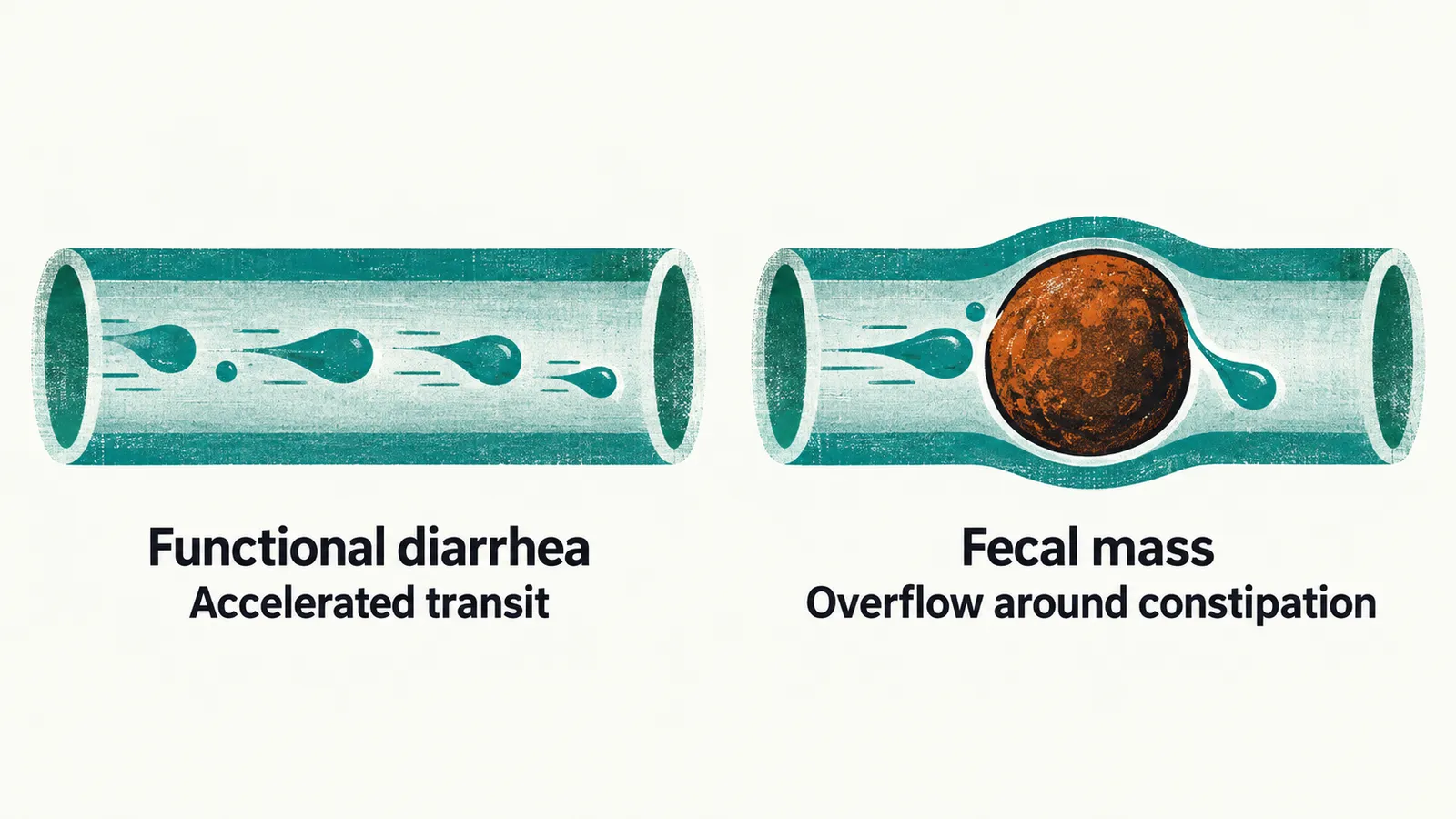
Functional diarrhea of toddlerhood
Functional diarrhea — also called chronic nonspecific diarrhea or toddler’s diarrhea — is the most common cause of chronic diarrhea in early childhood, and its diagnosis is a pattern rather than a test. The Rome IV criteria, the international consensus definitions of functional gastrointestinal disorders, describe a child with daily, painless, recurrent passage of four or more large unformed stools, symptoms lasting more than four weeks, onset between 6 and 60 months of age, and no failure to thrive (faltering weight gain) when caloric intake is adequate.
The mechanism is accelerated transit with incomplete carbohydrate absorption. A meal reaches the colon before all of its carbohydrate and water have been absorbed, and the unabsorbed carbohydrate holds water in the lumen. The gastrocolic reflex, the increase in colonic activity that follows eating, explains why stools often follow immediately after a meal, and the pattern is amplified by a large intake of fruit juice or fructose and by a low fat intake. Nothing is inflamed and nothing is malabsorbed, which is why the child looks well, the growth chart is normal and the laboratory tests — blood count, inflammatory markers, celiac serology — are normal.
Because the diagnosis rests on normal growth and normal tests, functional diarrhea is reached only after the red flags and the malabsorptive and inflammatory causes have been excluded. A child with the same stool pattern whose growth is flattening does not have functional diarrhea, and neither does a child who passes stools at night or who has blood in the stool or abnormal inflammatory markers. Those children belong to the organic work-up set out in Clinical Approach and Work-up of Chronic Diarrhea in Children.
Once the pattern is confirmed, management is reassurance and dietary advice, and no drug treatment is needed: the condition is harmless and resolves spontaneously by school age. Cutting back fruit juice and sweet drinks is the first change, since juice is the usual trigger; keeping juice within the general recommendation of no more than about 120 mL (4 oz) a day in a child aged 1 to 3 years is a reasonable target. Milk and water stay the main drinks, and the rest of the diet is balanced rather than restricted, because a low-fat, juice-heavy diet is the pattern that produces these stools. When the pattern does not settle, a food-and-stool diary identifies reproducible triggers better than further broad elimination.
Overflow around constipation
A constipated child can present with liquid stools, and parents reasonably describe this as diarrhea. The mechanism is obstructive rather than secretory: soft stool passes around a retained hard fecal mass and leaks out, often with soiling of the underwear, and the child may pass several small loose stools a day. The clinical clue is on examination — a palpable mass in the lower abdomen, or hard stool in the rectum — while the history often contains the counter-intuitive detail that the child is passing stool frequently rather than infrequently.
Treating this as diarrhea makes it worse. The retained stool has to be cleared and the constipation then treated: a disimpaction regimen, which clears the retained mass, comes first when fecal impaction is present, followed by maintenance laxative treatment, for which an oral macrogol (polyethylene glycol, an osmotic laxative) is the usual first choice, continued for months rather than days while a regular toilet routine is re-established. Antidiarrheal drugs increase the retention that produced the problem, and a child labelled as having chronic diarrhea may be treated for the wrong condition for a long time before the abdomen is examined.
When neither pattern fits — there is no retained fecal mass, and growth is faltering or the stools contain blood — the child belongs to the organic work-up. In the toddler years the organic causes include cow’s milk protein allergy, cystic fibrosis–related pancreatic insufficiency, and celiac disease, which appears once gluten has been introduced into the diet.