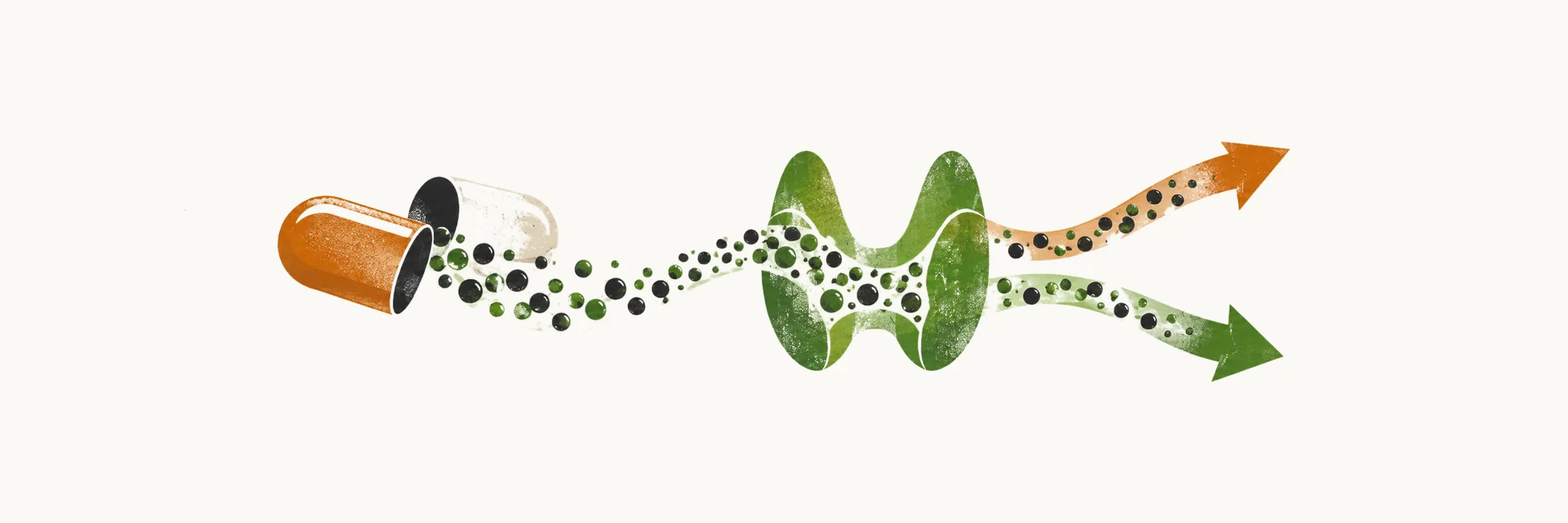
Amiodarone, an antiarrhythmic drug used for arrhythmias, delivers about 30-100 times the normal daily physiological requirement of iodine. Because the thyroid handles iodine as the raw material of its hormone, that load can disturb thyroid function in two opposite directions.
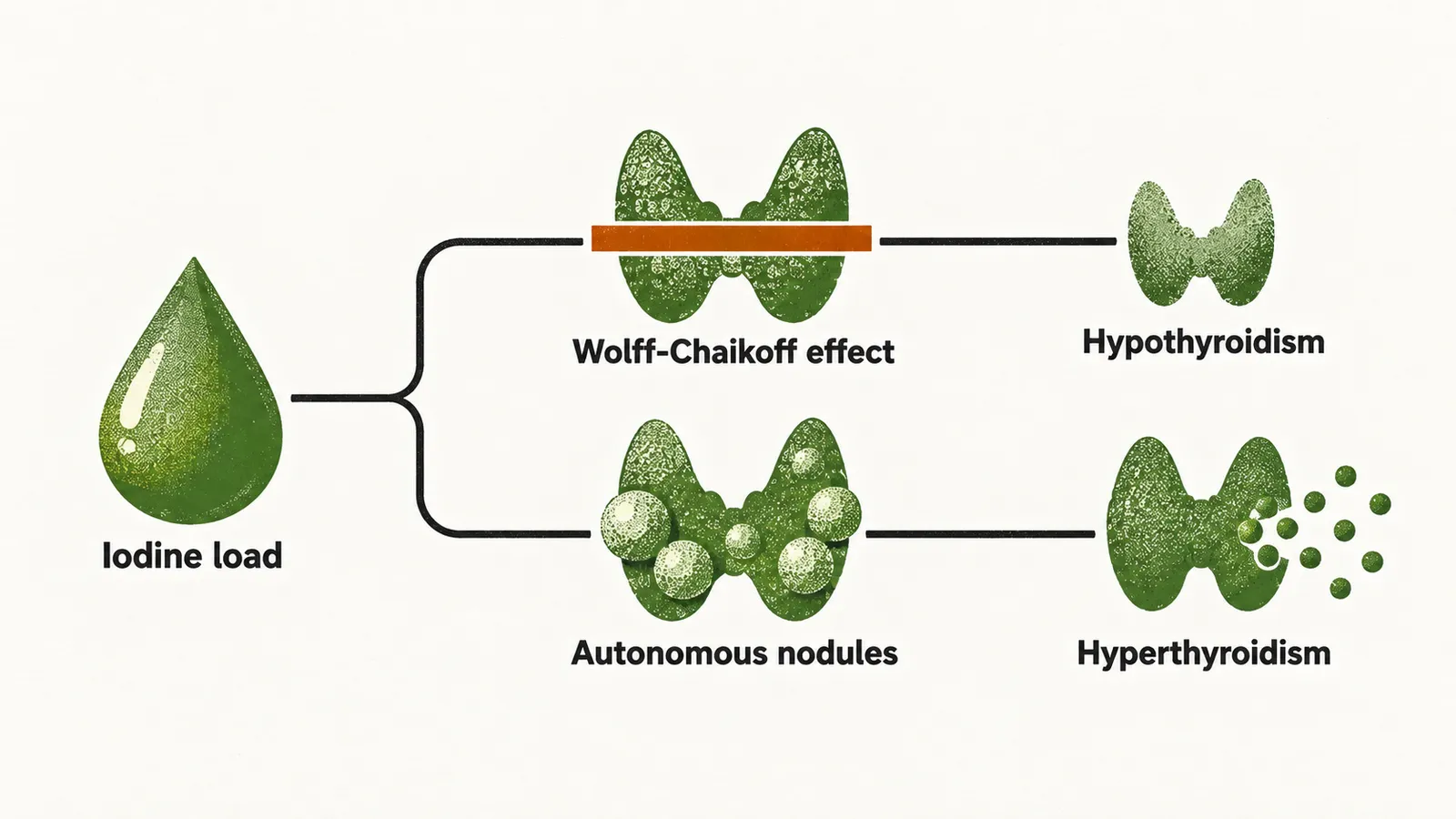
Amiodarone-induced hypothyroidism comes from the Wolff-Chaikoff effect, the temporary shutdown of hormone production when the gland is flooded with iodine. When a large amount of iodine reaches the gland, organification — the attachment of iodine to thyroglobulin, the protein in which the hormone is made, by thyroid peroxidase — is inhibited, and the gland shuts down hormone production to prevent thyrotoxicosis. Normally the gland escapes this block after a few days and resumes work. In amiodarone-induced hypothyroidism the escape fails and the block persists. Patients whose gland has already lost follicular tissue to a thyroiditis such as Hashimoto thyroiditis have less reserve, are more likely to develop it, and usually remain permanently hypothyroid.
Amiodarone-induced hyperthyroidism occurs in the opposite setting. In populations with a low iodine supply the gland forms goiter and sometimes autonomous nodules that produce hormone in the absence of TSH (thyroid-stimulating hormone). When amiodarone delivers its iodine load to such a gland, that tissue overproduces hormone, giving hyperthyroidism rather than hypothyroidism.
Factitious thyrotoxicosis
Both amiodarone effects arise from iodine acting on the gland. Factitious thyrotoxicosis is different: the excess hormone does not come from the gland at all. Some people take levothyroxine to lose weight. It does promote weight loss, but it is not indicated for that purpose, and it is often obtained without a prescription. The excess hormone produces hyperthyroidism and even thyrotoxicosis, characterised by a low level of TSH.
A low TSH with thyrotoxicosis has a broad differential, from Graves disease to adenomatous nodules of the thyroid gland. The pattern that identifies factitious thyrotoxicosis — in patients who are often suffering from psychiatric conditions and who deny using levothyroxine — is a very low level of thyroglobulin together with a normal thyroid gland on ultrasound and on scintigraphy. The low thyroglobulin is the clue: the hormone is coming from the tablet, so the gland’s own synthesis, and with it thyroglobulin production, is suppressed.