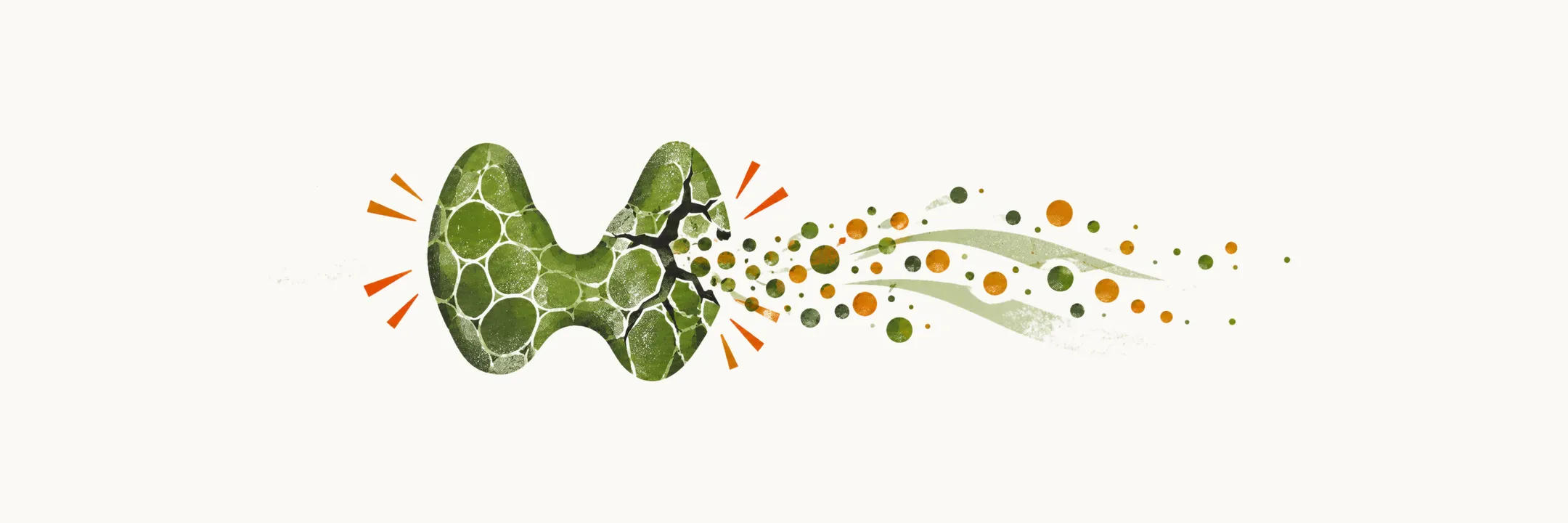
De Quervain thyroiditis, also called subacute thyroiditis or giant cell thyroiditis, is different from the other forms of thyroiditis such as Hashimoto thyroiditis: it follows a viral infection of the upper respiratory tract and it is painful.
The illness is seasonal, occurring mostly in spring and autumn, and its peak incidence is between 30 and 50 years of age.
After the viral infection, macrophages and giant cells infiltrate the gland. The inflamed follicles rupture, their thyroglobulin (the protein in which the hormone is stored) is hydrolyzed, and a large amount of T3 and T4 is released into the bloodstream at once, producing a thyrotoxic phase. Because the hormone comes from stored hormone rather than from new synthesis, this phase is self-limited. On scintigraphy the gland shows low or absent uptake, which separates it from Graves disease, where uptake is high. When the store is exhausted and the gland cannot yet make more, a hypothyroid phase follows.
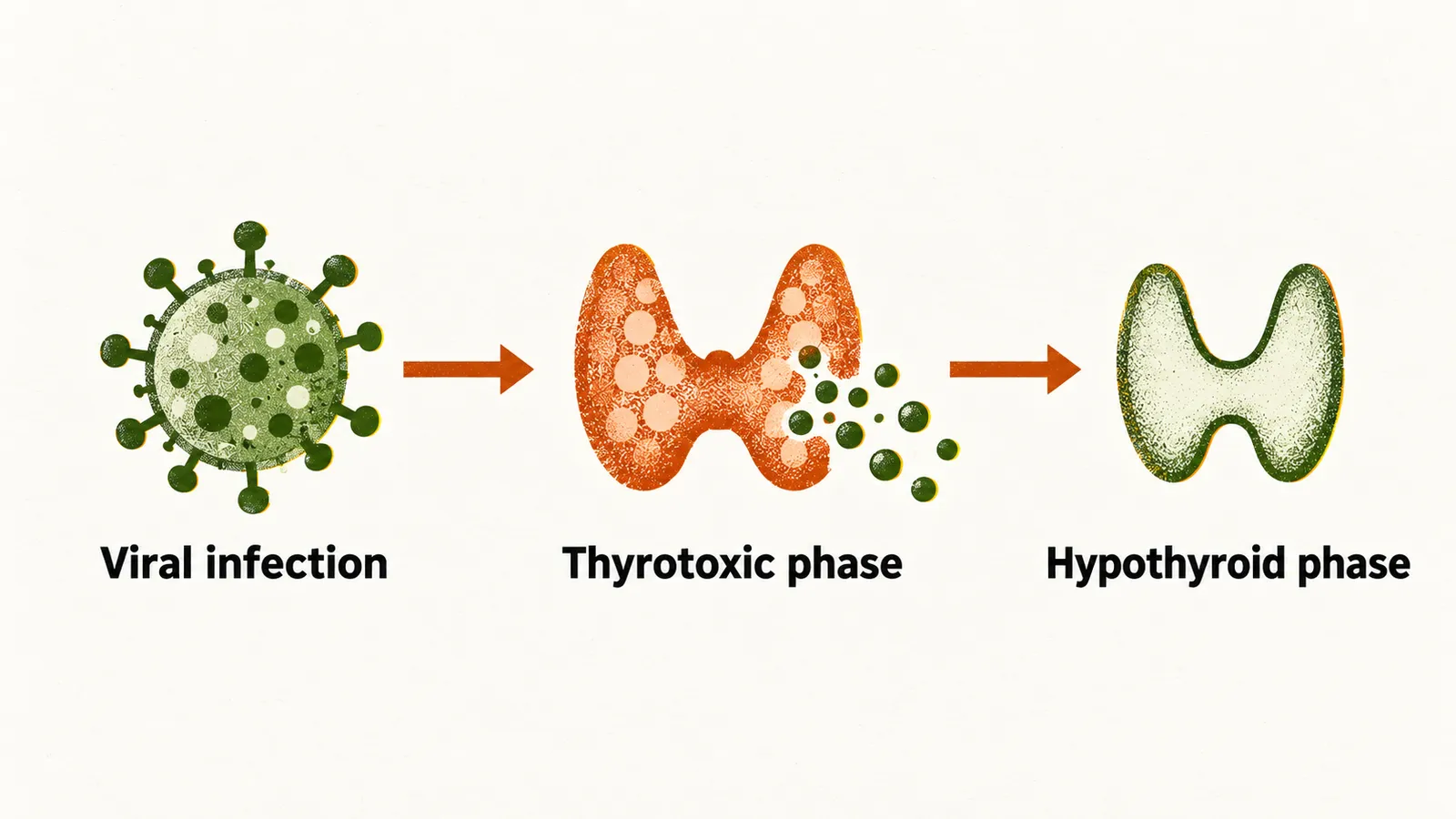
The biochemical findings in the two phases are given below. TSH is thyroid-stimulating hormone; anti-TPO antibodies are directed against thyroid peroxidase; ESR (erythrocyte sedimentation rate) and CRP (C-reactive protein) are markers of inflammation.
| Thyrotoxic phase | Hypothyroid phase | |
|---|---|---|
| TSH | low | high |
| T3 and T4 | high | low |
| Anti-TPO antibodies | negative | negative |
| ESR and CRP | increased | normalised |
De Quervain thyroiditis is self-limiting, so treatment is for symptoms. NSAIDs relieve the pain, a beta-blocker controls the adrenergic symptoms of the thyrotoxic phase, and glucocorticoids are used when the pain is severe or NSAIDs are not enough; the hypothyroid phase is usually mild and does not require levothyroxine. Antithyroid drugs are not used, because the hormone is being released from stores rather than synthesized.
A condition with a very similar course — thyrotoxicosis followed by hypothyroidism — but no pain and a normal ESR is called silent thyroiditis, which is believed to have an autoimmune origin. In silent thyroiditis there is no pain, the ESR is normal, and thyroglobulin is increased; this distinguishes it from factitious thyrotoxicosis, in which thyroglobulin is low.