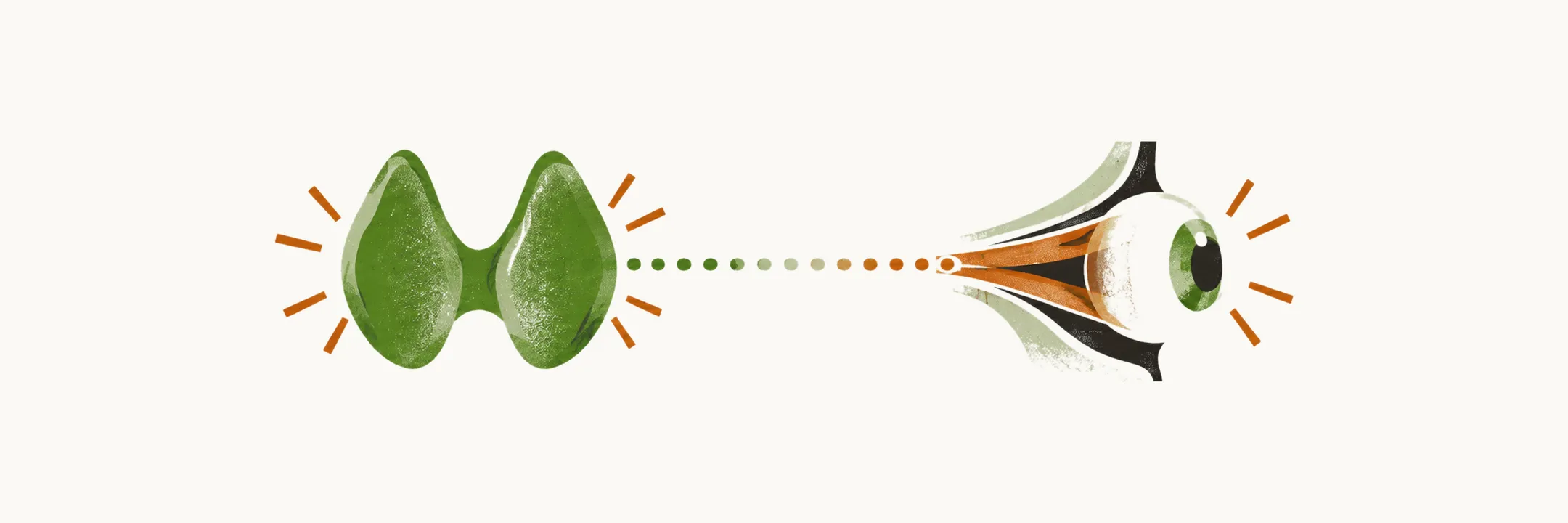
Graves disease is the autoimmune form of hyperthyroidism, in which antibodies stimulate the thyroid’s TSH receptor. Its clinical picture is the general picture of thyrotoxicosis plus the features that are specific to Graves disease itself.
How the disease manifests depends on the level of thyrotoxicosis, on sex and on age. In elderly patients the signs can be subtle and masked, reduced to weight loss and fatigue; this is called apathetic thyrotoxicosis.
General features of thyrotoxicosis
Body weight falls despite an increased appetite, because the basal metabolic rate is raised.
The common cardiovascular signs and symptoms of thyrotoxicosis are:
- supraventricular tachycardia and palpitations
- high cardiac output
- widened pulse pressure
- an aortic systolic murmur
- worsening angina
- atrial fibrillation, mostly in patients over 50 years
Long-standing thyrotoxicosis can lead to osteopenia, and in about 20% of cases there is mild hypercalcemia.
Features specific to Graves disease
On examination, the thyroid is diffusely enlarged — a smooth goiter, two or three times its normal size, with a firm consistency and no nodules. A bruit may be heard over it, because the overactive gland is more vascular.
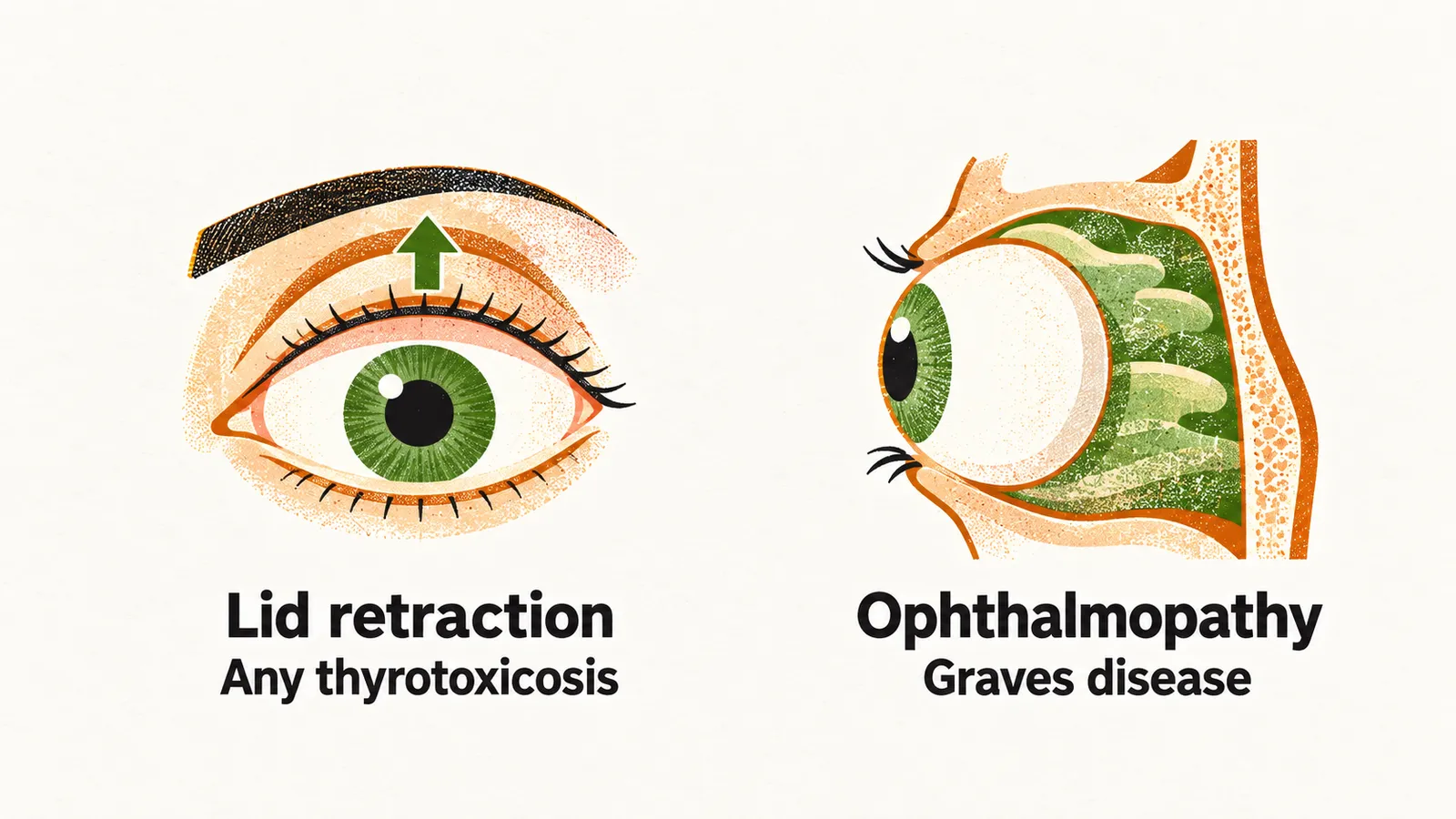
Lid retraction, the staring appearance, is not specific to Graves disease and can be seen in any form of thyrotoxicosis; ophthalmopathy, the disease of the eye and orbit, is specific to Graves disease. About one-third of patients with Graves disease have ophthalmopathy, in which immune infiltration of the orbit causes proptosis and, in severe cases, optic neuropathy.
Thyroid dermopathy can be seen in less than 5% of patients, and always in the presence of Graves ophthalmopathy. It is a painless, non-pitting thickening of the skin that occurs mostly on the anterior and lateral side of the leg.
Thyroid acropachy is a form of clubbing that can be seen in less than 1% of patients with Graves disease.