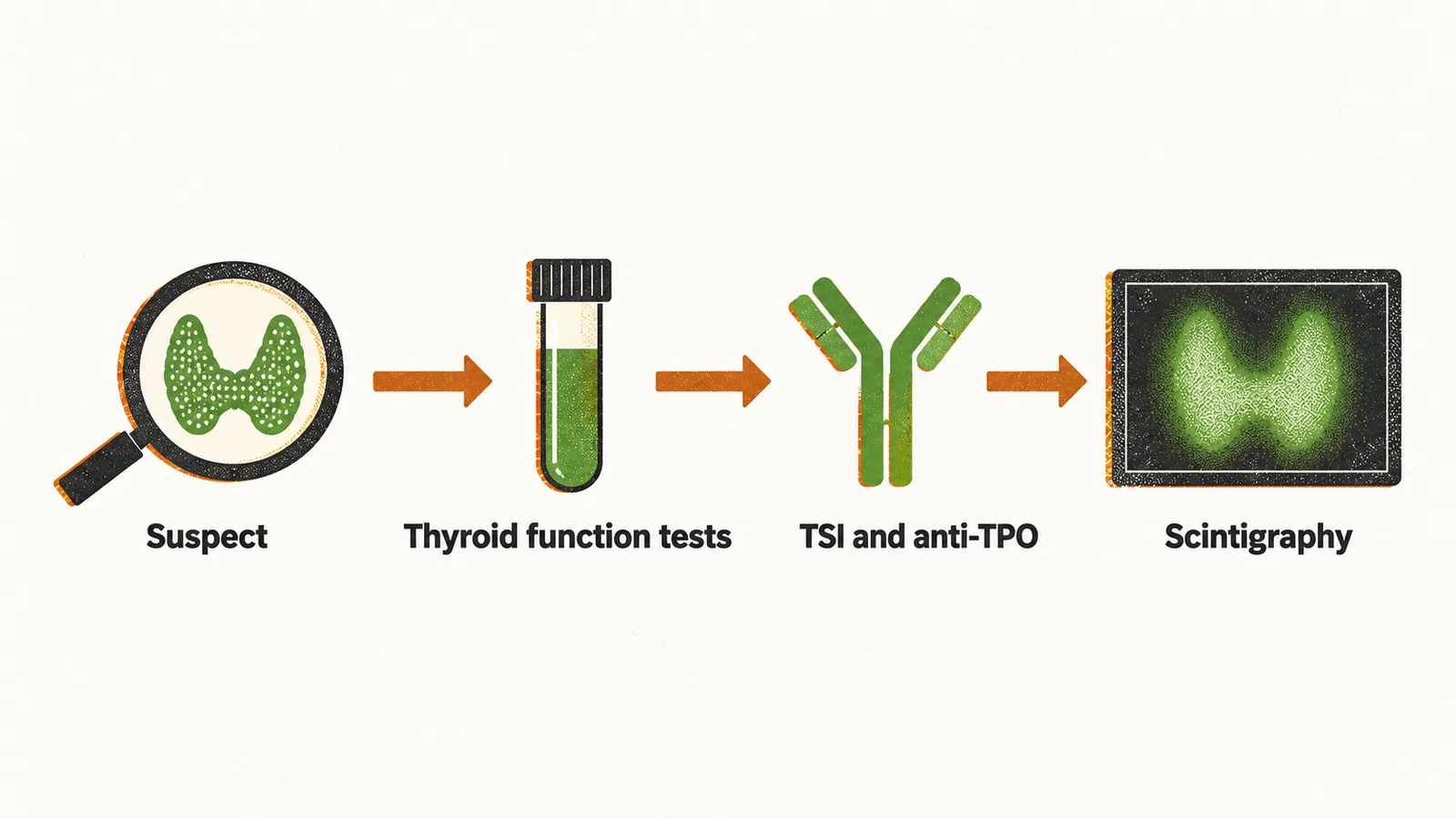
Diagnosing Graves disease has three steps: recognising who may be thyrotoxic, confirming it with thyroid function tests, and showing that the cause is Graves disease rather than another condition. Management then adds recommendations for the eye disease and for women of fertile age.
When to suspect it
Hyperthyroidism, including Graves disease, should be suspected in patients with:
- tachyarrhythmias, atrial fibrillation and heart failure
- osteopenia
- an irregular menstrual cycle
- anemia
- fatigue
- weight loss
- a family history of autoimmune thyroid disease or another autoimmune condition such as vitiligo
Thyrotoxicosis can mimic other conditions, including panic attack, mania, weight loss from malignancy and pheochromocytoma, so the suspicion has to be confirmed biochemically.
Laboratory pattern and scintigraphy
The laboratory changes seen in Graves disease are a decreased level of TSH (thyroid-stimulating hormone) with an elevated free T4, an elevated free T3, or both; in 2-5% of cases only T3 is increased (T3 toxicosis). TSI (thyroid-stimulating immunoglobulins) and anti-TPO (anti-thyroid peroxidase) antibodies are present.
If the TSH is normal, the patient cannot be said to have Graves disease at all: a TSH-secreting tumor, for example, can produce a diffuse goiter very similar to that of Graves disease without being Graves disease.
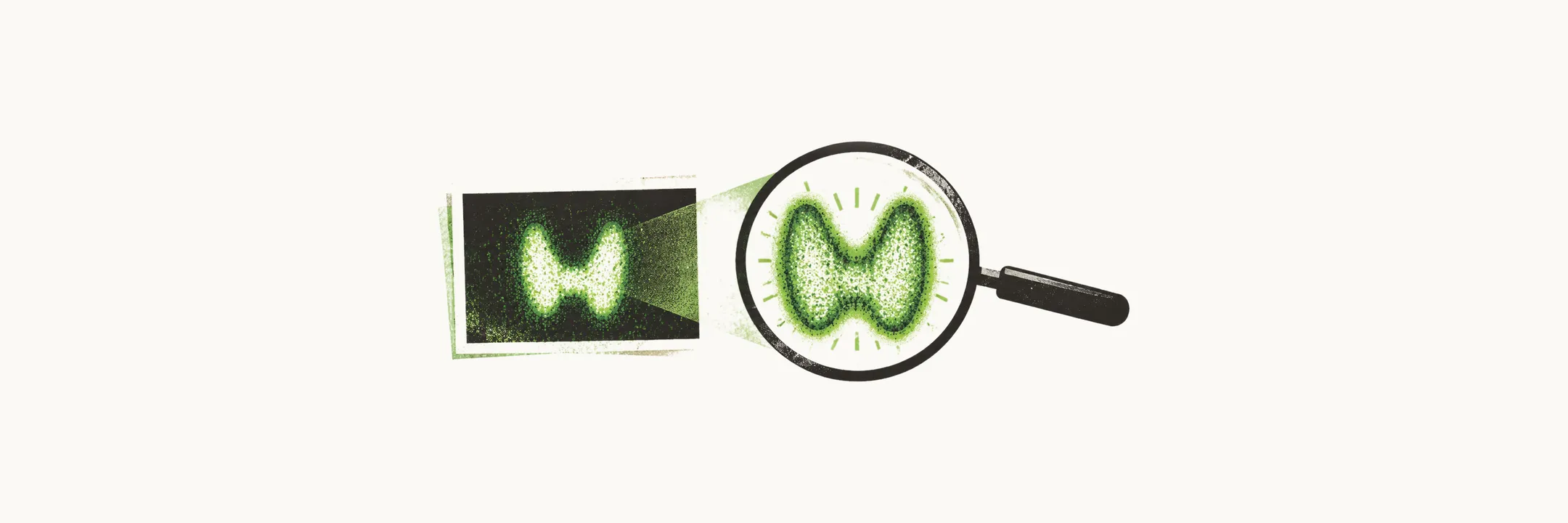
The diagnosis is straightforward when the biochemistry is confirmed and the picture also includes Graves-specific features such as ophthalmopathy, or a family history of autoimmunity. When those features are absent, a radionuclide scan (scintigraphy) can be used: Graves disease shows diffuse high uptake of iodine, a pattern that is not seen in toxic multinodular goiter.
Management of the eye disease
In patients with Graves disease and Graves ophthalmopathy (the eye disease), management follows a few recommendations:
- stop smoking, because smoking is related to a higher risk of orbitopathy and to resistance to therapy
- treat the thyroid dysfunction with antithyroid drugs, but avoid iatrogenic hypothyroidism, meaning hypothyroidism caused by the treatment
- refer to the thyroid-eye clinic
- look for dry eye syndrome
Thyrotoxicosis in women of fertile age
In women of fertile age, thyrotoxicosis needs planning before pregnancy, because it carries a higher risk of pregnancy complications. A woman with Graves disease who is taking antithyroid drugs should avoid conception, because of the detrimental effects of these drugs on neonatal development. A woman with a high level of TSI can pass the antibodies to the fetus, causing fetal hyperthyroidism.