
Subclinical hyperthyroidism is the state in which the circulating thyroid hormone levels (free thyroxine, T4, and triiodothyronine, T3) are normal but TSH (thyroid-stimulating hormone) is suppressed. The routine biochemistry is only partly abnormal, but the tissue effect of the hormone is not neutral, and patients with subclinical hyperthyroidism have been shown to progress to overt hyperthyroidism in the near future.
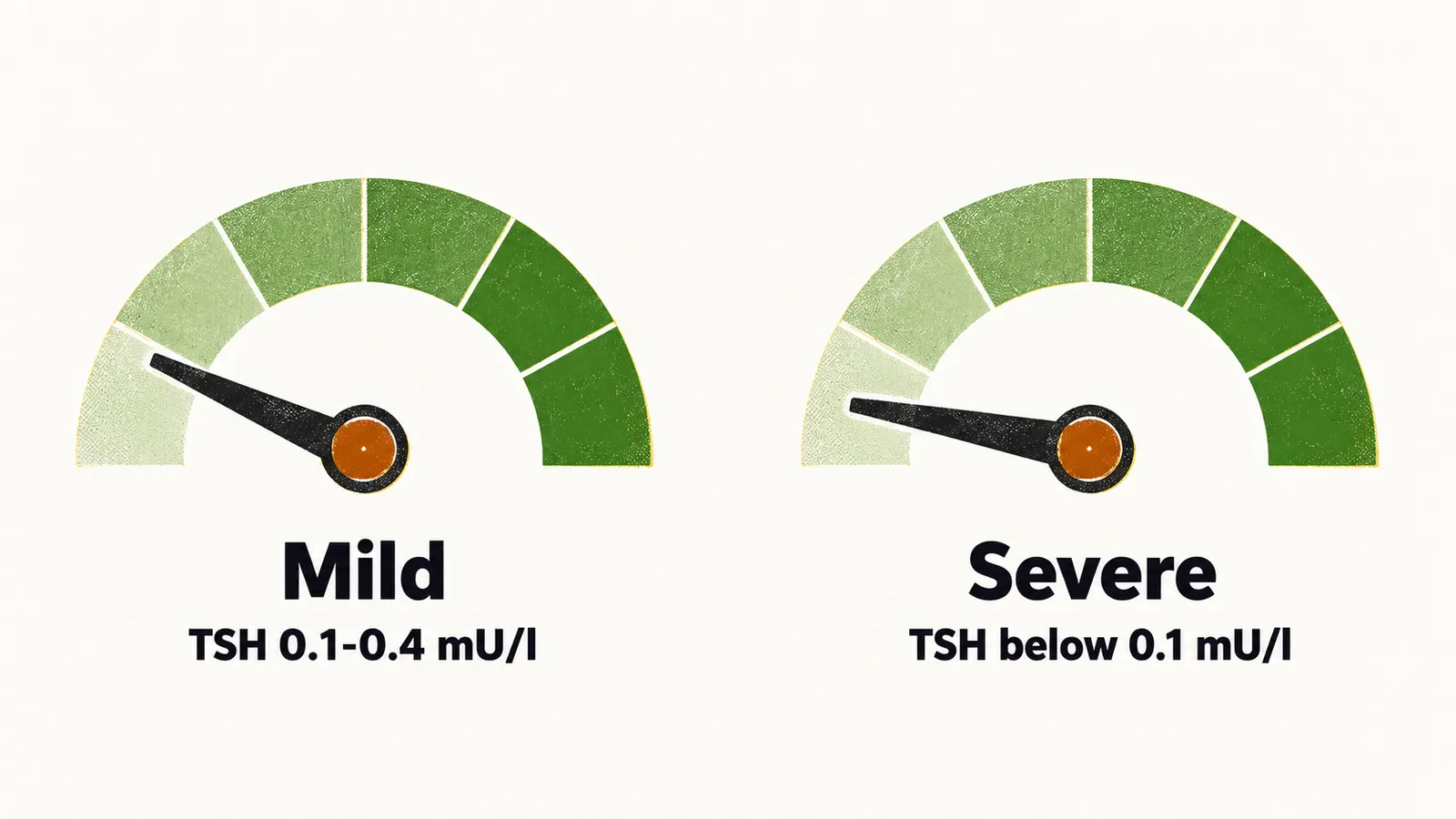
It is graded by the degree of TSH suppression. Mild subclinical hyperthyroidism has a TSH of 0.1-0.4 mU/l; severe subclinical hyperthyroidism has a TSH below 0.1 mU/l.
Because TSH suppression can be transient, the TSH, T3 and T4 are repeated after 3-6 months before the diagnosis is confirmed.
Even when the circulating level is normal, the excess hormone action on the heart and bone raises the risk of heart failure, hypertension and other cardiovascular events, and this is why treatment is considered. Subclinical hyperthyroidism also increases the overall risk of mortality, most prominently in older men, more than in women and younger patients.
Treatment is advised when the TSH remains below 0.1 mU/l, particularly in people aged 65 or older or those with heart disease or osteoporosis, in whom the cardiovascular risk is highest.