Treatment of thyrotoxicosis has two layers: controlling the excess hormone effect while the underlying overproduction is dealt with.
Beta-blockade gives the fastest relief. A non-selective beta-blocker such as propranolol blunts the adrenergic symptoms — palpitations, tachycardia, tremor, anxiety and heat intolerance — and at higher doses also inhibits the peripheral conversion of thyroxine (T4) into the more active triiodothyronine (T3). It can be started as soon as the diagnosis is made, before the cause is known, and it is a mainstay in severe thyrotoxicosis and thyroid storm.
For the underlying overproduction, overt Graves hyperthyroidism can be treated with any of three definitive modalities — antithyroid drugs (thionamides), radioiodine or surgery — and the choice depends on the patient.
Antithyroid drugs. Methimazole (or its prodrug carbimazole) is used in almost every patient who chooses drug therapy. Thionamides inhibit thyroid peroxidase, the enzyme that oxidizes iodide and attaches it to thyroglobulin (organification), so new hormone cannot be synthesized; hormone already stored in the gland is not affected, which is why the effect takes weeks. Methimazole is started at 10-30 mg daily and reduced as thyroid function returns to normal. Propylthiouracil (PTU) is used instead during the first trimester of pregnancy, in thyroid storm and when methimazole cannot be tolerated; unlike methimazole it also blocks the peripheral conversion of T4 to T3. The serious adverse effects are agranulocytosis, which occurs in about 0.2-0.5% of patients and usually within the first three months, and hepatotoxicity; patients are warned to report a sore throat or fever. A course of 12-18 months is usual, after which the possibility of remission is assessed.
Radioiodine. Radioactive iodine is taken up by the thyroid like ordinary iodine and destroys the overactive tissue. It is not given during pregnancy or breastfeeding. Because it can release stored hormone and transiently worsen the thyrotoxicosis, beta-blockade is used around the treatment, and in patients at high risk of complications methimazole is given beforehand and stopped 2-3 days before the radioiodine. Most patients become hypothyroid within months and then need lifelong levothyroxine, which is the predictable result rather than a complication. Radioiodine can worsen active Graves ophthalmopathy, so it is recommended against in active moderate-to-severe or sight-threatening Graves ophthalmopathy, where antithyroid drugs or surgery are preferred instead.
Surgery. Total thyroidectomy is chosen for a large or compressive goiter, a nodule suspicious for malignancy, severe ophthalmopathy, or by patient preference. The patient is rendered euthyroid with antithyroid drugs and beta-blocked before surgery, because operating on uncontrolled thyrotoxicosis can precipitate thyroid storm. The specific risks are injury to the recurrent laryngeal nerves, which changes the voice, and hypoparathyroidism with hypocalcemia, in addition to permanent hypothyroidism.
For toxic multinodular goiter and toxic adenoma, radioiodine or surgery are the definitive options. Antithyroid drugs control the hyperthyroidism but rarely induce remission in autonomous tissue, so they are not used as definitive treatment.
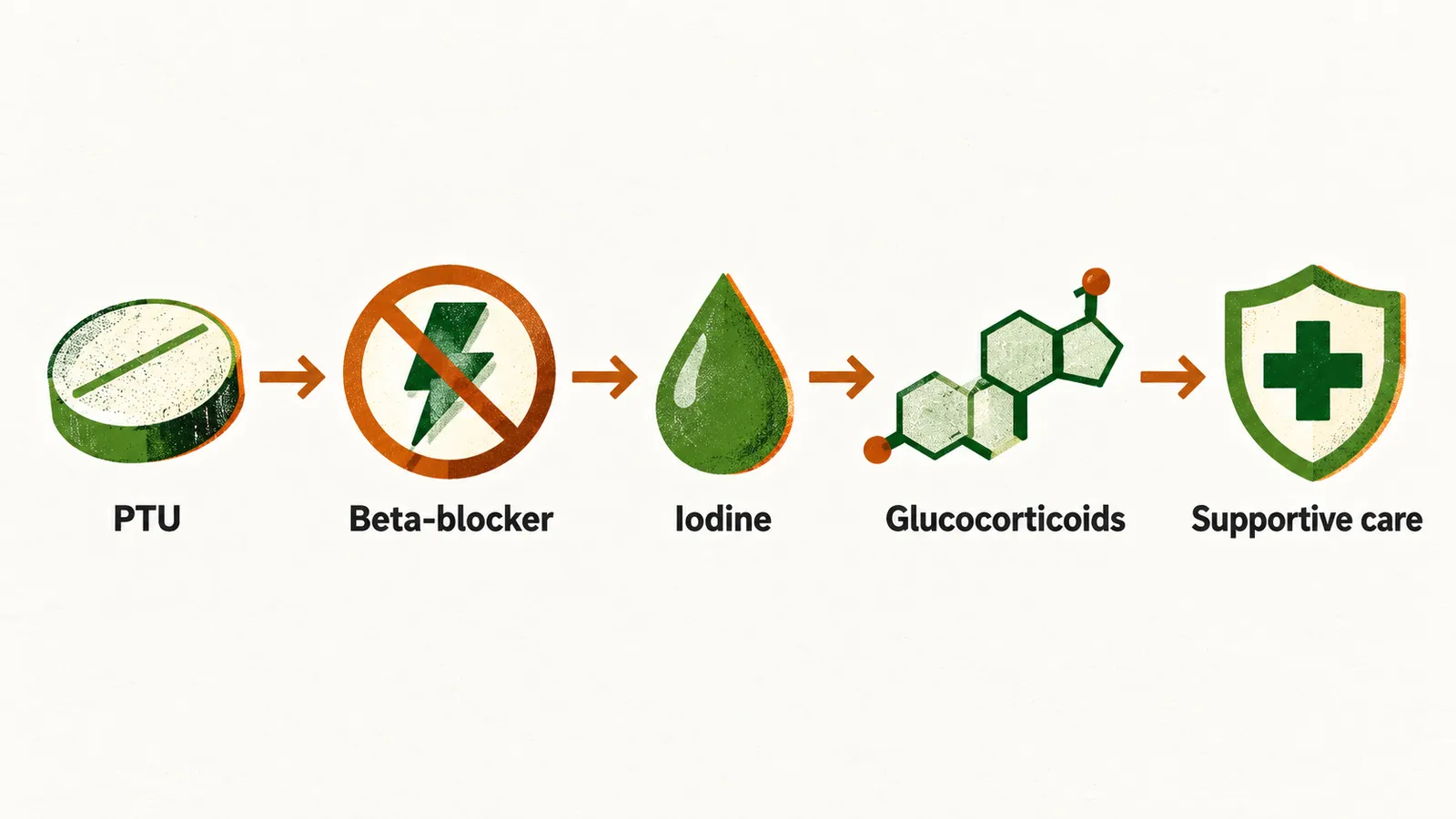
Thyroid storm is a life-threatening exacerbation of untreated or partly treated thyrotoxicosis. Treatment is with PTU, preferred because it also blocks the conversion of T4 to T3; a beta-blocker; iodine, given at least an hour after the thionamide so that it does not feed new hormone synthesis; glucocorticoids; and supportive care.
All of this concerns overt thyrotoxicosis, in which the circulating thyroid hormone levels themselves are raised.