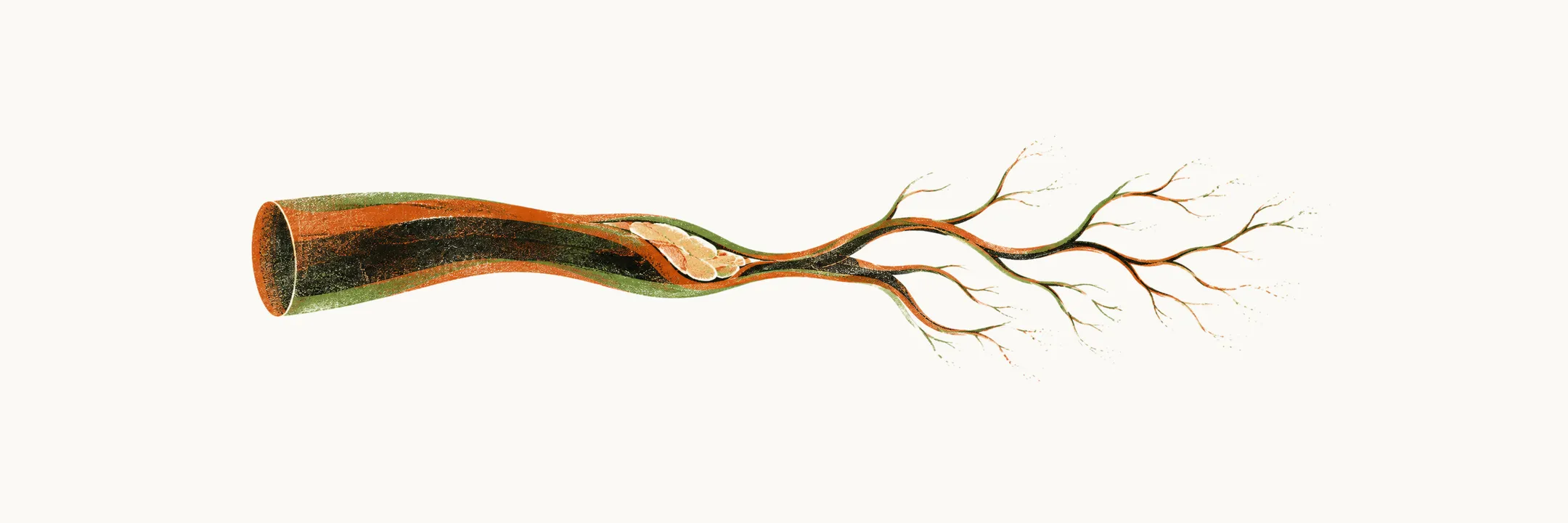
Persistently high glucose damages blood vessels, and that damage defines the long-term course of type 2 diabetes. The complications are grouped into microvascular disease, affecting the small vessels of the retina, kidney and peripheral nerves, and macrovascular disease, affecting the large arteries of the heart, brain and legs. Because hyperglycemia often precedes the diagnosis by years, some of this damage is already present when the disease is first recognised.
Microvascular complications
Each of the three microvascular complications damages a different small-vessel bed: the retina, the kidney and the peripheral nerves.
Diabetic retinopathy is damage to the capillaries of the retina. In the early, non-proliferative stage, the vessels leak and occlude, producing microaneurysms, haemorrhages and hard exudates. In the later, proliferative stage, hypoxia drives the growth of fragile new vessels that can bleed into the vitreous or pull the retina off, causing severe visual loss. Diabetic retinopathy is a leading cause of vision loss in working-age adults.
Diabetic kidney disease is damage to the glomerular microvasculature. It begins with hyperfiltration and then appears clinically as albumin in the urine and a progressive fall in the estimated glomerular filtration rate; it is a leading cause of kidney failure. A proposed SGLT2 mal-adaptation, in which tubular cells increase expression of SGLT2, the transporter that reabsorbs glucose from the filtrate, and so raise the renal reabsorption threshold for glucose, might also add to the hyperglycemia behind this damage.
Diabetic neuropathy is the most common of the diabetes-associated neuropathies, affecting around half of people with diabetes. The typical form is a distal, symmetric, sensory polyneuropathy of the feet, where lost sensation allows injuries and pressure sores to go unnoticed. Autonomic neuropathy can affect the gut, blood pressure regulation and sexual function.
Macrovascular complications
Atherosclerosis in diabetes produces coronary artery disease, stroke and peripheral artery disease. Cardiovascular disease is the leading cause of death in people with type 2 diabetes, and much of that risk is present before the glucose thresholds for diabetes are even crossed, because the risk factors for both conditions overlap. Myocardial insulin resistance — reduced glucose uptake by heart muscle — adds to the burden by lowering the heart’s tolerance to ischemia.
The diabetic foot
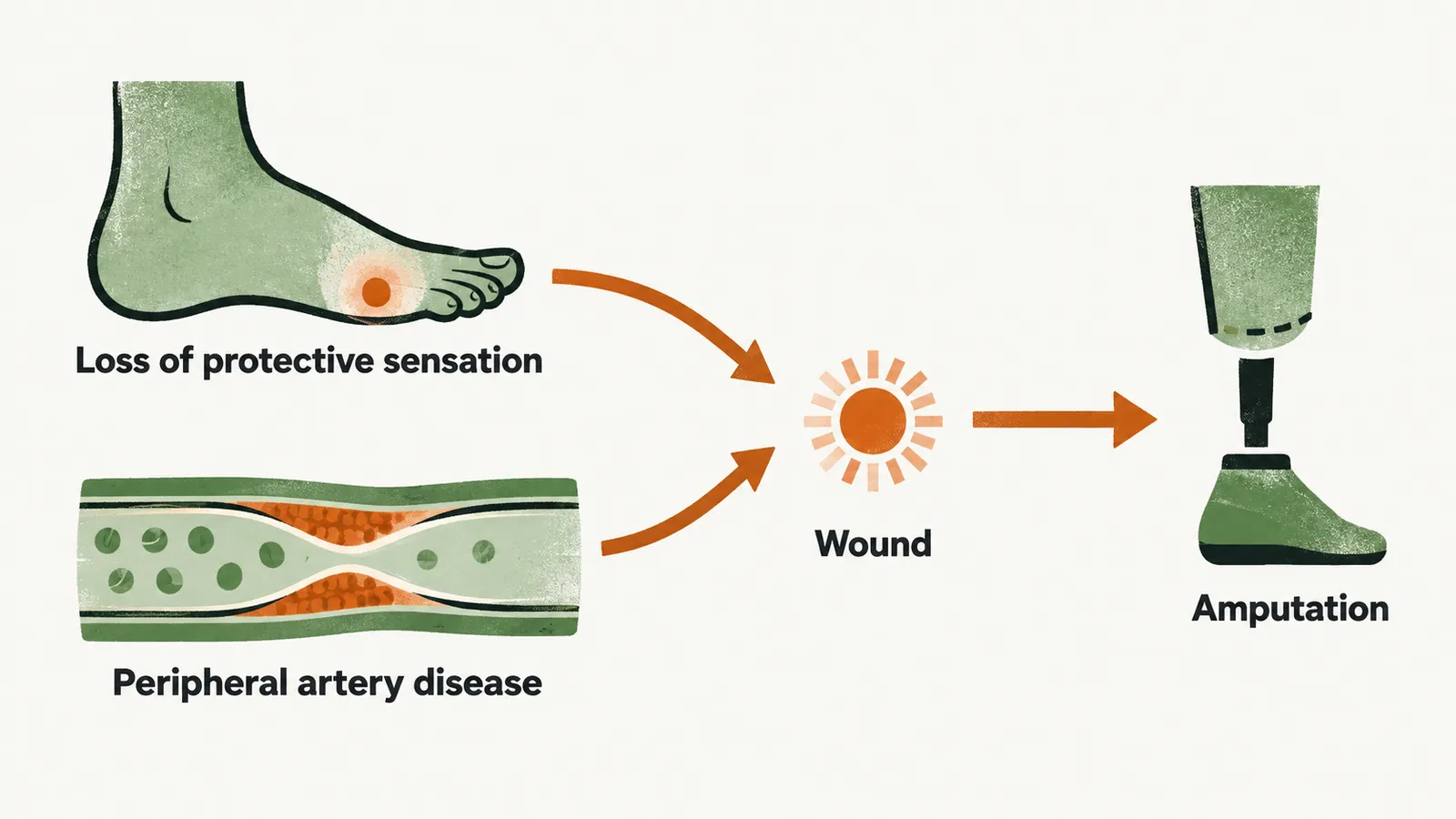
The diabetic foot combines the two mechanisms. Loss of protective sensation from neuropathy means minor trauma is not felt, while peripheral artery disease reduces the blood supply needed for healing. The result is a wound that becomes infected, fails to heal, and can progress to gangrene and amputation. A history of a diabetic foot event is associated with a marked increase in subsequent mortality.
Prevention
These complications share a common thread: they are reduced by the same control that treats the disease. Good glycemic control lowers the risk of microvascular disease, while blood-pressure and lipid control carry much of the benefit against macrovascular disease. That is why care is organised around periodic screening of the eyes, kidneys and feet, and not around glucose alone.