
Diet and physical activity are the two main lifestyle measures prescribed in metabolic disorders such as obesity and type 2 diabetes. Both are part of treatment, and in recent-onset type 2 diabetes substantial weight loss through an energy-restricted diet can restore normal glucose control in a proportion of patients, a state called remission.
For exercise, two aspects of the prescription have to be decided: how long the patient exercises, and how hard. Both change which fuel the muscle uses, and therefore what the exercise achieves.
Energy sources for muscle activity
Muscle can draw on three energy systems, and they differ in how much energy they hold and how quickly they can release it:
| System | Stored energy | Speed of supply |
|---|---|---|
| Aerobic | very high | very slow, but prolonged |
| Anaerobic lactic | medium | medium |
| Anaerobic alactic (phosphocreatine) | very low | very fast |
Phosphocreatine is a small, rapidly available store that regenerates ATP without oxygen. Anaerobic lactic glycolysis supplies energy at a medium rate while producing lactate. Aerobic metabolism can draw on fat and on glycogen and yields far more energy per unit of fuel, but releases it slowly.
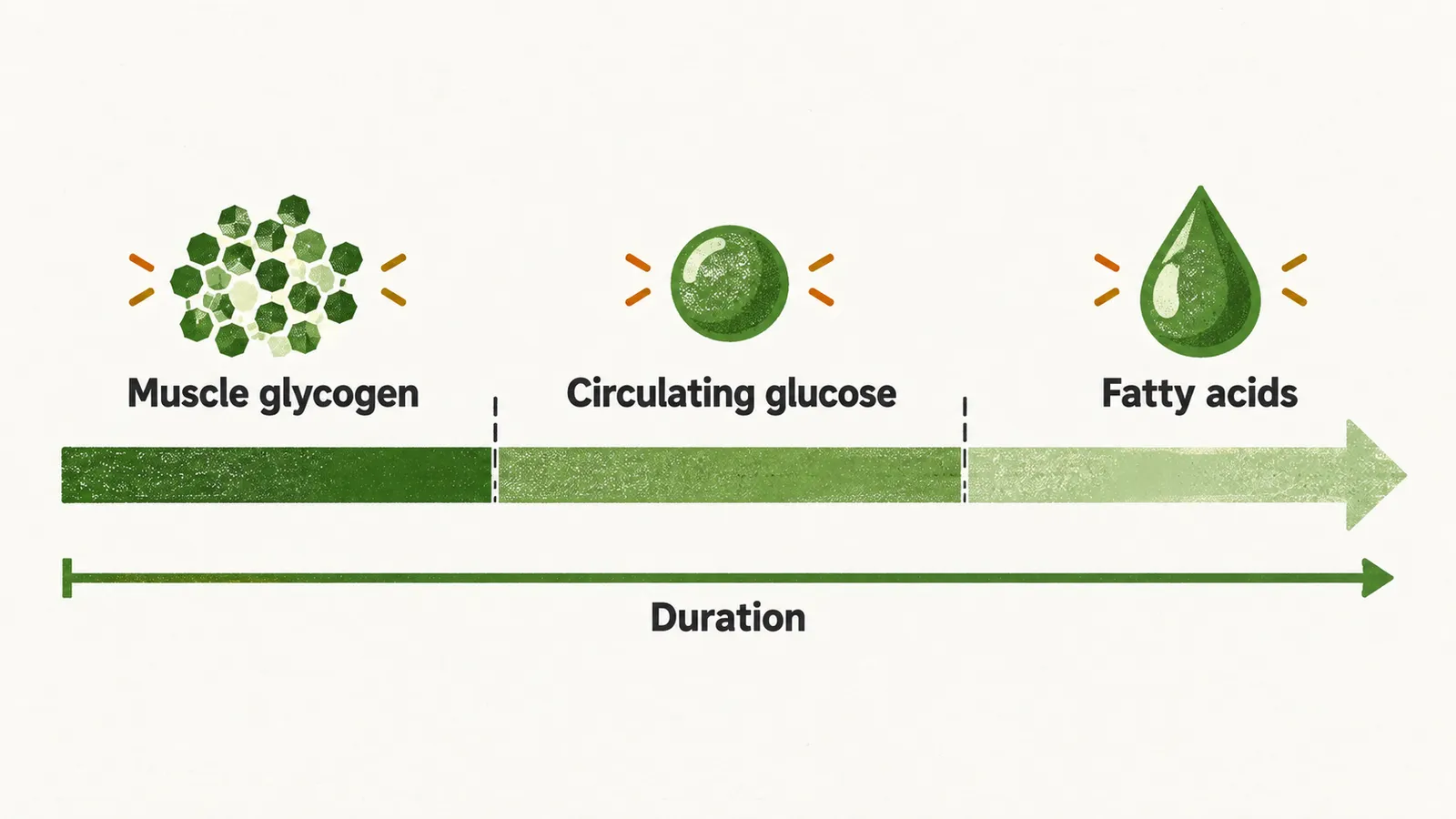
Because of these differences, the muscle shifts between fuels as exercise continues. In the early stages of exercise the main source of energy for the muscles is muscle glycogen. As the duration increases, that source gives way to circulating glucose, drawn first from hepatic glycogenolysis — the breakdown of liver glycogen — and then from hepatic gluconeogenesis, the synthesis of new glucose — and finally to non-esterified fatty acids (NEFAs), the free fatty acids released from adipose tissue.
Matching the prescription to the patient
The shifts in fuel use are the basis for individualising the prescription. Studies show that different sources are used at different intensities and durations: low intensity and low duration draw more on fatty acids and triglyceride, whereas high intensity and high duration call more and more on glycogen.
That is why the exercise prescribed to different patients should differ. A patient with a high body fat percentage is asked to exercise at low intensity, so that more lipid is used. A patient with poor control of blood glucose should not be given high intensity and long duration exercise, because blood glucose rises during such exercise. For most adults with type 2 diabetes, the general target is at least 150 minutes per week of moderate-to-vigorous aerobic activity spread over at least 3 days, with no more than 2 consecutive days without activity, plus resistance exercise on 2–3 non-consecutive days per week; combined aerobic and resistance training lowers HbA1c more than either alone.