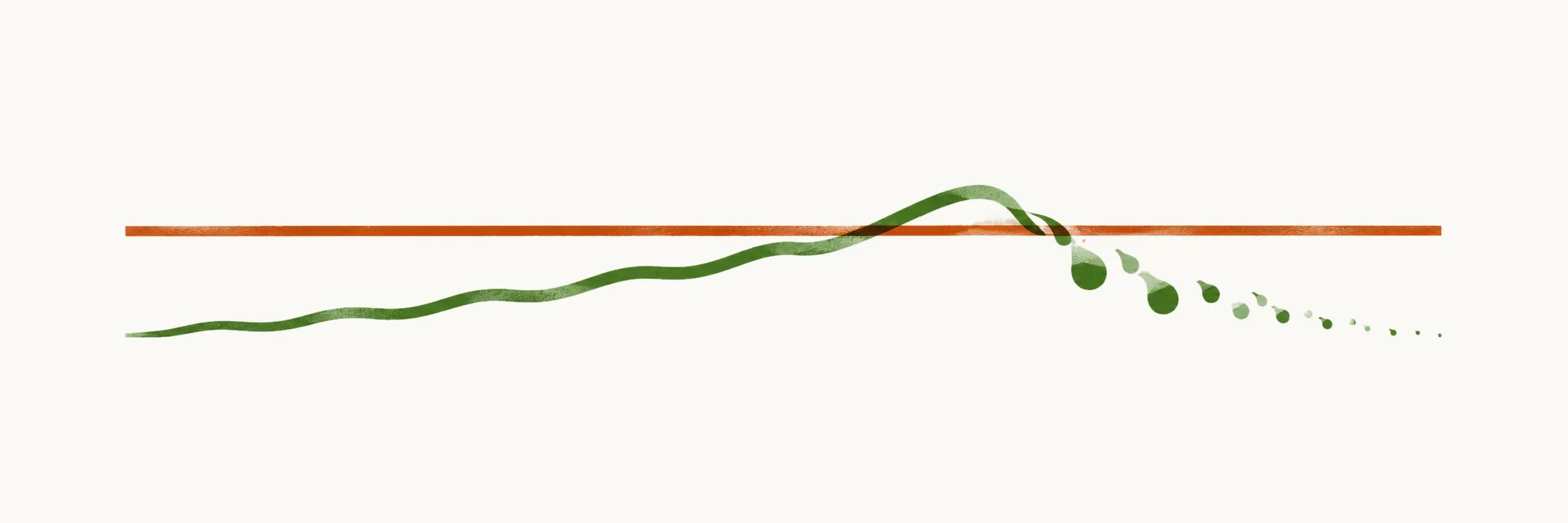
Type 2 diabetes usually develops silently. Hyperglycemia builds over years, and because the rise is gradual the classic symptoms of high glucose may never appear, or may be put down to ordinary tiredness or ageing. In practice the diagnosis is often made from a routine blood test or a screening test rather than from the patient’s complaint. A large fraction of adults with diabetes worldwide — around 2 in 5 — do not know they have it.
Symptoms of hyperglycemia
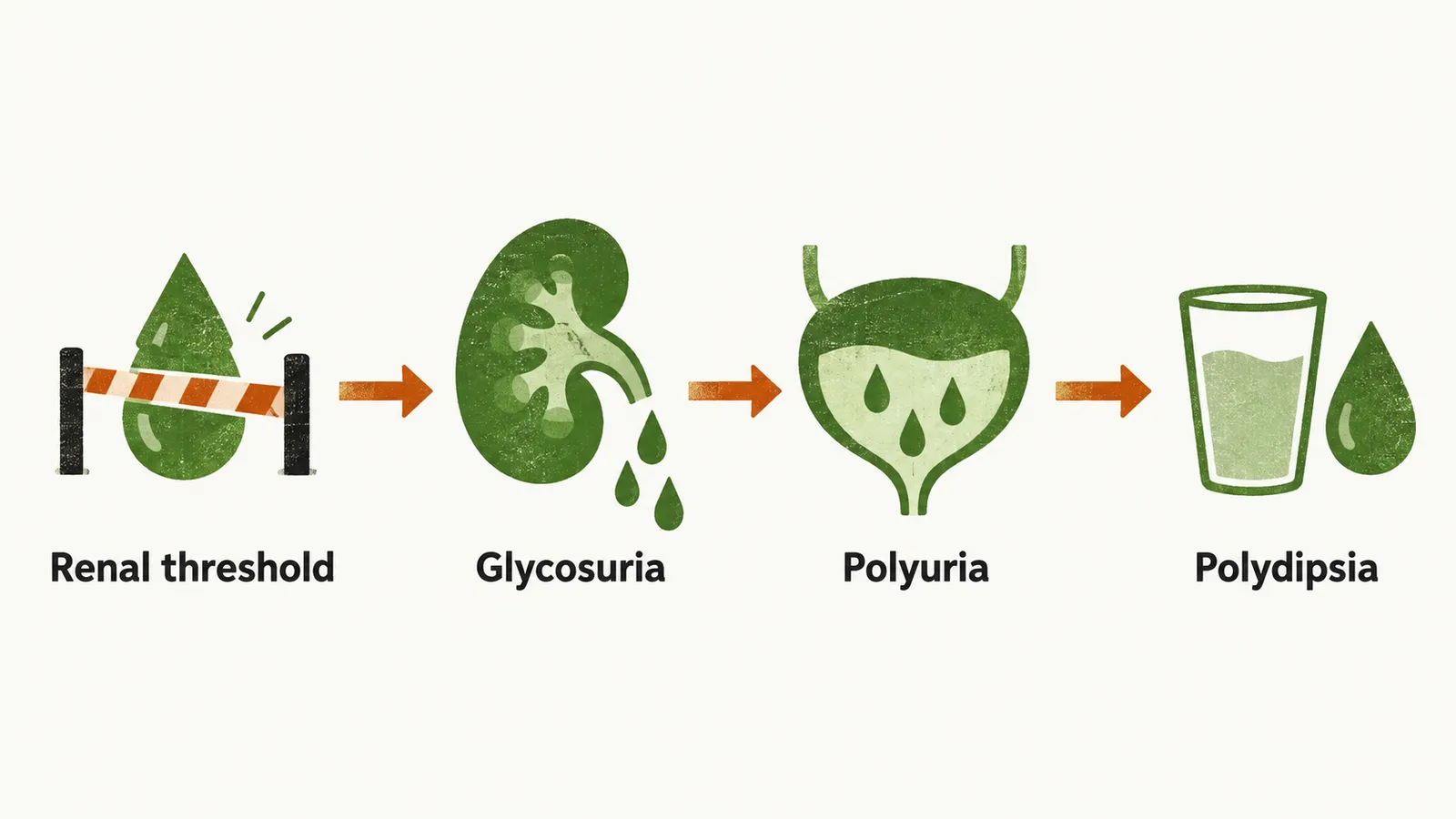
When symptoms do occur, they follow from glucose that the kidney cannot retain. The renal threshold for glucose reabsorption is about 180 mg/dL (10 mmol/L); above it, glucose spills into the urine as glycosuria and drags water with it by osmosis. The result is polyuria, the passing of large volumes of urine, including at night, and this fluid loss drives polydipsia, the compensatory thirst. Because glucose enters cells poorly, the tissues lean more on fat and protein for fuel, so fatigue is common and marked hyperglycemia can produce weight loss, although that is more prominent in type 1 diabetes. Blurred vision is also common, usually temporary, and is caused by osmotic swelling of the lens as glucose moves in and out of it.
When there are no classic symptoms
Most people with newly diagnosed type 2 diabetes have none of these symptoms and no sign of catabolism. The raised glucose is discovered another way: an unrelated blood test shows it, or the person is screened because they have risk factors for the disease. Sometimes the first clue is a complication that has already developed — retinopathy, neuropathy, or a foot ulcer — because hyperglycemia commonly predates the diagnosis by several years. Recurrent infections, such as genital or urinary candidiasis, and poor healing of minor wounds are other ways the disease announces itself.
Hyperglycemic emergencies
Rarely, the first presentation is an acute metabolic emergency rather than a slow decline. In type 2 diabetes this is usually hyperglycemic hyperosmolar state (HHS), in which severe hyperglycemia — plasma glucose often above 600 mg/dL — and extreme hyperosmolality, above 320 mOsm/kg, cause profound dehydration and an altered mental state, with little or no ketosis. HHS typically occurs in older people with type 2 diabetes and is often triggered by infection, myocardial infarction, stroke, or a period of poor fluid intake. The ketosis stays minimal because a residual amount of insulin still suppresses ketone production, but diabetic ketoacidosis can also occur in type 2 diabetes, particularly in people who are ketosis-prone or under severe physiological stress. Both are medical emergencies with substantial mortality if they go untreated.