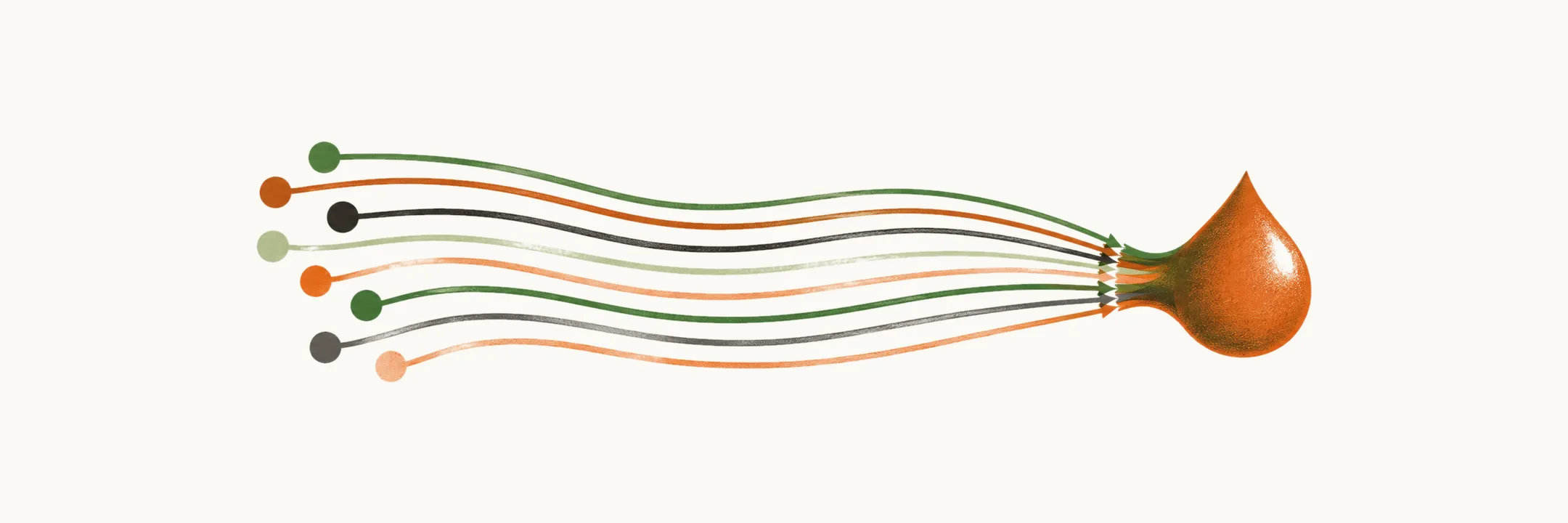
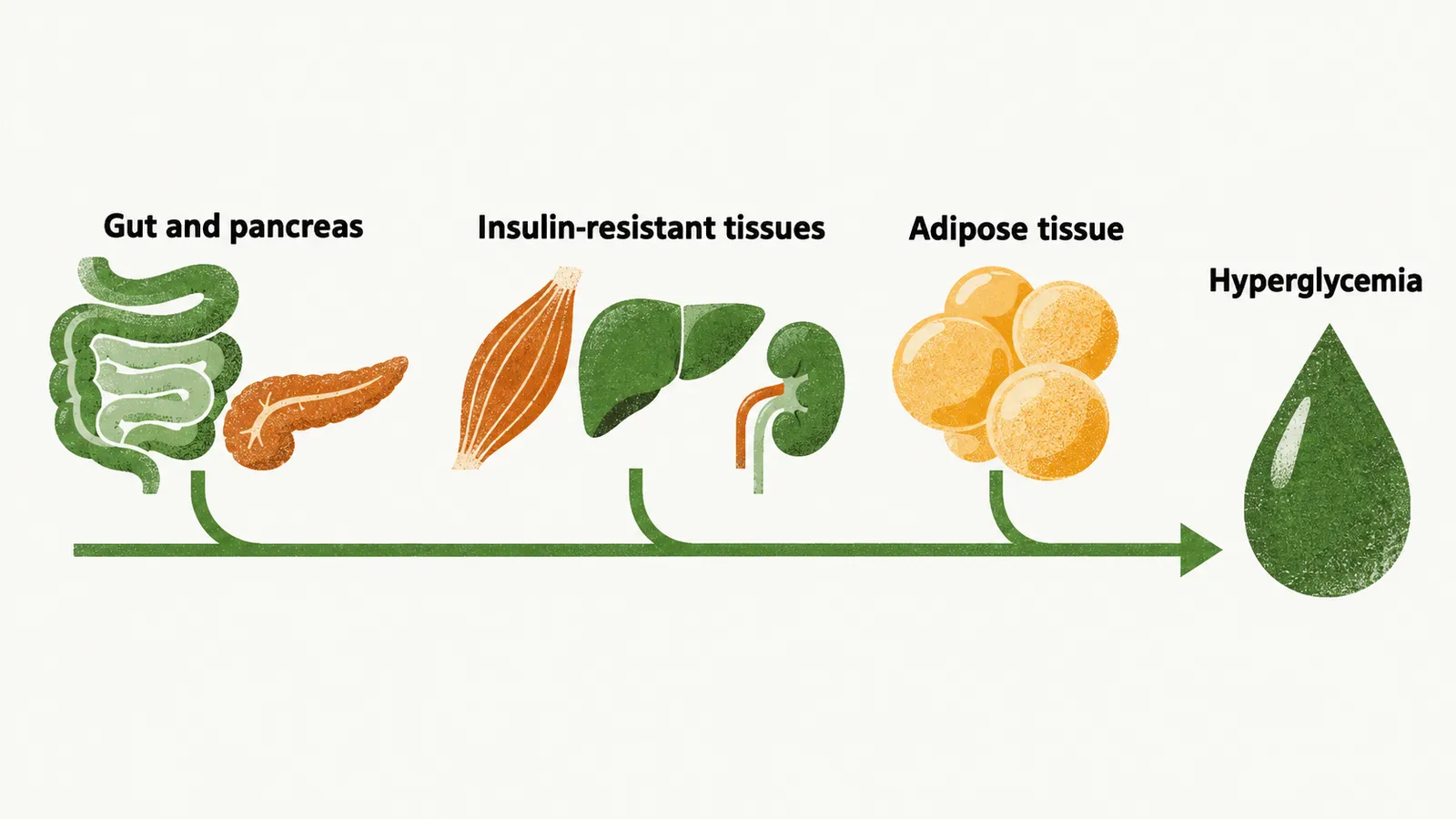
Several mechanisms act together to raise glucose in type 2 diabetes mellitus, or T2DM. No single one of them explains the disease, and they reinforce each other, which is why treatment commonly has to act on more than one. Eight are recognised. They run from the gut and pancreas (the first two) through the insulin-resistant tissues (the third to the sixth, including the kidney’s handling of glucose) to adipose tissue (the last two).
The first is a decreased incretin effect. Incretins are gut hormones released after a meal; physiologically they reduce alpha cell activity and lower the production of glucagon, the hormone that drives hepatic glucose output. In patients with T2DM this post-prandial inhibition of the alpha cells is reduced, so glucagon is less restrained and endogenous glucose production rises further.
The second is decreased insulin secretion. The β cells of the pancreas release more and more insulin in the early stages of the disease, but this compensatory mechanism fails sooner or later because insulin resistance keeps increasing.
The third is insulin resistance of peripheral tissue, especially skeletal muscle, which is the main site of insulin-stimulated glucose uptake after a meal.
The fourth is increased hepatic glucose production (HGP). Because the liver is insulin-resistant, HGP is not reduced after hyperglycemia, so the liver keeps adding glucose when it should stop.
The fifth is insulin resistance of the CNS, mainly the hypothalamus. Hypothalamic insulin resistance raises sympathetic activation, which increases endogenous glucose production. The same central circuits are a target of incretins — mainly GLP-1, which acts on the CNS to decrease appetite.
The sixth is enhanced glucose reabsorption by the tubular cells of the kidney, so glucose that would otherwise be excreted is retained and hyperglycemia persists.
The seventh is increased lipolysis. Adipocytes lose the inhibitory effect of insulin on fat breakdown, so lipolysis increases and free fatty acids reach the circulation.
The eighth is a chronic low-grade inflammatory state of the adipose tissue, sustained by the cytokines that inflamed fat releases, which keeps insulin resistance in place. Together the eight describe a disease in which glucose is produced too freely, taken up too poorly and reabsorbed too readily, while the pancreatic β cells cannot make up the difference.