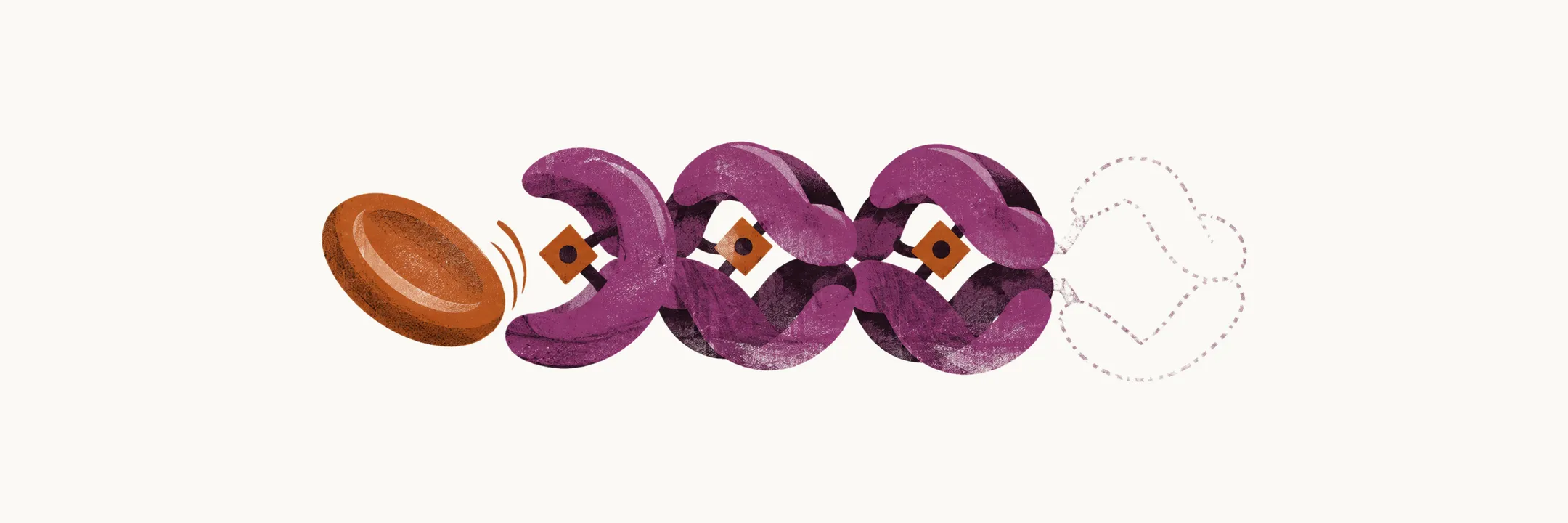
Hemoglobinopathies are diseases caused by inherited changes in the globin genes, the genes that code for the protein chains of hemoglobin, the molecule that carries oxygen inside the red cell. The change can lie in the hemoglobin molecule itself, or in how much of one of its chains is produced.
That single distinction separates the two families. Sickle cell disease is a structural problem: the hemoglobin molecule is altered, and the abnormal molecule damages the red cell. Thalassemia is a quantitative problem: the molecule is normal, but too little of one chain is made, and the chain left in excess does the damage. A person can carry a change from each family at once, and the two interact.
Neither family makes sense without the normal molecule, because each is a change in that molecule’s structure or its amount. The switch from fetal to adult hemoglobin after birth is part of that picture, and it is what decides when each disease first appears.
Routes through the topic
Normal hemoglobin is the natural place to start, because its vocabulary of chains, genes and the hemoglobins of fetal and adult life is the vocabulary the two families are described in. From there, sickle cell disease runs from its mechanism through its clinical picture, diagnosis and treatment, and the thalassemias run from their shared mechanism to each type.
The normal molecule
- Normal Hemoglobin: Structure, Globin Genes and Hemoglobin Switching explains how hemoglobin is built from two pairs of globin chains, which genes make each chain, and how the hemoglobin of embryonic, fetal and adult life differs.
Sickle cell disease: the structural family
- Sickle Cell Disease: Genetic Basis and Pathophysiology explains the single amino acid substitution and the genotypes it produces, and how deoxygenated HbS polymerisation makes red cells sickle and become irreversibly damaged.
- Clinical Manifestations and Complications of Sickle Cell Disease explains the laboratory findings and the main complaints, and the complications that follow, from acute pain episodes and acute chest syndrome to the long-term organ damage.
- Diagnosis and Screening of Sickle Cell Disease explains how newborn screening and hemoglobin fractionation identify the disease, and how the proportions separate it from sickle cell trait.
- Treatment of Sickle Cell Disease explains the disease-modifying drugs — hydroxyurea, voxelotor, crizanlizumab and L-glutamine — and the supportive care these patients need.
Thalassemia: the quantitative family
- Thalassemia: Overview and Genetic Basis explains how a reduced synthesis of one chain leaves the other chain in excess, and the deletions and point mutations behind the two types.
- Beta Thalassemia: Forms, Clinical Features and Treatment explains the trait, intermedia and major forms, their laboratory findings and complications, and their treatment.
- Alpha Thalassemia: Deleting α-Globin Genes explains how the number of deleted α genes sets the severity, from α-thalassemia minima to Hb Bart hydrops fetalis.