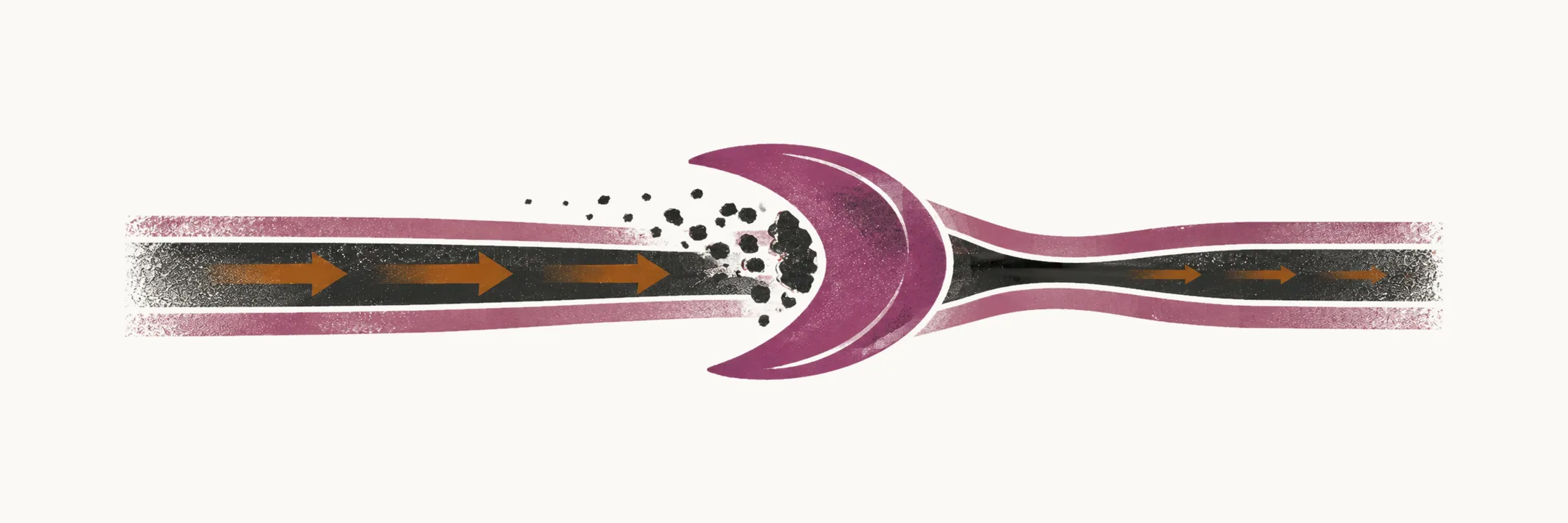
In sickle cell disease, red cells containing HbS polymerise when deoxygenated and become deformed, and the clinical manifestations are related to two main events: hemolysis, the destruction of red cells, which is the chronic state of the patient, and vaso-occlusive events, the blockage of small vessels, which are acute.
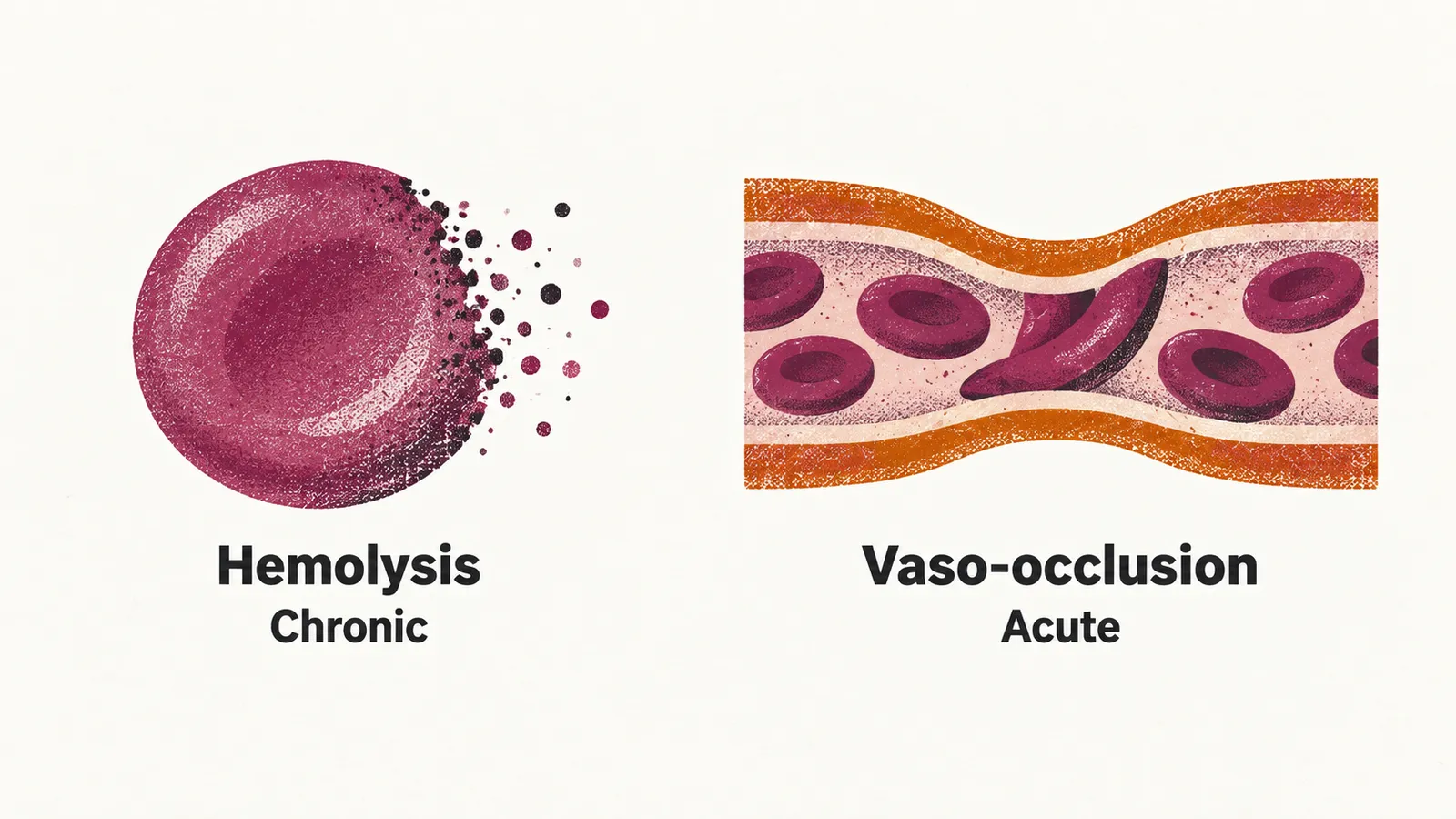
Hemolysis
Hemolysis occurs mostly in the patients with more irreversible sickle cells (ISCs), the permanently deformed cells, in their blood, and it is the chronic disorder of sickle cell disease. The laboratory changes of sickle cell disease are those of hemolysis. The hemolytic biomarkers are an increased LDH, an increased unconjugated bilirubin and a decreased haptoglobin, and the blood count shows a mild-to-moderate normocytic normochromic anemia with a slight reticulocytosis.
Hemolysis produces:
- normocytic normochromic red cells with a low hematocrit, about 18-30%
- hyperbilirubinemia, high LDH and low haptoglobin
- reticulocytosis
Vaso-occlusive events
Vaso-occlusion is the acute event. Because sickle cells are present, the transit time of the red cells in the microvasculature is increased, so more and more polymerisation and attachment of sickle cells occur, which increases the blood viscosity. Two things follow at the site of occlusion:
- activation of coagulation and of platelets
- activation of leukocytes, with inflammation
These events cause organ ischemia, which mostly happens in the tissues with small vessels and a low velocity of blood, such as the spleen and the bone marrow. Splenic infarction is mostly seen in homozygote patients, who are considered asplenic, and encapsulated infections should be considered in these patients. Vaso-occlusive events respond best to HbF induction.
The precipitating factors of a vaso-occlusive event are:
- hypoxia
- stress
- dehydration
- cold and wind
The main complaints of patients with sickle cell disease are pain and the arthritis-like hand-foot syndrome.
Acute pain episode
The acute pain episode is the most common manifestation of sickle cell disease, and on average it happens 1 to 2 times a year. For each patient it is a symmetrical and stereotypical manifestation in the extremities.
There is no diagnostic way to confirm an acute pain episode. Mostly there is a 1-2 g/dl reduction of Hb and a slightly increased leukocyte count.
The pain in the most anemic patients with an acute pain episode is the least pain. Priapism is acute pain in the penis during erection.
Some patients die after being admitted for an acute pain episode, for a reason that is not clear and could be arrhythmia or pulmonary embolism; this is why the patient has to be monitored for 48-72 hours after admission to prevent sudden death, and a quarter of the acute chest syndrome that follows an acute pain episode appears within 72 hours.
Acute chest syndrome
Acute chest syndrome is the second most common reason for admission in sickle cell disease, and one of the leading causes of death. It is a pneumonia-like syndrome: it presents with chest pain, cough and fever, with a pulmonary infiltrate on chest X-ray.
Its etiology is not always one thing; infection, in-situ thrombosis, fat emboli and post-operation hypoventilation can each start it. The manifestation is mild in children and can be very severe in adults. Acute chest syndrome is usually controlled, except when it is caused by fat emboli from osteonecrosis.
Leg ulcers and long-term complications
The incidence of leg ulcers depends on geography — for instance they are not prevalent in the Middle East — and also on the mutation type in HbS. They are mostly seen in HbSS and HbS-β0 thalassemia.
The other long-term complications of sickle cell disease are:
- growth retardation and delayed puberty
- asplenism and related infections such as pneumonia and meningitis
- cerebrovascular events
- avascular necrosis of the femur
- heart failure and myocardial infarction
- pulmonary hypertension
- renal failure, which is due to infarction of the papillary regions of the kidney