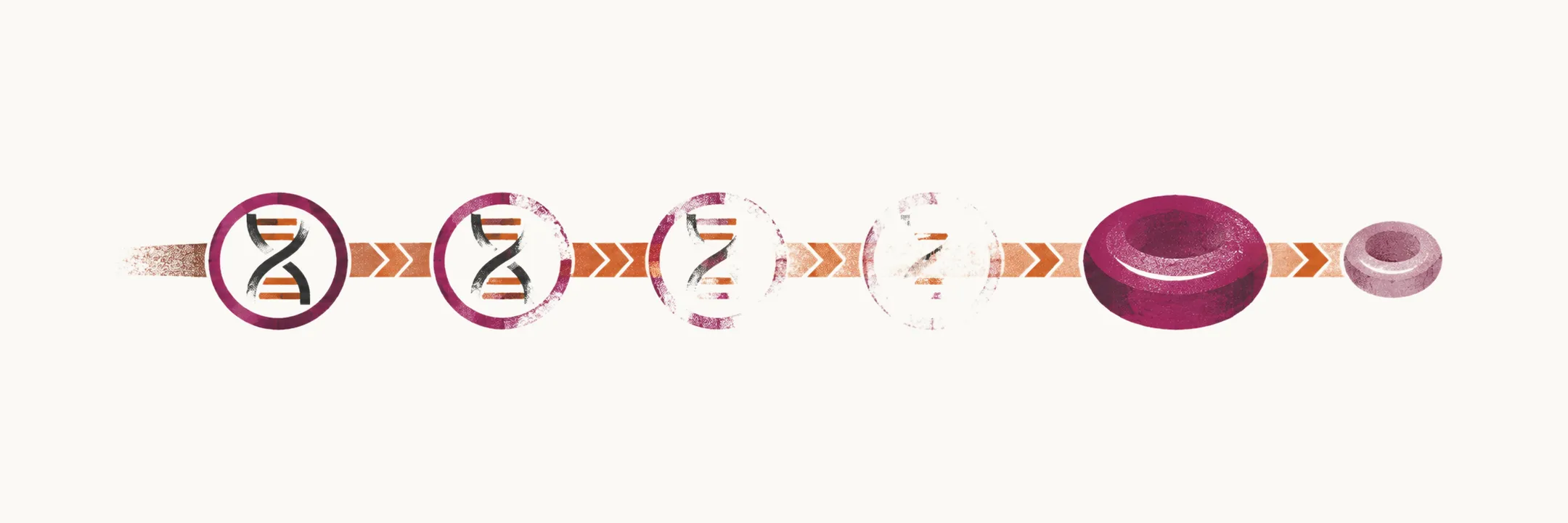
α-thalassemia is the form of thalassemia in which the synthesis of the α-globin chain is reduced. It is seen most often in the Asian countries, and also in the Mediterranean region, the Middle East and Africa — the tropical and sub-tropical regions where malaria has been common.
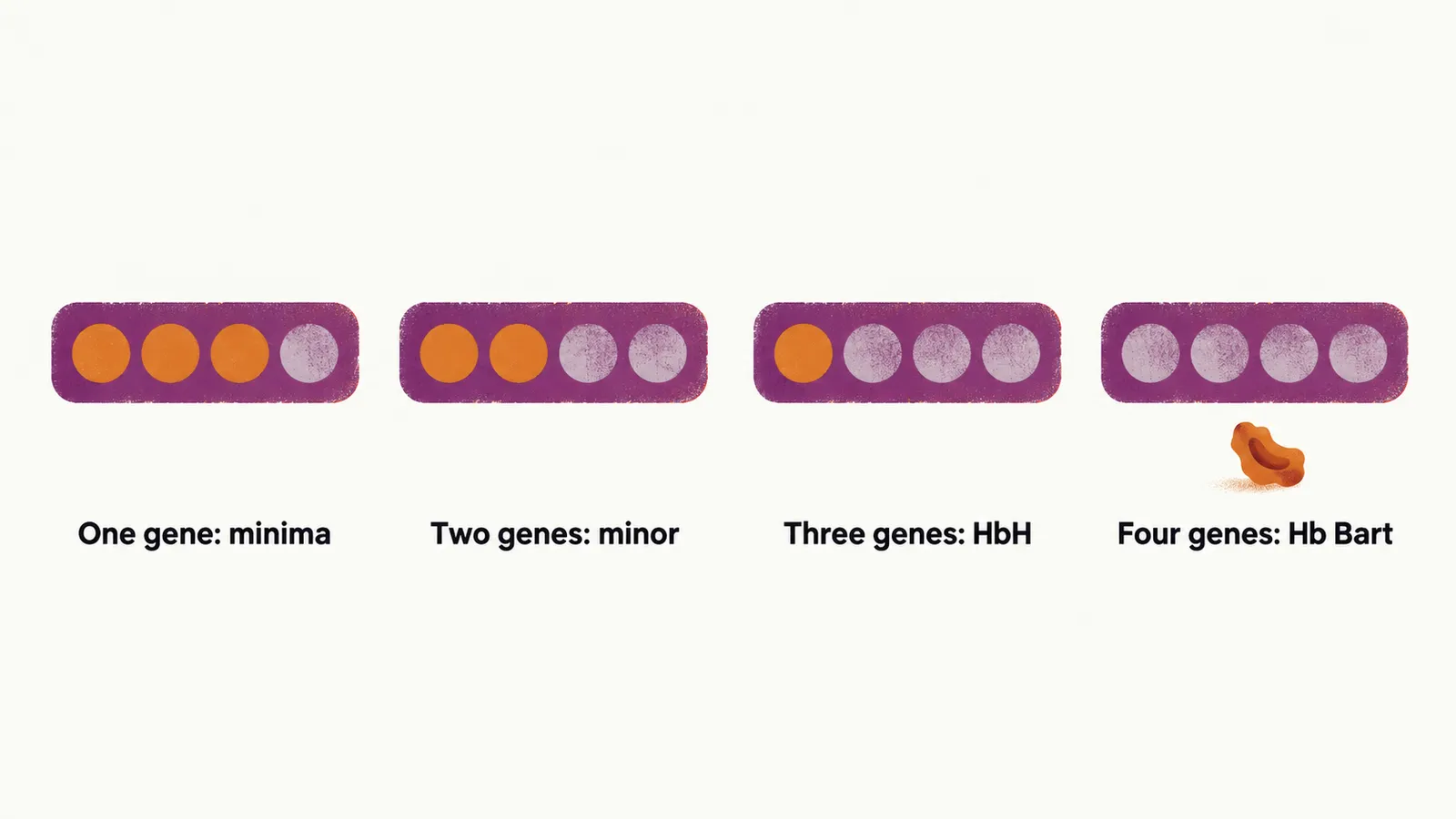
Each chromosome 16 carries two identical copies of the α-globin gene, so a healthy person has four copies in total. The severity of α-thalassemia is strictly related to the number of genes that are deleted: the fewer the working genes, the less α-globin is available, and the more the unpaired β- and γ-globin are left free to precipitate.
One or two deleted genes
If only one gene is deleted, the condition is also called α-thalassemia minima. If two genes are deleted, it is called α-thalassemia minor. The two deletions can lie one on each chromosome, one inherited from each parent, or both can lie on one of the parents’ chromosomes.
Three deleted genes: HbH disease
With three genes deleted there is excess β- or γ-globin, which leads to the formation of HbH, a tetramer (a molecule of four chains) of β chains, and Hb Bart, a tetramer of γ chains, respectively.
HbH is unstable. When the β4 tetramer forms, the oxidative stress in the cell increases, and the damaged cells are removed by the spleen — an extravascular hemolysis. The γ chain is still being made in the first months of life, so after birth Hb Bart accounts for about 20-30% of the hemoglobin; in the adult, once γ production has fallen, about 40% of the hemoglobin can be HbH.
HbH disease is less severe than β-thalassemia major. The reason is that the unpaired α-globin chains are more damaging than the β4 tetramer.
Four deleted genes: Hb Bart hydrops fetalis
With four genes deleted, the only tetramer that can form is Hb Bart, the γ4 precipitate. These fetuses mostly die during infancy, from hydrops fetalis.
Hb Constant Spring
Mostly α-thalassemia is caused by deletion of one or some of the genes, but there is one form of non-deletion α-thalassemia called Hb Constant Spring. It is based on an elongated α-globin that is not as stable as the normal α-globin, so it is very similar to the condition in which there is no α-globin.
Hb Constant Spring is usually discussed with a two-gene deletion: two genes are deleted, and among the two remaining α genes one carries the Constant Spring mutation. The rule that severity follows the number of deleted genes therefore does not fit this case exactly, and this point is not certain.